Germany work visa in 2026: Step-by-step guide
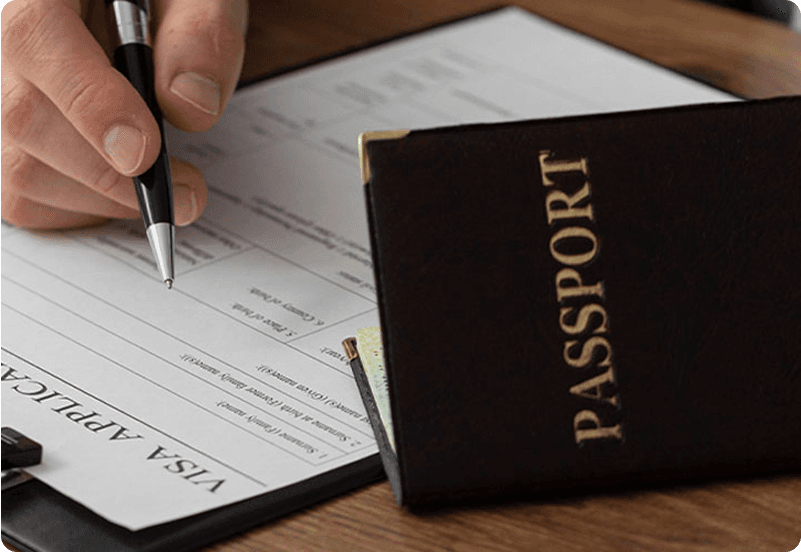
Germany is one of Europe's top destinations for skilled workers — and for good reason. A strong economy, an international job market and a high quality of life are drawing more professionals here every year.
But before you can start working legally, you need to clear one major hurdle: securing a Germany work visa.
This guide walks you through the full process — from checking your eligibility to choosing the right visa type, preparing your documents, and settling in after arrival. We cover every visa category available in 2026, including the new Opportunity Card (Chancenkarte) and the professionally experienced worker pathway.
Here's what we'll cover:
- Who needs a work visa to live and work in Germany
- The different types of work visas — including the EU Blue Card and Chancenkarte
- Which documents you need and how to prepare them
- How to apply online or at your embassy
- Typical processing times and what to expect
- What to do after arrival: registration, residence permit and the path to permanent residency
- Why health insurance is essential — and how Feather makes it simple
Whether you're a tech specialist relocating for a new role, a healthcare professional or an experienced worker without a German-recognized degree, this guide will help you navigate the process with confidence.
Who needs a work visa in Germany?
If you're a citizen of the EU, EEA or Switzerland, you don't need a visa to live and work in Germany.
But if you're from a non-EU country — such as the US, UK, Canada, India or Australia — you'll need to apply for a Germany work visa before starting any employment. For a full overview of entry requirements by nationality, see our guide to Germany's visa requirements.
You're generally eligible for a work visa if you:
- Have a concrete job offer from a German employer (not required for the Opportunity Card)
- Can demonstrate relevant qualifications or professional experience
- Meet the salary or language requirements for your visa type
- Have valid health insurance — public, private or expat
Types of Germany work visas
Germany offers several work visa categories, each designed for different qualifications, experience levels and salary brackets. Choosing the right one is the first critical step.
General employment visa
The general employment visa (section 18a/18b AufenthG) is for non-EU citizens who have a job offer and recognized qualifications. It covers a wide range of industries, especially where Germany faces skill shortages — tech, healthcare and engineering in particular.
Requirements:
- A confirmed job offer from a German employer
- Recognition of your university degree or vocational qualification in Germany (via Anabin or a ZAB evaluation)
- Salary in line with German standards for the role
- If you're over 45: minimum salary of €55,770/year, or proof of adequate pension provision
EU Blue Card
The EU Blue Card is Germany's fast-tracked visa for highly skilled professionals. It's one of the most attractive options because it offers a significantly faster path to permanent residency — as little as 21 months with B1 German, or 27 months without.
2026 salary thresholds (updated January 1, 2026):
- General professions: €50,700 gross per year
- Shortage occupations: €45,934.20 gross per year (STEM, IT, healthcare, construction, engineering and other professions in demand)
- Over-45 applicants: €55,770 gross per year minimum
These thresholds are recalculated annually based on the pension insurance ceiling.
Eligibility:
- A job offer meeting the relevant salary threshold
- A higher education degree relevant to the role (minimum 3 years of study) from a recognized institution
- IT specialists exception: You can qualify for a Blue Card without a university degree if you have at least 2 years of comparable professional experience in IT
Shortage occupations that qualify for the lower salary threshold include: STEM fields, IT and ICT, healthcare (doctors, nurses), construction, skilled trades, green-tech engineering and childcare — covering 163 of roughly 1,200 assessed occupations.
Opportunity Card (Chancenkarte)
The Opportunity Card (Chancenkarte, section 20a AufenthG) replaced the old job seeker visa on June 1, 2024, under Germany's expanded Skilled Immigration Act (Fachkrafteeinwanderungsgesetz). If you've read about a "job seeker visa" elsewhere, this is what replaced it — the system is fundamentally different.
The Chancenkarte gives you 12 months to find a job in Germany and lets you work part-time (up to 20 hours per week) and complete two-week trial periods with potential employers while you search.
There are two routes to qualify:
- Direct recognition: Your foreign qualification is fully recognized in Germany — you qualify automatically.
- Points system (6 points required): Points are awarded for qualifications (up to 4), language skills (up to 3), professional experience (up to 3), age under 35 (2 points), and connection to Germany (1 point).
Requirements:
- Language minimum: A1 German or B2 English
- Financial proof: €1,091/month (typically via a blocked account, totaling ~€13,092 for 12 months)
- Apply online via digital.diplo.de
For the full application walkthrough, see our Chancenkarte guide. You can also read more about how this compares to the former system in our job seeker visa article.
Important distinction: The post-study job search permit (section 20 AufenthG) still exists for people who completed a degree inside Germany. It gives you 18 months with unrestricted working hours. The Chancenkarte is specifically for people applying from outside Germany.
Professionally experienced worker visa (section 19c AufenthG)
This is one of the most underappreciated pathways — and a major option if your qualifications aren't recognized in Germany.
Unlike most other work visas, the section 19c visa does not require German qualification recognition. You only need recognition from your country of origin.
Requirements:
- At least 2 years of relevant professional experience within the last 5 years
- A job offer from a German employer
- Minimum salary: €45,630/year (or €55,770 if you're over 45)
- Qualification recognized in your home country (not necessarily by German authorities)
This pathway is particularly valuable for professionals from countries where the German recognition process is slow or where degrees don't map neatly to the German system.
Self-employment and freelancer visa
If you're planning to work independently rather than for an employer, Germany offers a dedicated freelance visa. This covers freelancers, consultants and entrepreneurs.
The requirements focus on demonstrating that your work will benefit the German economy — you'll need a viable business plan, proof of financial sustainability and, in many cases, letters of intent from potential German clients.
Other visa types
Germany also offers visas for specific situations:
- Family reunification visa: Your spouse can join you in Germany (A1 German usually required, though Blue Card holders and certain nationalities are exempt). Children are also welcome.
- Researcher visa: For academic researchers with a hosting agreement from a recognized German institution.
- Internship visa: For internships connected to your studies or professional development.
- Language course visa: For intensive German language courses (not a work visa, but a common stepping stone).
- Student visa: For degree programs at German universities.
How to apply for a work visa for Germany
The application process varies slightly by country, but the core steps are consistent. Here's the full walkthrough.
Step 1: Secure a job offer
Before anything else, you need a signed contract or official job offer from a German employer. This should include your role, salary, working hours and start date.
The exception is the Chancenkarte, which lets you enter Germany to search for work — no job offer required upfront.
For job hunting tips, see our guide on how to move to Germany.
Step 2: Check qualification recognition
Germany requires proof that your qualifications meet local standards. Use these resources:
- Anabin database: Check whether your university and degree are already recognized.
- Anerkennung in Deutschland: The official portal for starting the recognition process for vocational qualifications.
- ZAB evaluation: If your institution isn't in the Anabin database, you'll need a formal evaluation from the ZAB (Zentralstelle fur auslandisches Bildungswesen). This costs approximately €485 and takes 1-4 months. You may need apostilled documents depending on your country.
Alternative: If the recognition process is proving difficult, consider the section 19c professionally experienced worker pathway — it only requires recognition in your home country, not in Germany.
Step 3: Get health insurance
Health insurance isn't optional — it's a legal requirement for living and working in Germany, and you'll need proof of coverage for your visa application.
The type of insurance depends on your employment status and income:
- Public health insurance: If you're employed and earn less than €77,400 per year (the 2026 JAEG threshold), public health insurance is mandatory. It's reliable, widely accepted and meets all visa requirements. Read our public health insurance guide for details.
- Private health insurance: Available to employees earning above €77,400 annually and to all self-employed workers and freelancers (regardless of income — there is no income threshold for freelancers choosing private insurance). Private insurance offers more flexibility and often faster access to specialists. See our private health insurance guide.
- Expat health insurance: An affordable, visa-compliant option if you haven't started working yet or are in the early stages of freelancing. It's ideal for bridging the gap until you're enrolled in public or private insurance. Learn more in our expat health insurance explainer.
Important: Travel insurance is not accepted for work visa applications — this is a common reason for rejection. You need proper health insurance from the start.
Use our insurance recommendation tool to find the right option for your situation.
Step 4: Prepare your documents
Here's the standard document checklist:
- Completed visa application form (download from your embassy's website)
- Valid passport (must be valid for at least 3 months beyond your planned stay)
- Two biometric passport photos (35mm x 45mm). Check our visa photo requirements guide for exact specifications.
- Signed job offer or employment contract
- Degree certificates or vocational qualifications (with certified German or English translations)
- Proof of qualification recognition (Anabin printout, ZAB evaluation or recognition notice)
- CV and reference letters
- Proof of accommodation in Germany (rental contract or confirmation letter)
- Proof of financial stability (bank statements, blocked account or declaration of commitment from a sponsor)
- Health insurance certificate
Top tip: German embassies often request proof of health insurance before you apply. Feather offers visa-compliant, expat-friendly health insurance you can get in minutes — with documents ready for submission.
Always have documents translated by a certified translator into German or English. Untranslated documents are one of the most common reasons for delays.
Step 5: Apply online or at your embassy
As of February 2026, Germany's Consular Services Portal (digital.diplo.de) is fully operational across all 167 German missions worldwide. You can now submit your Blue Card, Chancenkarte and other work visa applications online.
Here's how it works:
- Create an account on digital.diplo.de
- Upload your documents digitally
- Book an in-person appointment for biometrics (fingerprints and photo — this still requires one visit)
- Track your application status online
The digital portal has significantly reduced processing times — pilot programs saw average processing drop from 54 days to 17 days.
If you prefer the traditional route, contact the nearest German embassy or consulate in your country directly. Due to demand, appointment wait times vary significantly — from 2-3 weeks in many European countries to 6-12 months in parts of Asia. Book as early as possible.
Step 6: Attend your appointment
Bring all original documents, your visa fee (€75 for adults, €37.50 for minors, paid in local currency) and be ready to explain your job, qualifications and plans. If approved, you'll receive a national visa (D-visa) valid for 3-6 months, allowing you to enter Germany and begin work.
What happens after you arrive in Germany?
Your plane has landed — congratulations. But there are a few more steps to make your residency official.
Register your address (Anmeldung)
Everyone living in Germany must register their home address within 14 days of moving in. Visit your local Burgeramt (citizens' office) with:
- Your passport
- Rental contract
- Landlord confirmation (Wohnungsgeberbestatigung)
You'll receive a Meldebescheinigung (proof of registration) — you'll need this for banking, visa extensions and nearly everything else. Appointments can be scarce in major cities like Berlin and Munich, so book ahead if possible.
Apply for your residence permit
Even with a valid work visa, you must apply for a residence permit at your local Auslanderbehorde (immigration office). The residence permit replaces your visa and allows you to stay for a specific period — from one year tied to a specific employer up to longer-term permits.
You'll need:
- Your national visa
- Passport
- Proof of registration (Anmeldung)
- Employment contract
- Health insurance certificate
- Biometric passport photos (35mm x 45mm)
- Application form
Good to know: You can start working as soon as you arrive in Germany, as long as your national visa permits employment. You don't need to wait for your residence permit to be issued.
Since January 2026, employers are also required to provide written information about free counseling services on labor and social rights to all recruited third-country nationals by their first working day (section 45c AufenthG).
Feather supplies all health insurance documentation in English or German, tailored for your residence permit application.
Path to permanent residency
Germany offers several routes to permanent residency (Niederlassungserlaubnis), and the timeline depends on your visa type:
- EU Blue Card holders: Eligible after just 21 months with B1 German language skills, or 27 months without. This is one of the fastest paths to permanent residency in the EU.
- General work visa holders: Eligible after 5 years of continuous residence, with B1 German and sufficient pension contributions.
For a detailed breakdown, see our permanent residency guide.
How long does it take to get a Germany work visa?
Processing times vary by embassy, nationality and application complexity. Current averages:
- Online via digital.diplo.de: 2-4 weeks (with the new digital portal)
- Embassy application (traditional): 6-12 weeks
- Residence permit (in Germany): 4-8 weeks (varies significantly by city — Berlin and Munich are known for longer wait times)
EU Blue Card applications are generally processed faster than standard work visas.
Looking ahead: Germany is also developing the Work-and-Stay Agency (WSA), a digital platform designed to further streamline the immigration process. It's currently in the planning phase, with a pilot expected in late 2026 and full operation targeted for 2029.
Common Germany work visa mistakes to avoid
Stay ahead of the bureaucracy by avoiding these common pitfalls:
- Using travel insurance instead of health insurance: This is one of the most frequent rejection reasons. Travel insurance is not accepted for work visa applications. You need proper expat health insurance, public or private coverage from day one.
- Not switching insurance before your residence permit renewal: Expat health insurance is accepted for your initial visa, but most Auslanderbehorde offices will not accept it for residence permit renewals. Make sure you've switched to public (GKV) or private (PKV) insurance before your renewal date.
- Submitting untranslated documents: Always have diplomas and reference letters translated into German or English by a certified translator.
- Applying too late: Embassy appointment wait times vary wildly. In some countries, you may wait 6-12 months just for an appointment slot. Start the process as early as possible.
- Not registering your address: The Anmeldung is the foundation for everything — bank account, tax ID, residence permit. Don't skip it or delay it.
- Not knowing that visa appeals are no longer possible: As of July 2025, remonstration (the free appeal process for visa rejections) was abolished worldwide. If your visa is rejected, you must reapply with a new fee and start the waiting process again. Getting your application right the first time is more important than ever.
Sign up for expat health insurance
Cancel anytime.
Don't take our word for it

Quality service. Rare in Germany.
“After my claim, Chris guided me through everything. Super helpful and responsive.”
Madalina
2 years of amazing service
“Justina makes me feel like her only customer. Fast, clear, always helpful.”
Funto
Made my life 100x easier
“Best support I’ve ever had. Clear answers, fast help, incredibly kind team.”
HW