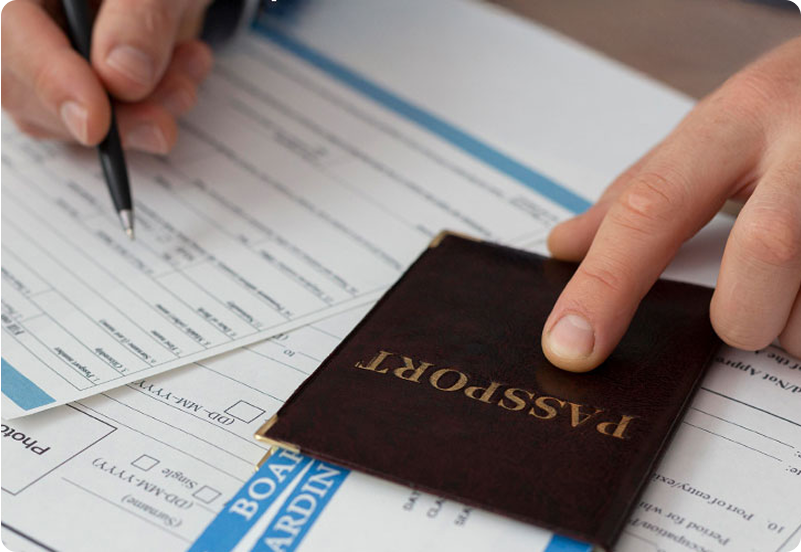
How to get a family reunification visa for Spain
If you're already living in Spain and want your loved ones to join you, the Spanish family reunification visa (autorización de residencia por reagrupación familiar) offers a legal pathway to bring close family members into the country.
Whether you're hoping to reunite with your spouse, children or dependent parents, this visa makes long-term family life in Spain possible -- but it comes with specific income thresholds (150% of the IPREM), housing requirements and a multi-phase application process that typically takes 4--8 months from start to finish.
In this step-by-step guide, we explain exactly how the process works under the current regulations (Real Decreto 1155/2024), including:
- Who qualifies as a sponsor and which family members are eligible
- Income requirements with worked IPREM calculation examples
- Every document you need -- organized by relationship type
- A full cost breakdown including consulate fees by nationality
- How to apply step by step, with realistic processing timelines
- What to do if your application is denied
- Health insurance requirements for your family members
What is Spain's family reunification visa?
The family reunification visa allows non-EU residents who have been legally living in Spain for at least one year to bring certain family members to join them. It's a long-term residency visa designed to keep families united while ensuring the sponsor can provide housing, healthcare and financial support.
Legal basis: The right to family reunification is established in the Ley Orgánica 4/2000 (Spain's foreigners' rights law). The detailed procedural requirements are set out in Real Decreto 1155/2024, which replaced the previous RD 557/2011 and entered into force on 20 May 2025. If you see guides citing RD 557/2011, note that this regulation is no longer in effect.
This visa is specifically for non-EU residents holding a valid residence permit in Spain. If you are an EU/EEA/Swiss citizen living in Spain, the process for bringing non-EU family members is different and generally faster -- EU citizens apply for a "tarjeta de familiar de ciudadano de la Unión" rather than the standard reagrupación familiar. This guide covers the non-EU sponsor process only.
For a comparison of all available visa types, see our guide to Spain's visa types.
Who qualifies? Sponsor and applicant eligibility
To be eligible, both the sponsor (the person living in Spain) and the family member (the applicant) must meet specific criteria.
Sponsor requirements
As the sponsor, you must:
- Have lived in Spain legally for at least one year and hold a valid residence permit. Your permit must have been renewed at least once -- initial permits that have not yet been renewed do not qualify.
- Prove adequate income based on the IPREM formula (see the income section below for full details and worked examples).
- Have adequate housing with an official housing adequacy report (informe de adecuación de la vivienda) -- see the housing section below.
- Hold valid health insurance covering your family member, or demonstrate they will be covered. Feather offers embassy-approved expat health insurance that meets this requirement.
Note on sponsor visa types: The reunification right applies to holders of work visas, non-lucrative visas, freelance visas and students with long-term permits. Students can sponsor family members, though proving sufficient income may be more challenging. For more on Spain's student health insurance requirements, see our dedicated guide.
Eligible family members
You can apply to bring the following family members:
- Spouses -- including same-sex marriages, which are fully recognized in Spain
- Registered partners (pareja de hecho) -- you must have an official registration certificate. Under RD 1155/2024, at least 12 months of cohabitation is now accepted as an alternative to formal registry inscription. You'll need documentation proving the cohabitation period (rental agreements, utility bills, municipal registration in both names).
- Children under 18, including adopted children and children of your spouse or partner
- Dependent children aged 18--26 -- this is a new provision under RD 1155/2024. Children up to age 26 may qualify if they are enrolled in formal education and earn below 50% of the IPREM (€300/month). Previously, the age limit was 21.
- Dependent adult children with disabilities, regardless of age
- Dependent parents -- subject to stricter requirements (see important note below)
Important: parent reunification has specific rules. To bring parents, you generally need:
- 5 years of legal residency in Spain (not the standard 1 year for spouses/children)
- Parents must typically be over 65 years old (parents over 80 are now automatically classified as financially dependent under the November 2025 ministerial instruction)
- You must prove your parents are financially dependent on you and cannot receive adequate care in their home country
- Income thresholds are approximately 25% higher than the standard IPREM formula
- You'll need to provide notarized remittance histories showing regular financial support (typically representing at least 51% of the per-capita GDP of the parent's home country)
Not eligible: Siblings, grandchildren, aunts/uncles, cousins and other extended family members cannot be brought through family reunification.
Income requirements: IPREM calculation explained
The income requirement is one of the most common reasons applications are denied, so understanding the calculation is critical.
What is the IPREM?
The IPREM (Indicador Público de Renta de Efectos Múltiples) is a public income reference index used by the Spanish government to set eligibility thresholds for immigration permits, social benefits and other administrative purposes. It is not the minimum wage.
Spain's minimum wage (SMI -- Salario Mínimo Interprofesional) is a separate figure: €1,221/month in 2026, more than double the IPREM. The IPREM has been frozen at €600/month (on a 14-payment basis) since 2023, because Spain has not passed a new General State Budget.
Income thresholds for family reunification
| Family members to bring | IPREM multiplier | Monthly income required | Annual income required |
|---|---|---|---|
| 1 | 150% | €900 | €10,800 |
| 2 | 200% (150% + 50%) | €1,200 | €14,400 |
| 3 | 250% (150% + 2 × 50%) | €1,500 | €18,000 |
| 4 | 300% (150% + 3 × 50%) | €1,800 | €21,600 |
New under RD 1155/2024 -- reduced threshold for minor children: When reunifying only with minor children, a lower threshold applies: 110% of the guaranteed minimum for the Ingreso Mínimo Vital (IMV), which is lower than 150% IPREM.
Parent reunification (post-November 2025): Income thresholds for sponsors bringing parents are approximately 25% higher than the standard IPREM formula. Approximate thresholds: ~€14,400/year for one parent, ~€18,000/year for two parents (exclusive of the sponsor's own living costs).
What counts as income
Acceptable income sources include:
- Employment contracts and payslips (6 months minimum)
- Self-employment earnings (autónomo income)
- Tax returns (Declaración de la Renta / Modelo 100)
- Bank statements showing regular income
- Pension income
Not accepted: Social assistance payments, housing subsidies, study grants or alimony (unless paid to the person being reunified).
Practical tip: Immigration offices in expensive cities like Madrid and Barcelona may informally apply higher income thresholds. Aim to demonstrate income well above the minimums if possible.
Housing requirements: informe de adecuación de la vivienda
One of the most common stumbling blocks for expats is the housing requirement. You need an official informe de adecuación de la vivienda (housing adequacy report) -- this is a different document from the general certificado de habitabilidad that some guides mention.
What the report must confirm
The housing adequacy report verifies:
- Legal basis for occupation (ownership deed or rental contract -- minimum 1 year)
- Number of rooms and designated uses
- Number of persons currently residing in the property
- Habitability conditions: adequate sanitation, heating, ventilation and space per occupant
- Sufficient space for the incoming family members
- Compliance with standards defined by Law 12/2023 (Spain's Housing Law)
Who issues it and how to get it
The report is issued by the social services department of your autonomous community or municipality -- not by a private architect or surveyor.
- Madrid: Apply for the "informe de adecuación de vivienda" through the Comunidad de Madrid social services
- Catalonia: Request the "informe d'adequació de l'habitatge" through the Generalitat
- Other regions: Apply through your municipal social services department
Under RD 1155/2024, the administration must issue the report within 1 month of your request. If they miss that deadline, you may submit alternative proof of adequate housing.
Practical tips:
- Start this process early -- it typically takes 2--4 weeks, longer if there's a backlog
- Both rental and owned properties are accepted
- Some landlords are reluctant to allow the inspection -- explain that it's a standard administrative procedure, not a complaint
- The report must be current when your application is submitted
For broader guidance on finding housing, see our guide on how to move to Spain.
Required documents checklist
Applying for family reunification requires documents from both the sponsor and the applicant. Requirements can vary slightly by consulate, so always verify the exact list with the Spanish consulate in the applicant's home country.
Documents from the sponsor (in Spain)
- Completed Modelo EX-02 form (the specific application form for family reunification)
- Copy of your valid residence card (TIE)
- Certificate of empadronamiento (address registration)
- Proof of income: work contract, 6 months of payslips, tax returns (Modelo 100), bank statements
- Informe de adecuación de la vivienda (housing adequacy report -- see above)
- Tasa 790-052 payment receipt (authorization fee)
- Private health insurance covering your family member
Documents from the applicant (abroad)
- Completed visa application form
- Valid passport (must remain valid for the duration of the stay)
- Birth or marriage certificate (translated and apostilled or legalized)
- Proof of relationship with the sponsor
- Police clearance certificate (from country of residence)
- Two recent passport-sized photographs (35mm × 45mm -- the standard Schengen format)
- Medical certificate stating no serious contagious diseases (must be issued within 3 months of application)
- Proof of visa-compliant health insurance (if not already covered by the sponsor)
Apostille vs. legalization: If the applicant's country is a member of the Hague Convention, documents need an apostille. For non-Hague countries, documents must go through the longer legalization process via the relevant embassy. All foreign documents must be translated into Spanish by a traductor jurado (sworn translator authorized by the Spanish Ministry of Foreign Affairs). Sworn translations typically cost €30--80 per document.
For a broader overview of Spain's visa requirements, including the general documentation standards, see our dedicated guide.
Special documents by relationship type
Spouses: Marriage certificate (recent -- typically issued within the last 3--6 months). In some cases, the immigration office may request evidence that the marriage was not contracted solely for immigration purposes.
Registered partners (pareja de hecho): Official registration certificate from the relevant civil registry, plus proof of at least 12 months of cohabitation (joint rental contract, shared utility bills, joint municipal registration).
Children: Birth certificate. If the sponsoring parent has sole custody, a custody order from a court. For adopted children, the adoption decree.
Dependent parents: Proof of financial dependency -- this is the hardest to document. You'll need notarized remittance histories showing regular transfers (typically covering 2+ years), evidence that the parent has no pension or insufficient pension income, and medical reports if claiming health-based dependency.
How much does family reunification cost?
One aspect many guides overlook is the total cost of the reunification process. Here's a breakdown:
| Cost item | Amount | When paid |
|---|---|---|
| Authorization fee (Tasa 790-052) | Free (some subtypes €16--20) | With application in Spain |
| Consulate visa fee -- US citizens | ~€130 ($140) | At consulate appointment |
| Consulate visa fee -- most other nationalities | ~€97 ($106) | At consulate appointment |
| TIE residence card (Tasa 790-012) | ~€12 | After arrival in Spain |
| Document apostille | €0--50 per document | Before application |
| Sworn translations (traductor jurado) | €30--80 per document | Before application |
| Housing adequacy report | Usually free (municipal services) | Before application |
| Private health insurance (for family member) | €50--150/month | Before application |
| Estimated total | €350--750+ |
Note: Visa fees vary by nationality -- this is set bilaterally between Spain and each country. Always check the fee schedule at your specific consulate. The authorization fee is contested across sources; the initial reagrupación filing is generally free, though some procedural subtypes carry small fees.
Step-by-step application process
The family reunification application is a three-phase process. For general guidance on the visa application process in Spain, see our detailed walkthrough.
Phase 1: Sponsor applies in Spain (autorización)
The sponsor submits the application at the Oficina de Extranjería in their province of residence.
What to submit: Completed Modelo EX-02 form plus all supporting documents (income proof, housing report, insurance, TIE copy, empadronamiento).
How to book: Schedule an appointment via the Sede Electrónica (sede.administracionespublicas.gob.es). Appointments in Madrid and Barcelona can be difficult to secure -- check regularly or use the alert services.
Timeline: 1--3 months for a decision. If you receive no response after 3 months, the authorization is considered approved under the principle of "silencio administrativo positivo" (positive administrative silence).
Phase 2: Family member applies at consulate
Once the authorization is approved, the Spanish consulate in the applicant's home country will be notified.
- The family member has a 2-month window to complete the consulate process
- They must attend an in-person appointment to submit documents and provide biometrics
- Processing time: typically 4--8 weeks
Phase 3: Arrival and registration in Spain
After the visa is approved, the family member receives a national visa (Type D) and must enter Spain within the visa validity period.
Upon arrival:
- Empadronamiento -- register your address at the local town hall (Ayuntamiento). This is the first step and needed for everything else.
- Apply for TIE -- schedule an appointment at the Oficina de Extranjería within 30 days of arrival. In Madrid and Barcelona, appointment wait times can be 2--3 months, so book immediately upon arrival.
- Receive TIE card -- this is your family member's official residence card in Spain.
Processing times and what to expect
The total process from initial application to TIE card in hand realistically takes 4--8 months. Here's the breakdown:
| Phase | Typical duration | Where |
|---|---|---|
| Authorization approval | 1--3 months | Oficina de Extranjería, Spain |
| Consulate visa processing | 4--8 weeks | Consulate, home country |
| Entry + TIE registration | 1--3 months | Spain |
| Total | 4--8 months |
When delays are most likely:
- Summer (July--August) and year-end (December--January) see the longest processing times
- Madrid, Barcelona and Málaga are consistently slower than smaller cities
- Incomplete documentation is the single biggest cause of delays -- double-check everything before submission
What is "silencio administrativo"? If the immigration office does not respond to the Phase 1 authorization within 3 months, the application is deemed approved (silencio administrativo positivo). Many guides incorrectly cite 45 days -- the correct period is 3 months.
What happens if your application is denied?
Denials are not uncommon, but they can usually be resolved. Understanding the most frequent reasons helps you avoid them -- or address them if they arise.
Common denial reasons
- Insufficient or unstable income -- the most frequent cause. Immigration offices look for stable, continuous income over 12+ months, not just a one-time bank balance. Third-party transfers are not accepted.
- Housing report missing or inadequate -- submitting the wrong document type, failing the inspection, or submitting an expired report.
- Sponsor's permit not renewed -- initial permits (not yet renewed at least once) do not qualify for sponsoring family reunification.
- Missing or improperly apostilled documents -- apostilles and certificates must typically be within 3 months of the application date.
- Relationship not sufficiently proven -- especially common for parent reunification, where dependency must be thoroughly documented.
- Medical certificate out of date -- must be within 3 months and cover specifically checked diseases.
Appeal options
If your application is denied, you have several options:
- Recurso de reposición: Appeal to the same body that issued the denial, within 1 month. The body has 1 month to respond; silence means denied.
- Recurso de alzada: Hierarchical appeal to a superior body, within 1 month. The body has 3 months to respond; silence means denied.
- Recurso contencioso-administrativo: Court appeal after administrative routes are exhausted. This adds 6--24 months and requires an immigration lawyer (abogado de extranjería).
- Reapplication: Often faster than appealing. Fix the specific deficiency and submit a new application.
Tip: For complex cases -- especially parent reunification or appeals -- consider consulting an immigration lawyer early in the process.
Health insurance for family reunification
Health insurance is a mandatory requirement at both the authorization stage (Phase 1) and the consulate appointment (Phase 2). Family members arriving through reunification are not automatically enrolled in Spain's public healthcare system.
What type of insurance is required
The policy must provide:
- Full medical coverage with no co-pays
- No waiting periods
- Coverage valid in Spain for the duration of the visa
Private health insurance in Spain that meets these criteria is what most applicants use. Feather offers embassy-approved health insurance certificates specifically designed for visa applications -- you can get a quote here.
When can family members access public healthcare?
Once a reunified family member begins working in Spain and contributing to Social Security (Seguridad Social), they can access Spain's public healthcare system. Until then, private insurance is required.
For a full overview of how Spain's healthcare works, including the public vs. private system, see our comprehensive guide.
After the visa: life in Spain as a family
Work rights (now automatic)
Under RD 1155/2024, spouses, registered partners and children over 16 receive work authorization automatically with their reunification permit. They can work as employees or become self-employed (autónomo) without needing a separate work permit application. This is a significant change from the previous regulation, which required a separate modification of the residence permit.
Exception: Family members of sponsors on the student regime may have restricted work authorization.
Modifying residence status
After the initial period, family members can apply for an independent residence permit -- meaning their right to stay in Spain no longer depends on the sponsor's permit. This is especially important in cases of separation or divorce.
Renewing the permit
The family member's permit is aligned with the sponsor's renewal cycle. Renewals require demonstrating that the conditions for reunification (income, housing, insurance) continue to be met.
Path to permanent residency
After 5 years of continuous legal residence in Spain, family members can apply for permanent residency (residencia de larga duración). This removes the need for periodic renewals.
Path to citizenship
After 10 years of continuous legal residence, family members may apply for Spanish citizenship. Citizens of Latin American countries, Portugal, the Philippines, Equatorial Guinea, Andorra and Sephardic heritage have a reduced requirement of 2 years.
Applicants must pass the DELE A2 (Spanish language) and CCSE (constitutional and sociocultural knowledge) exams.
For guidance on settling into life in Spain, see our guides on how to move to Spain from the US and how to move to Spain from the UK.
Sign up for expat health insurance
Visa-compliant. Cancel anytime.
Frequently asked questions
Don't take our word for it

Amazing from start to finish
“From the first message, and on, Feather guided me to the best health insurance plan with care and clarity.”
Murtala
Support that saves me time
“Pausing my health insurance took just one form, thanks to Feather's fast, clear help.”
Ardi
Expert health insurance help for expats
“Manthos always has clear and valuable advice about health insurance.”
Rick