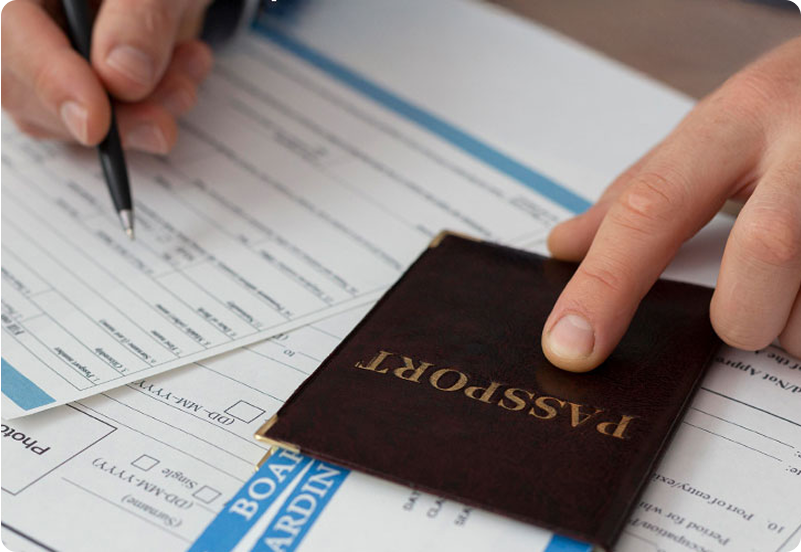
How to get an Au Pair visa for Spain
If you're dreaming of spending a year helping a Spanish family, learning the language and immersing yourself in everyday life, the au pair visa for Spain is your pathway to a truly unique cultural adventure. Becoming an au pair allows you to build lifelong relationships, improve your language skills and experience Spanish traditions from the inside -- all while receiving room, board and pocket money.
In this guide, you'll learn:
- What Spain's au pair visa is and who qualifies
- Every document you need for a smooth application
- How much the visa costs (including a full budget breakdown)
- How to apply at the Spanish consulate step by step
- Why health insurance is essential -- and what coverage you need
- How to find a host family and what to expect once you arrive in Spain
What is Spain's au pair visa?
Spain's au pair visa is a national long-stay visa (Type D) issued specifically for cultural exchange through au pair placement. It allows young people from outside the EU to live with a Spanish host family while helping with childcare and light household tasks in exchange for:
- A private room and meals
- Weekly pocket money (typically €70--80/week)
- Language and cultural immersion opportunities
Unlike a student visa for Spain, which requires enrollment in a recognized educational institution, the au pair visa is built around a host family placement. And unlike a work visa, it does not permit full employment -- only light domestic duties.
If you're considering other ways to move to Spain, our guide to Spain's visa types compares all available options side by side. You may also want to explore the volunteer visa for Spain or the internship visa for Spain, which serve a similar cultural exchange purpose.
Eligibility requirements
You can apply for Spain's au pair visa if you meet the following criteria:
| Requirement | Details |
|---|---|
| Age | Between 17 and 30 years old (may vary slightly by consulate) |
| Nationality | Non-EU/EEA/Swiss citizen |
| Marital status | Single and without dependents (note: some consulates have relaxed this requirement -- check with yours) |
| Host family | Accepted by a registered Spanish host family with a signed agreement |
| Language course | Enrolled in or planning to enroll in a Spanish language course |
| Criminal record | Clean criminal background |
| Education | Completion of secondary education |
EU/EEA and Swiss citizens do not need a visa to au pair in Spain -- they only need to register with local authorities after three months.
Duration, renewal, and extensions
The au pair visa allows stays of 6 to 12 months. You can renew once, for a maximum total stay of up to 24 months, provided you remain enrolled in a language course and your host family arrangement continues.
What if your arrangement ends early? If you and your host family part ways before the visa expires, you can seek a new host family. However, you will need to update your residency documentation through the Oficina de Extranjería, which can take several weeks.
Can you switch to another visa type? In most cases, you cannot switch directly from an au pair visa to a work or student visa while in Spain. You would typically need to return to your home country and apply for the new visa type from there. Check with your local Oficina de Extranjería for the latest rules.
Au pair visa requirements: documents checklist
The exact documents vary by consulate, but most Spanish consulates require:
- Valid passport -- must be valid for at least 6 months beyond your intended stay
- Completed visa application form (Solicitud nacional de visado)
- Two recent passport photos -- biometric format, white background, 3.5 × 4.5 cm
- Criminal background check -- from your home country, apostilled and translated into Spanish by a sworn translator
- Proof of secondary education -- diploma or equivalent, apostilled if required
- Host family agreement -- signed by both parties, detailing working hours (25--30 hrs/week), pocket money amount, duties, accommodation, meals, and whether the family covers language course fees
- Language course enrollment -- proof of enrollment or acceptance letter from a Spanish language school
- Proof of financial means -- host family provides pocket money, but you may also need to show you have basic personal funds available
- Travel medical insurance -- see below
Apostille and translation: Most documents issued outside Spain must carry an apostille (or be legalized) and be translated into Spanish by a certified sworn translator (traductor jurado). Factor in time and cost for this step.
For a broader overview of what Spain requires for all visa types, see our Spain visa requirements guide.
Health insurance requirements
Health insurance is legally required for the au pair visa because au pairs are not included in Spain's public healthcare system. Consulates check insurance documents carefully -- insufficient coverage is one of the most common reasons for visa refusal.
Your health insurance policy must meet these minimum standards:
- Full coverage for your entire stay in Spain
- Emergency, hospitalization, and repatriation coverage
- No deductibles or co-pays (many consulates require this)
- Valid across all Spanish territories
Typical cost: €50--120/month depending on the provider and level of coverage.
Trusted insurance providers like Feather offer instant visa-compliant insurance certificates, English-language support, and no-deductible policies that meet all of Spain's visa requirements. With the right private health insurance in Spain, you can visit private clinics directly, schedule appointments without referrals, and access English-speaking doctors in major Spanish cities.
For a full breakdown of your insurance options, read our health insurance in Spain guide. If you're a student as well as an au pair, our student health insurance guide may also be relevant.
👉 Get visa-compliant expat health insurance
How much does Spain's au pair visa cost?
This is one of the most common questions -- and the answer depends on several factors. Here's a full budget breakdown:
| Cost item | Estimated amount | Notes |
|---|---|---|
| Visa application fee | ~€80 | Non-refundable; paid at consulate or BLS center |
| TIE card (residence card) | ~€16 (Tasa 790-012) | Paid after arrival in Spain |
| Criminal background check | €15--50 | Varies by country |
| Apostille fee | €0--50 | Some countries charge, others don't |
| Sworn translation (per document) | €30--80 | Into Spanish |
| Health insurance | €50--120/month | Full private coverage required |
| Language course | €400--1,200/term | Depends on city, hours, and school |
| Total estimated budget | €800--1,800 | Before travel costs |
Pocket money from your host family
On top of these costs, your host family provides:
- Pocket money: typically €70--80/week (~€280--320/month)
- Private room and meals -- included as part of the arrangement
- Time off for language courses and personal activities
This is not a salary -- au pairs are not employees under Spanish labor law. The pocket money is an allowance to cover personal expenses during your stay.
How does this compare?
Au pair costs in Spain are broadly similar to other European countries. Germany's au pair programs typically offer €280--300/month in pocket money with comparable visa fees, while France offers around €320/month. Spain's lower cost of living (outside Madrid and Barcelona) can make your pocket money stretch further.
How to apply: step by step
Where and when to apply
You must apply at the Spanish consulate in your home country, or at a BLS International center if your country uses BLS for Spanish visa processing. Applications should be submitted at least 2--3 months before your intended travel date, as processing can take several weeks.
The application process
-
Find a host family -- Use platforms like AuPairWorld, GreatAuPair, or aupair.com. Spain does not require you to go through a licensed agency. Interview families via video call before committing.
-
Enroll in a Spanish language course -- Choose a school in the city where your host family lives. You'll need the acceptance letter for your visa application.
-
Gather all required documents -- Use the checklist above. Allow extra time for apostilles and sworn translations.
-
Book a consulate or BLS appointment -- Appointments can fill up quickly during peak season (spring and early summer for September starts). Book early.
-
Attend your appointment and submit biometrics -- Bring all original documents plus copies. You'll usually need to provide fingerprints.
-
Pay the visa processing fee -- ~€80, non-refundable.
-
Wait for processing -- Typical processing time is 4--6 weeks, but it can be longer during peak season or at busy consulates.
-
Collect your visa -- Once approved, collect your passport with the visa stamp and verify your entry dates.
For more detail on the general process, see our visa application process guide.
Processing times
- Typical: 4--6 weeks from submission
- Peak season (May--July): can stretch to 8+ weeks
- How to track: Most consulates provide a reference number at submission. Check status online or by phone.
Plan your timeline backwards from your intended arrival date and build in a buffer for delays.
Common mistakes to avoid
- Incomplete host family agreement -- missing details on hours, pocket money, or accommodation
- Missing language course enrollment proof -- some consulates are strict about this
- Insufficient health insurance -- coverage that doesn't meet consulate requirements is a top rejection reason
- Applying too late -- starting the process less than 2 months before departure
- Buying flights before visa approval -- always wait for confirmation before booking travel
- Documents not apostilled or translated -- every foreign document typically needs both
Finding a host family in Spain
Spain does not require au pairs to go through a licensed agency. You can find a host family independently through online platforms:
- AuPairWorld -- the largest au pair matching platform, with thousands of Spanish families
- GreatAuPair -- popular with American and British au pairs
- aupair.com -- comprehensive profiles and reviews
What to look for in a host family
- Clear expectations about working hours, duties, and time off
- A private room (this is a requirement, not a luxury)
- Willingness to support your language learning
- Positive reviews or references from previous au pairs
- Openness to a video call interview before you commit
Red flags to watch for
- Families requesting more than 30 hours/week of work
- No private room offered
- Reluctance to put the agreement in writing
- Expectations of heavy cleaning, cooking, or full-time nannying (these are not au pair duties)
- Unwillingness to provide time off for language courses
The host family agreement
Your written agreement with the host family is a required visa document. It must include:
- Weekly working hours (25--30 hours is standard)
- Pocket money amount
- Specific duties and expectations
- Accommodation and meal arrangements
- Whether the family covers language course fees
- Time off and holiday entitlement
Some consulates require the agreement to be notarized or legalized. Check with your specific consulate.
Living in Spain as an au pair
Post-arrival steps
Once you arrive in Spain, there are several administrative steps to complete. For a broader overview, see our guide to moving to Spain.
-
Empadronamiento (municipal registration) -- Register your address at the local town hall (Ayuntamiento). Do this first -- you'll need it for almost everything else.
-
Apply for TIE (Tarjeta de Identidad de Extranjero) -- You must apply within 30 days of arrival at the Oficina de Extranjería. Book your appointment in advance via sede.administracionespublicas.gob.es, as slots fill up fast.
-
Verify your NIE -- Your NIE (Número de Identidad de Extranjero) is usually assigned with your visa. Confirm it's active at your local police station (Comisaría de Policía).
-
Open a Spanish bank account -- Many banks require your NIE/TIE. Expat-friendly options like N26 or Openbank may accept you sooner.
-
Confirm health insurance is active -- Make sure your coverage is active from your arrival date.
Important: Au pairs are not registered in Spanish social security. Your host family is not your employer, so there are no social security contributions or employment rights attached to the arrangement.
Working hours, duties, and pocket money
- Weekly hours: 25--30 hours per week is the standard maximum
- Typical duties: childcare, light housework, helping children with homework, accompanying children to activities
- What's NOT expected: heavy cleaning, cooking for the whole family, full-time nannying, caring for elderly family members
- Pocket money: €70--80/week (~€280--320/month), paid by the host family
- Host family must also provide: a private room, all meals, and adequate time off
Your rights under Spanish law
As an au pair in Spain, you are entitled to:
- Minimum 1.5 days off per week (typically the full weekend or one full day plus one half-day)
- Annual holiday time -- proportional to your stay, typically 2 weeks for a 12-month placement
- A safe, private room with basic furnishings
- Time for language study -- this is part of the cultural exchange purpose
What to do if your host family violates the agreement: Contact your au pair agency (if you used one), reach out to the Oficina de Extranjería, or seek advice from local expat support organizations. You have the right to leave an unsuitable placement.
Language courses and cultural integration
Enrolling in a Spanish language course is typically a visa requirement, and it's also the best way to make the most of your time in Spain. Most au pairs attend classes 2--4 times per week.
Where to find courses:
- Official language schools (Escuelas Oficiales de Idiomas) -- affordable, government-run
- Private language academies -- more flexible schedules, often offering intensive options
- University extension programs -- some universities offer Spanish for foreigners
Beyond formal classes, immerse yourself in the culture:
- Join local language exchanges (intercambios) -- many Spanish cities have active communities
- Explore cultural events, festivals, and traditions with your host family
- Learn regional customs -- Spain's regions (Catalonia, Andalusia, Basque Country) each have distinct cultures and, in some cases, their own languages
Sign up for expat insurance
Visa-compliant. Cancel anytime.