
Health & healthcare in Italy: Statistics, trends & facts (2026)
Italians live longer than anyone else in the EU: 84.1 years on average. And Italy manages that while spending 19% less per person on health than the EU average of €3,832.
That's an impressive trick. But long lives don't automatically mean healthy ones, and low spending has to come from somewhere. If you're living in Italy, or planning to, it helps to know where the system is strong and where it's stretched.
In this article, we'll cover:
- Who lives in Italy, and how long (and how healthily) they can expect to live
- How much Italy spends on healthcare, and where the money comes from
- What the budget goes on, including Italy's unusual approach to medicines
- How healthy Italians are, and what they're most likely to die from
- How many doctors, nurses and hospital beds the country has
- How many people can't get the care they need
First, the headline numbers.
Key Italian healthcare statistics: our top picks
- 100% of Italian residents are covered for core health services.
- 4% of Italians report unmet medical needs, rising to 10% for those at risk of poverty.
- In 2023, the average Italian could expect 69.1 healthy life years at birth.
- Health spending per person in Italy was roughly 19% below the EU average in 2023.
- 75% of all Italian pharmaceutical spending goes through hospitals, the highest share in Europe.
- 73.6% of Italians aged 16 and over rate their health as good or very good.
Italy's population statistics
In 2025, Italy had 58,943,464 inhabitants: 30,071,747 women and 28,871,717 men. That's roughly 104 women for every 100 men, or 51% women and 49% men.
Italy is also home to a large foreign-born population. In 2025, 5,371,251 people living in Italy were born abroad, around 9.1% of the total.
Of these, 2,681,629 were women (49.9%) and 2,680,622 were men (50.1%).
How old is Italy's population?
Old, by EU standards. In 2024, the median age in Italy was 48.7 years, the highest in the EU.
24% of the population was aged 65 or over, also the highest share in the EU. That's projected to reach 34% by 2050.
In 2025, Italy had more than 22,652 centenarians, 18,676 of them women.
Life expectancy statistics in Italy
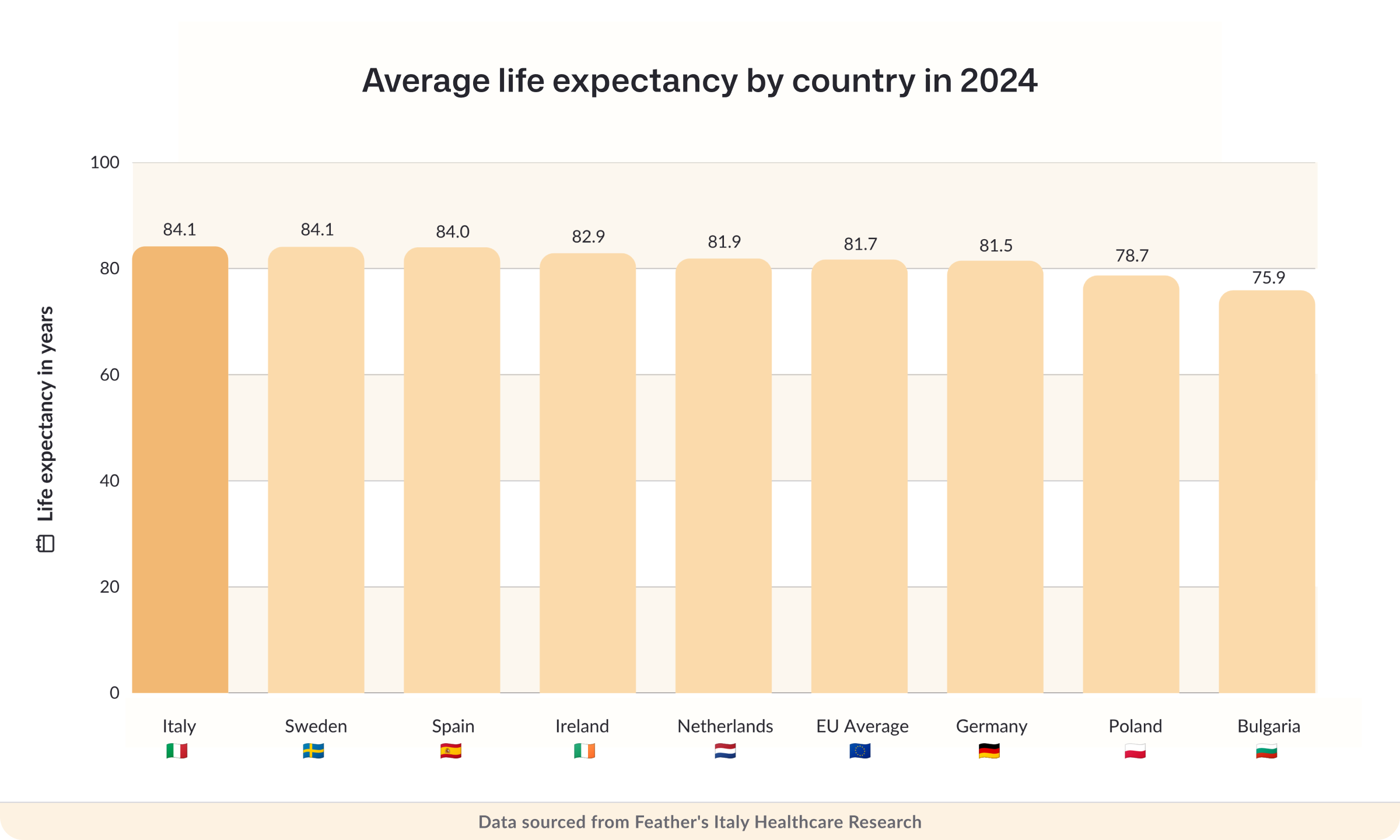
Italy and Sweden share the EU's highest average life expectancy: 84.1 years in 2024. For Italy, that's the first time it has passed its pre-COVID record of 83.6 years, set in 2019.
Life expectancy dropped to 82.3 years in 2020, at the height of the pandemic, and has recovered steadily since.
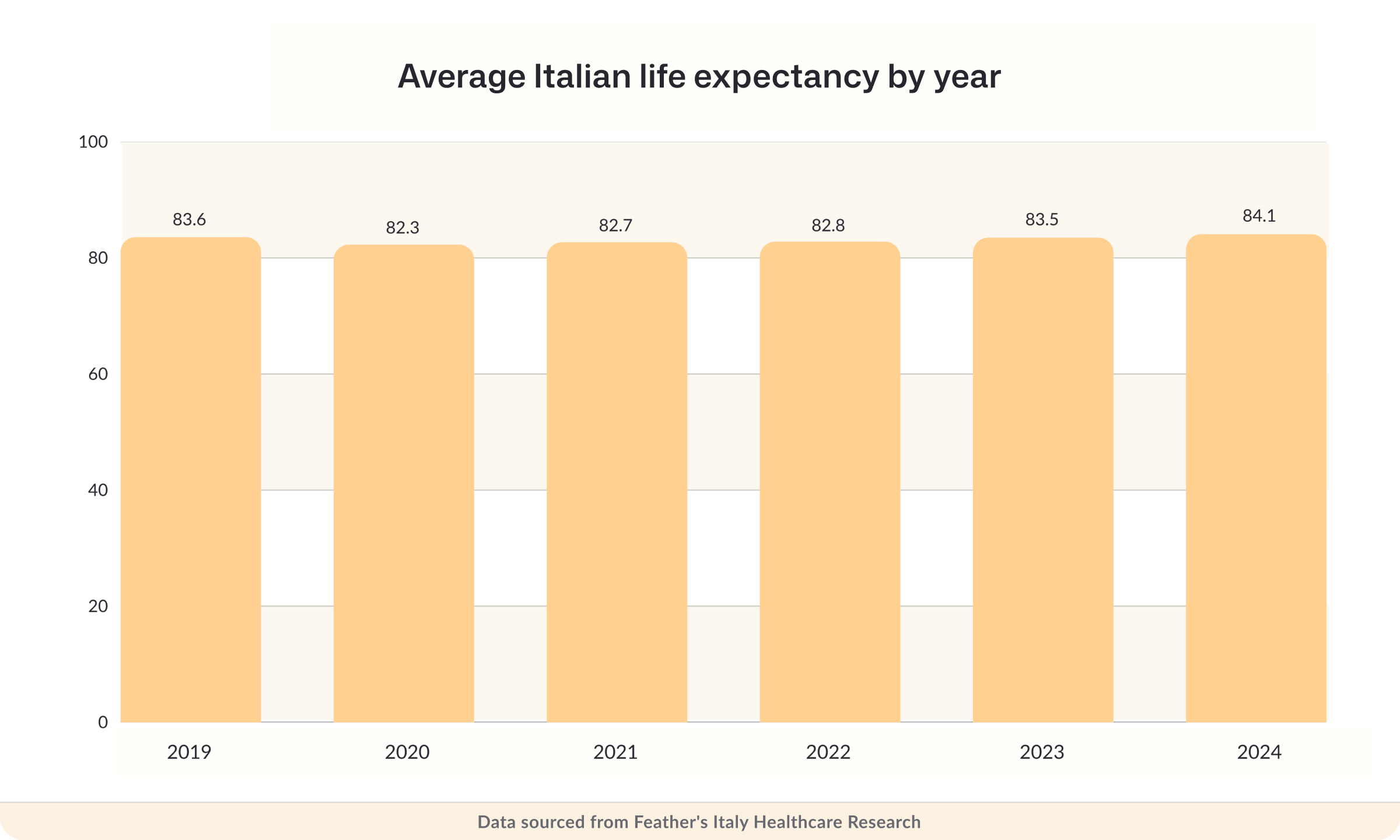
Italy's average is 2.4 years above the EU average of 81.7 years. It's ahead of every major EU economy, including Germany (81.5 years), the Netherlands (81.9 years), Denmark (82.3 years), Portugal (82.7 years) and Ireland (82.9 years). Italy is one of a small group of EU countries where longevity has fully recovered from the pandemic dip.
Living longer isn't the same as living well, though. In 2023, the average Italian could expect 69.1 healthy life years at birth, up from 67.4 healthy life years in 2022.
Men could expect 68.5 healthy life years (up from 67.1 in 2022) and women 69.6 (up from 67.8 in 2022).
Source: European Health Observatory, Eurostat
How much does Italy spend on healthcare?
In 2023, Italy spent 8.4% of its GDP on healthcare, 1.6 percentage points below the EU average of 10%.
Per person, health spending reached €3,086 in 2023, roughly 19% below the EU average of €3,832.
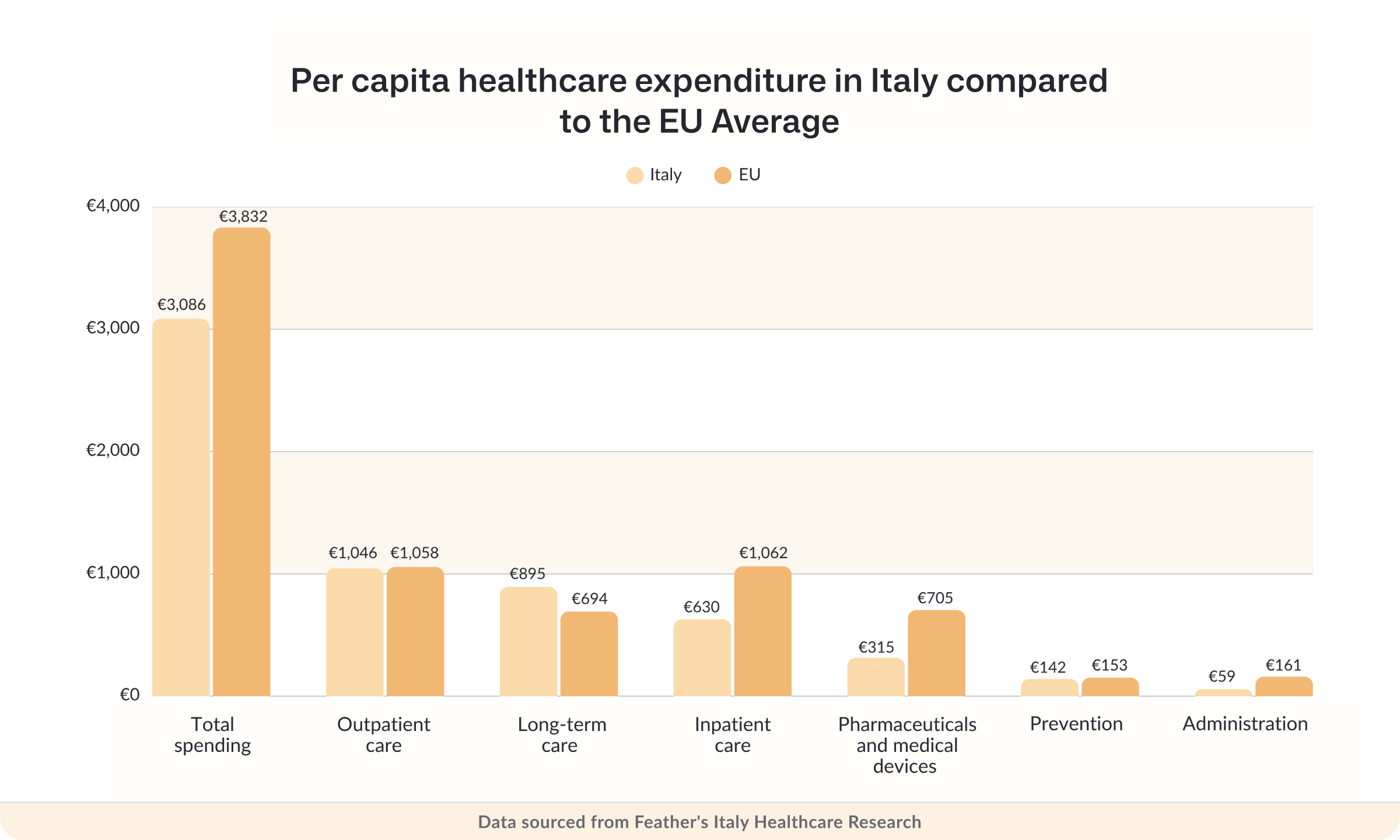
Here's how Italy's spending per person compares to the EU average across different areas of care:
-
Outpatient care:
€1,046 in Italy vs the EU average of €1,058 -
Inpatient care:
€895 in Italy vs the EU average of €1,062 -
Pharmaceuticals:
€630 in Italy vs the EU average of €705 -
Long-term care:
€215 in Italy vs the EU average of €694 -
Prevention:
€142 in Italy vs the EU average of €153 -
Administration:
€59 in Italy vs the EU average of €161
Source: European Health Observatory
Where does Italy spend its healthcare budget?
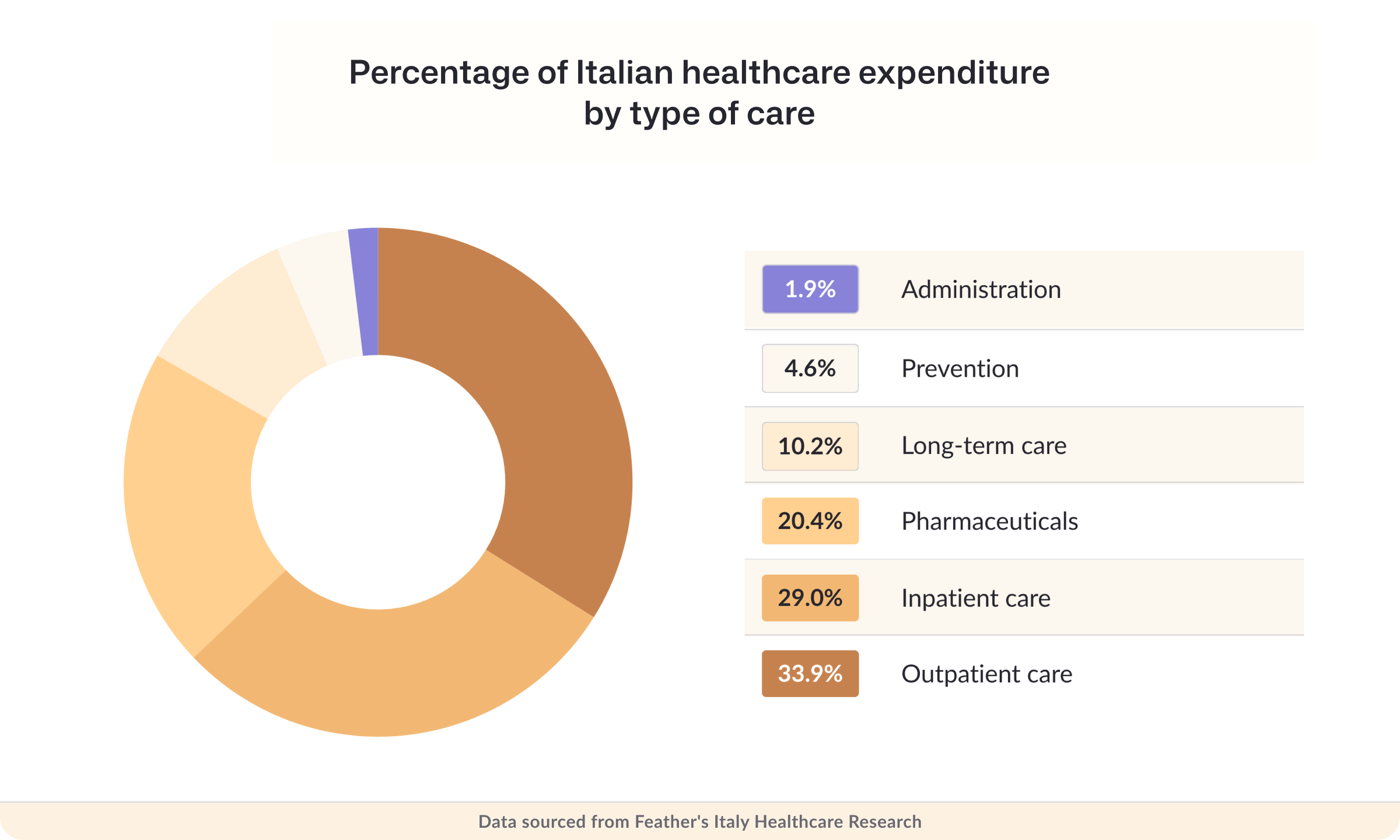
Outpatient care takes the biggest share, at 33.9% of total spending.
Inpatient care accounted for 29.0%, followed by pharmaceuticals and medical devices at 20.4%.
Long-term care got just 10.2% of Italian health spending, well below the EU average of around 18%. Prevention received 4.6% of the budget, and administration 1.9%.
Source: OECD, European Health Observatory
How much does Italy spend on pharmaceuticals?
In 2023, Italy spent €539 per person on retail pharmaceuticals, adjusted for purchasing power. That's around 6% above the EU average.
What's unusual is where the money flows. Approximately 75% of all Italian pharmaceutical spending goes through hospital procurement. That's nearly double the EU average of 41%, and the highest share in Europe.
For comparison, second-placed Belgium sees hospitals account for around 56% of pharmaceutical spending.
Retail makes up just under 25% of Italy's pharmaceutical spending, compared to 59% across the EU.
Generic medicines are also rare. They represent just 29% of total pharmaceutical volume in Italy, roughly half the EU average of 51% and among the lowest shares in the EU.
Source: OECD, European Health Observatory
How are pharmaceuticals reimbursed in Italy?
Italy uses a two-class system. Class A medicines (essential drugs and treatments for chronic conditions) are fully reimbursed by the national health service. Class C medicines have to be paid for entirely out of pocket.
Antibiotic use is high. Italy prescribes roughly 21 defined daily doses (DDDs) of antibiotics per 1,000 people per day, above the OECD average of 16 DDDs per 1000 people.
Source: OECD, European Health Observatory
Where does healthcare funding in Italy come from?
Italy's national health service (the SSN) covers nearly 100% of the population for a core set of services.
In 2023, 73% of total health spending was funded by the government or compulsory insurance schemes, below the EU average of 80%.
The other 27% came from private sources, including out-of-pocket payments and voluntary health insurance (VHI).
Out-of-pocket payments alone make up around 24% of total health spending in Italy, above the EU average of 16%. Most of that goes on outpatient care and medicines, so it's worth keeping in mind when you budget for life in Italy.
Source: European Health Observatory
How healthy are people in Italy?
Italians tend to feel good about their health. In 2025, 73.6% of Italians aged 16 and over rated their health as good or very good, above the EU average of 68%.
Among men, the figure was 76.1% (down from 78.1% in 2024). Among women, it was 71.3% (down from 73.0% in 2024). Having a job makes a big difference: 87.6% of employed Italians report good or very good health, compared to only 60.6% of those not in employment.
Long-standing illness is on the rise. 21.7% of Italians aged 16 or over reported a long-standing illness or health problem in 2025.
That's up from 17% in 2024 and 16% in 2023. Again, employment matters: 32% of non-employed Italians report a long-standing condition, compared to 10.7% of employed people.
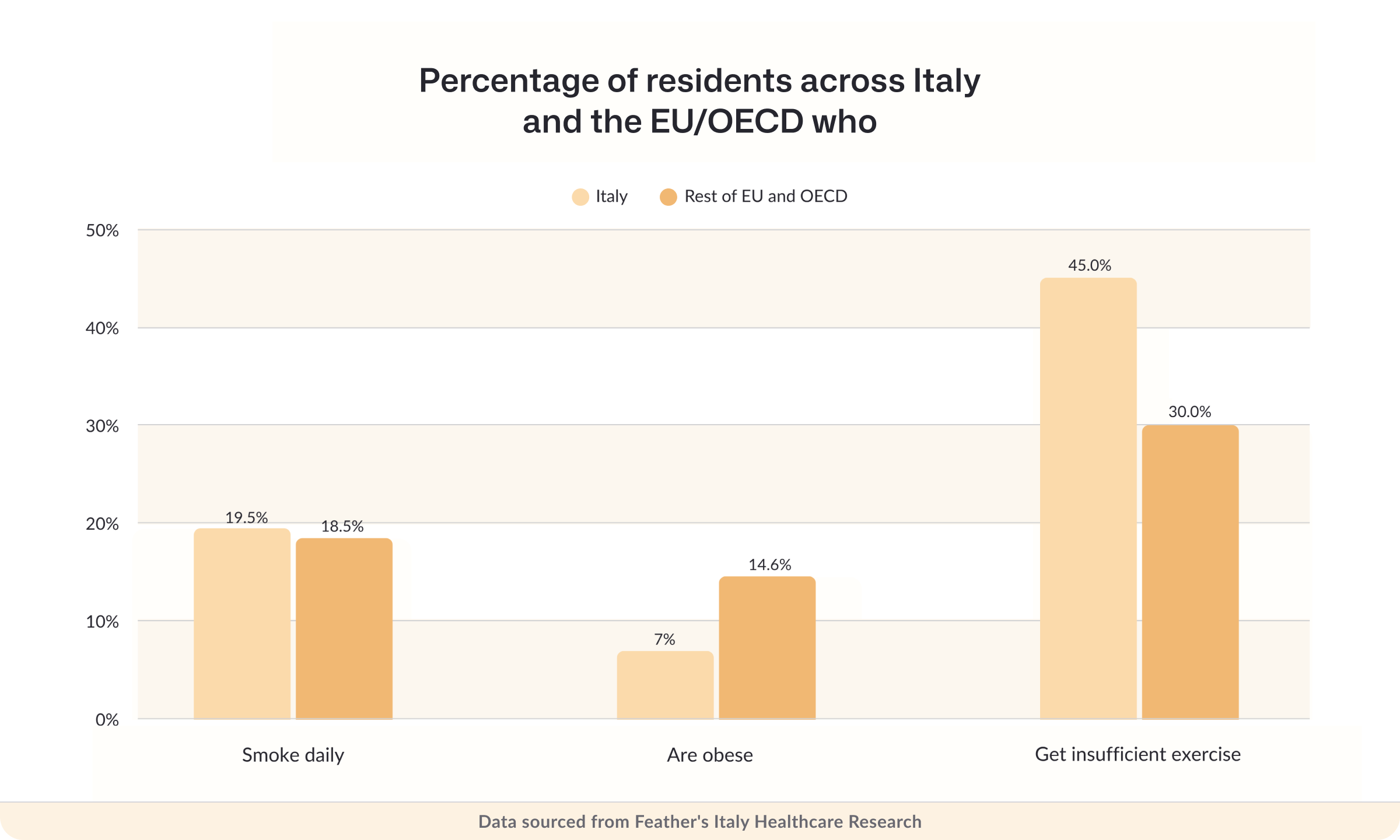
On lifestyle, Italy does well on alcohol and obesity but less well on smoking and exercise.
Around 19.5% of Italian adults smoke daily, slightly above the EU average of 18.5%. Alcohol consumption is roughly 8 liters per person per year, below the EU average of 9.8 liters.
Italy has the lowest adult obesity rate in the EU at approximately 7%, less than half the OECD average of 14.6%.
Exercise is the weak spot. 45% of Italians aged 18 and over don't get enough physical activity, far above the OECD average of 30%.
Source: European Health Observatory, ISS, Eurostat
How many people in Italy have a chronic health condition?
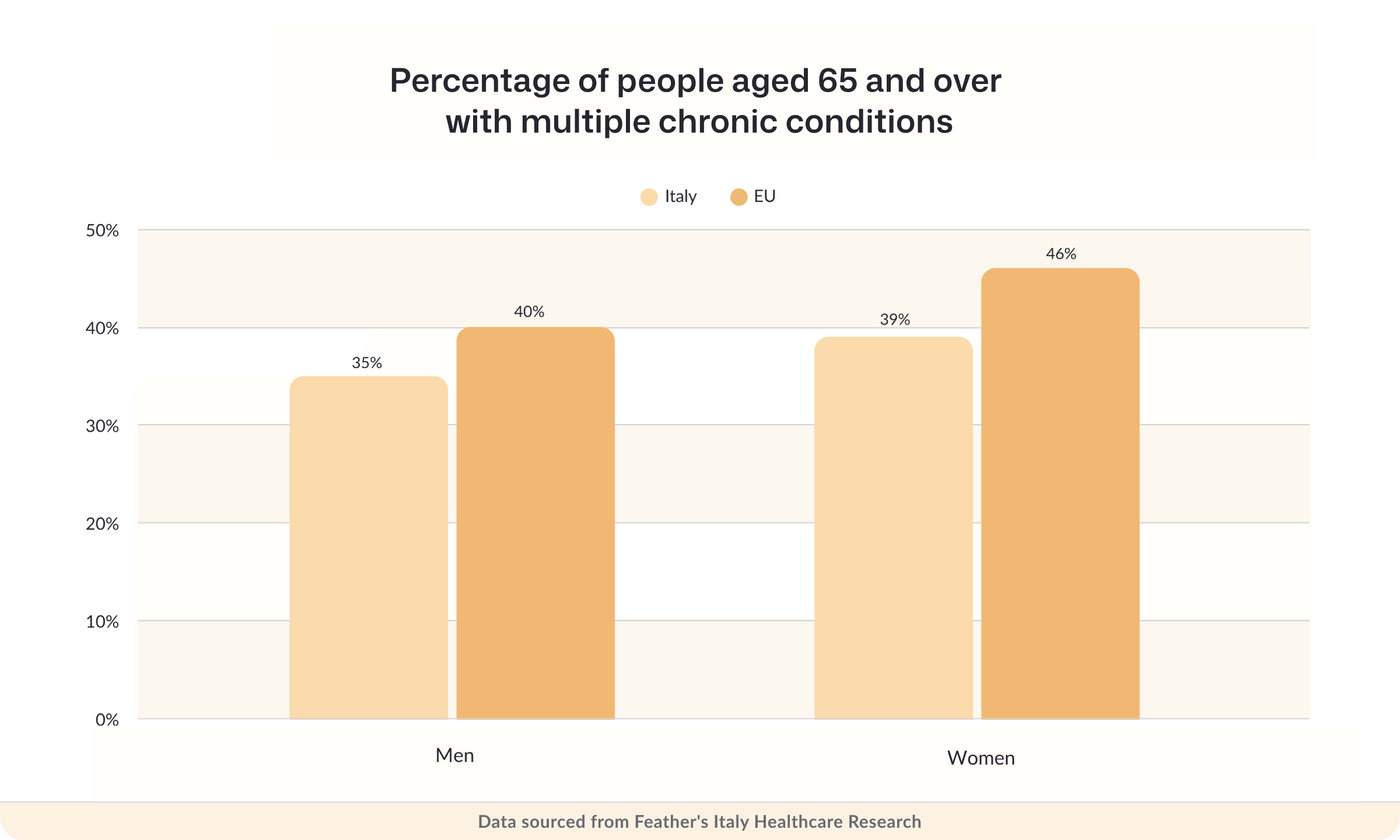
Among Italians aged 65 and over, 35% of men report multiple chronic health conditions. For women in this age group, it's 39%, below the EU average of 46%.
Cardiovascular disease is the most common chronic condition. An estimated 9.1 million people, over 15% of the population, were living with it in 2021.
Undiagnosed hypertension is a concern too. It's estimated to affect 37% of Italian men and 28% of Italian women.
Source: European Health Observatory, Eurostat
Cause of death statistics in Italy
In 2024, Italy recorded 650,587 deaths, well down from the pandemic peak of 740,317 deaths in 2020.
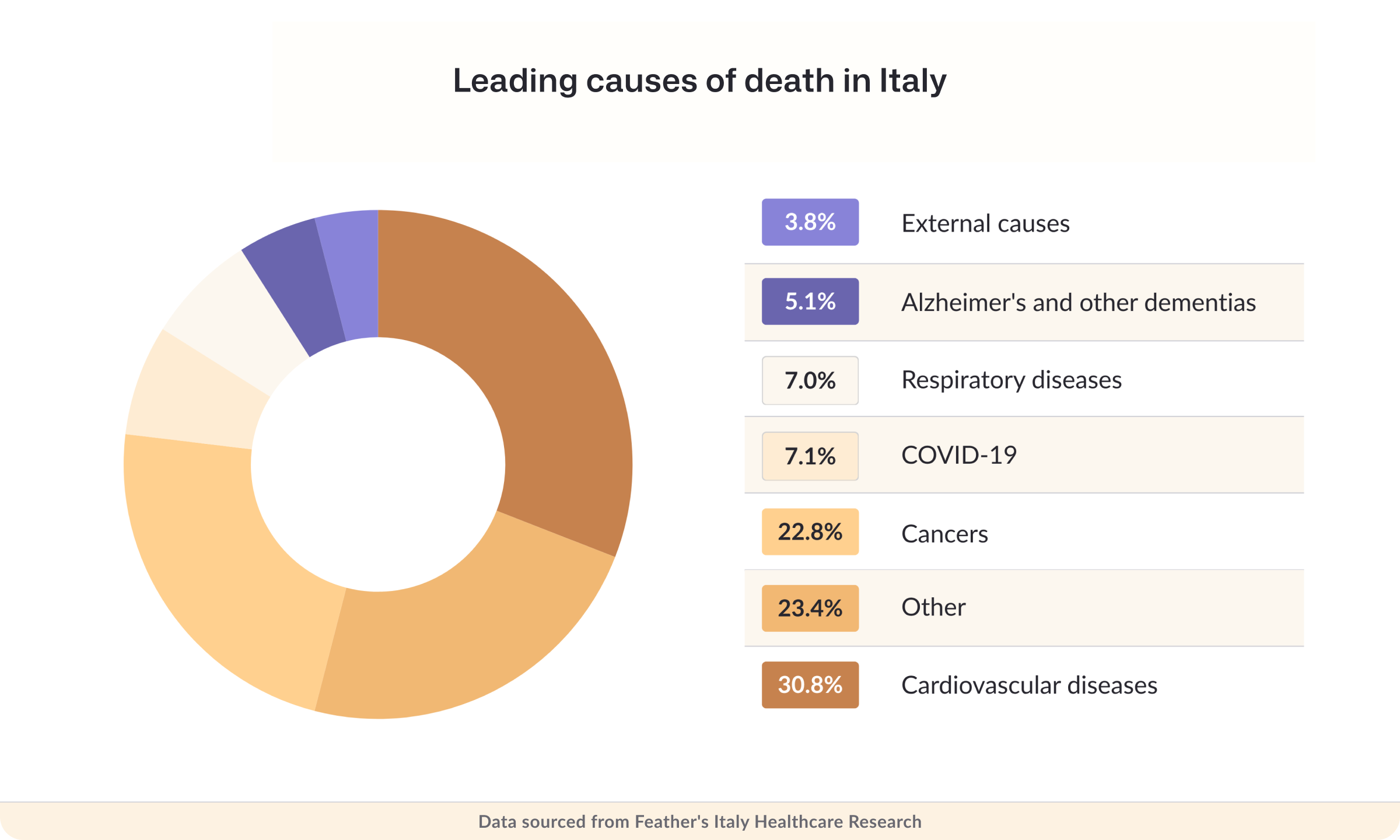
Cardiovascular diseases were the leading cause, at 30.8% of all deaths. Cancers came second at 22.8%, with colorectal cancer (4.4%) and lung cancer (2.6%) the most common.
COVID-19 and respiratory diseases ranked third and fourth, at 7.1% and 7.0% of deaths respectively.
Alzheimer's and other dementias accounted for 5.1% of deaths, and external causes for 3.8%.
Italy's suicide rate stood at around 6 deaths per 100,000 people, almost half the OECD average of 11 per 100,000.
Source: Istat, OECD, European Health Observatory
Vaccination and cancer screening coverage in Italy
Childhood vaccination rates are strong. 95% of children have had three doses of the DTP vaccine, above the OECD average of 93%.
Breast cancer screening sits at the EU average: 55% of women aged 50 to 69 were screened in 2023, matching the OECD average of 55%.
Other screening lags behind. Colorectal cancer screening reached 35% of the eligible population. Cervical cancer screening reached 41% of women aged 25–64, below the EU average of 58%.
Source: OECD
How many doctors and nurses are there in Italy?
Italy has plenty of doctors: approximately 5.5 practicing doctors per 1,000 people, 25% above the EU average of 4.3. It also has around 140 practicing pharmacists per 100,000 people, far more than the OECD average of 86.
Nurses are another matter. Italy has approximately 7.0 nurses per 1,000 people, below the EU average of 8.5 nurses per 1,000 people.
That gives Italy one of the lowest nurse-to-doctor ratios in the EU, at around 1.3 nurses per doctor.
There's also a growing GP problem. Overall doctor numbers have grown by more than 1% a year over the past decade, but GP density has fallen by approximately 13% in the same period. Estimates put the national GP shortfall at between 2,910 and 5,897 doctors.
Source: European Health Observatory, OECD
How many hospitals are there in Italy?
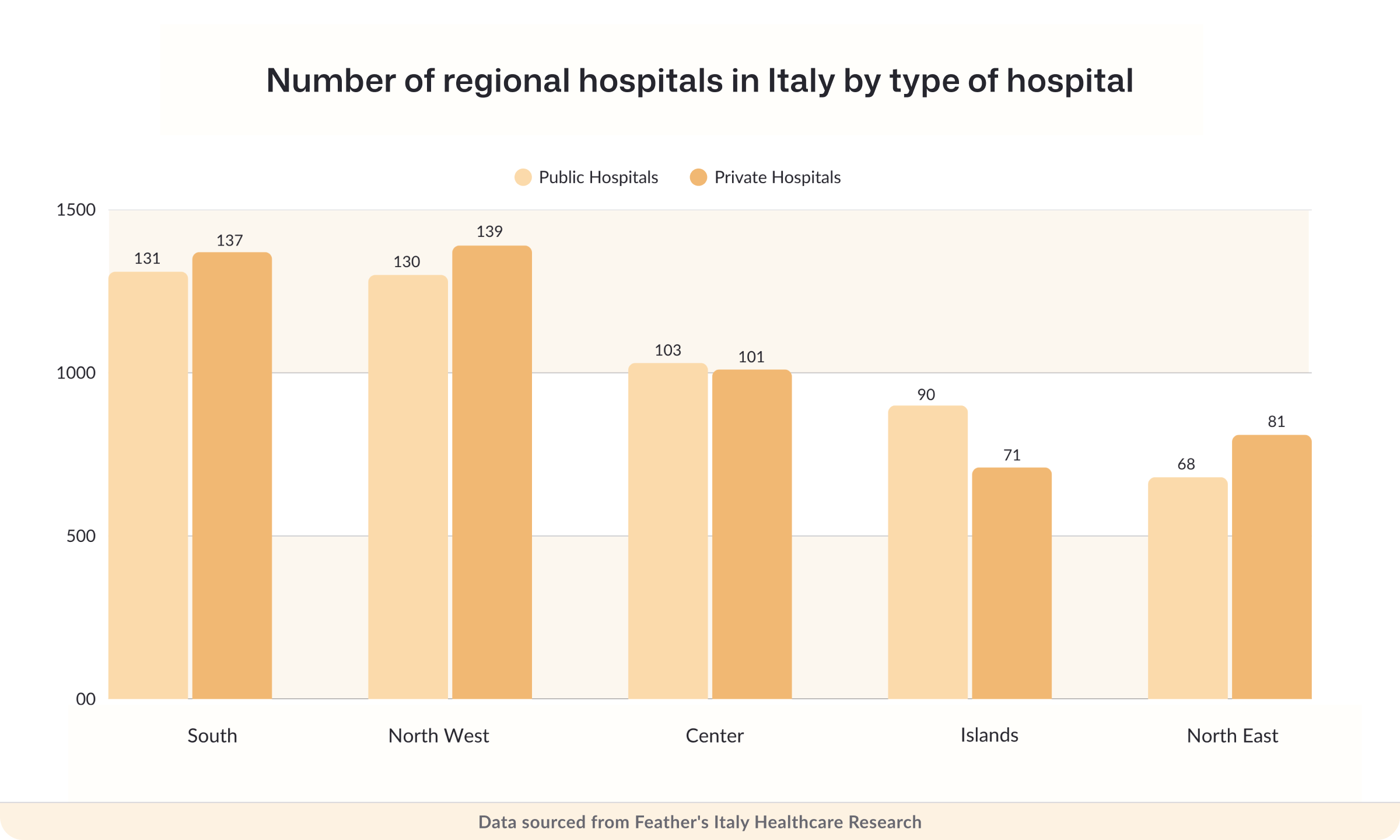
In 2021, Italy had 1,051 hospitals: 522 public hospitals and 529 private hospitals accredited with the national health service.
The North West had the most hospitals, with 130 public and 139 private. The South came next with 131 public and 137 private hospitals.
Central Italy had 103 public and 101 private hospitals. The islands had 90 public and 71 private, and the North East 68 public and 81 private.
Source: Statista
How many hospital beds are there in Italy?
Italy had approximately 3.04 hospital beds per 1,000 people in 2023, down from 3.09 per 1,000 in 2022.
It had approximately 2.61 ICU beds per 1,000 people in 2023, down from 2.66 per 1,000 in 2020.
Source: Trading Economics
What percentage of the population has unmet medical needs?
Coverage may be universal, but access isn't always. Around 4% of Italians reported an unmet need for medical care in 2024, slightly above the EU average of approximately 3.5%.
Among Italians at risk of poverty, unmet medical needs reach 10%, well above the EU average of 6% for this group.
Satisfaction is low too. Only 44% of Italians are satisfied with the quality of available healthcare, far below the OECD average of 64%.
Source: European Health Observatory, OECD


