
Health & healthcare in Singapore: Statistics, trends & facts (2026)
Singapore spends less on healthcare than almost any other high-income country. In 2022, it put just 4.9% of its GDP toward health, close to half the 8.2% average for high-income countries.
And yet Singaporeans enjoy one of the highest healthy life expectancies anywhere: 73.6 years in 2022. If you're living in Singapore, or planning to, it's worth knowing how the system pulls that off, and where you'll be expected to pay your share.
In this article, we'll cover:
- Who lives in Singapore, and how long (and how healthily) they can expect to live
- How much Singapore spends on healthcare, and how public and private insurance fit together
- How healthy Singaporeans are, from smoking and drinking to diabetes and mental health
- What people in Singapore are most likely to die from
- How many doctors, nurses, hospitals and beds the country has
- How much sick leave Singaporean employees take
First, the headline numbers.
Key Singapore healthcare statistics: our top picks
- In 2021, approximately 52.8% of employees in Singapore took sick leave, averaging 5.2 sick days.
- The average Singaporean starts smoking at 17 and becomes a daily smoker at 19.
- In 2023, 270 men for every 100,000 people were hospitalized for a mental health condition.
- Singapore had 33 mental hospital beds per 100,000 people in 2023.
- In 2022, depression and anxiety were estimated to cost the government approximately 2.9% of GDP.
Singapore's population statistics
In June 2025, Singapore's population was estimated at 6,111,175 people, up from 5,789,090 in 2023.
Citizens and permanent residents make up 68.8% (4,204,515 people) of the total. The other 31.2% (1,906,660 people) are neither citizens nor permanent residents. So if you're an expat here, you're in good company.
Source: SingStat, World Health Organization
Life expectancy statistics in Singapore
In 2024, average life expectancy in Singapore was 83.5 years, above the 81.1 years average for high-income countries.
Education makes a striking difference. For Singaporeans who haven't completed secondary education, life expectancy drops to 81 years. For those who have, it rises to 87.12 years.
Women live around four years longer than men: 85.6 years for women compared to 81.2 years for men in 2024.
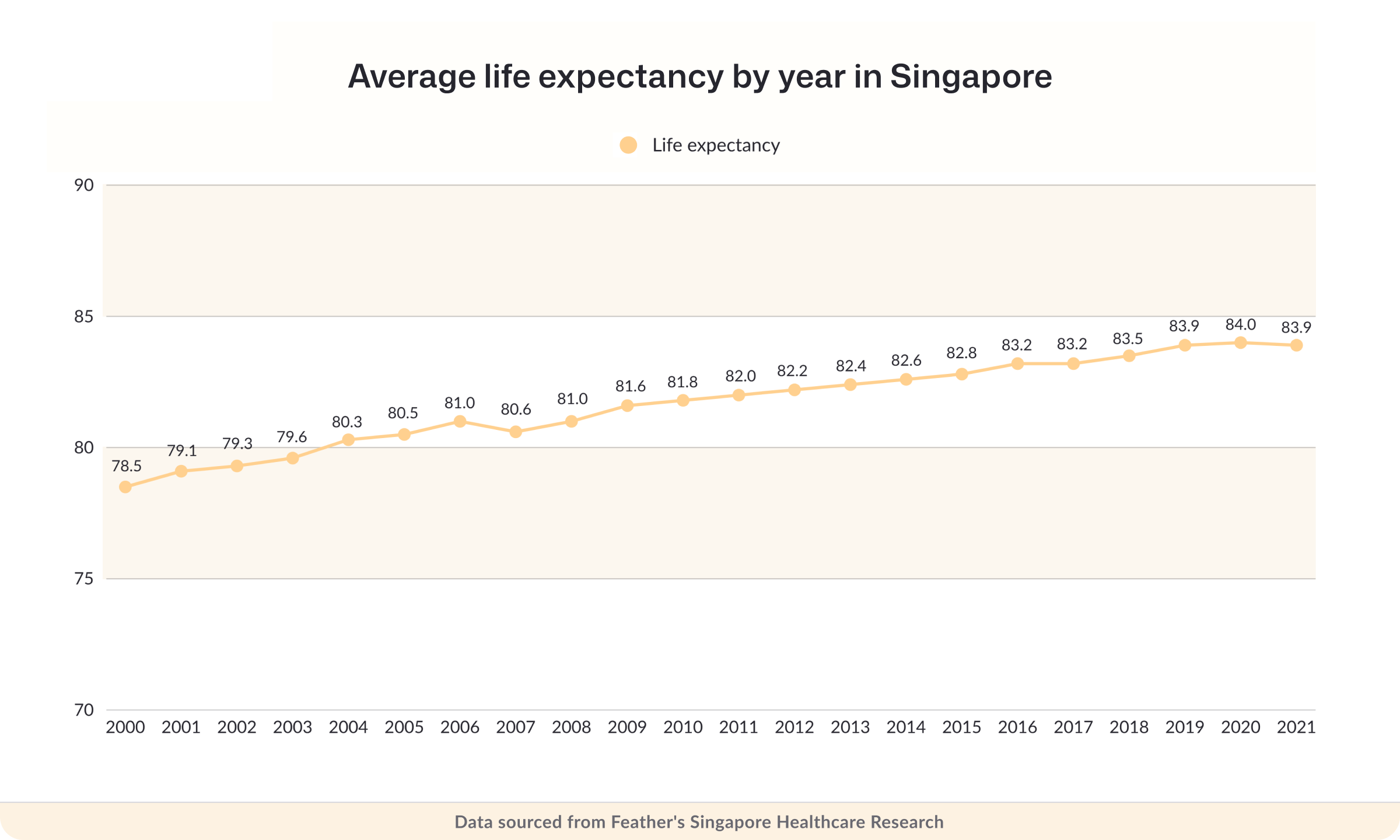
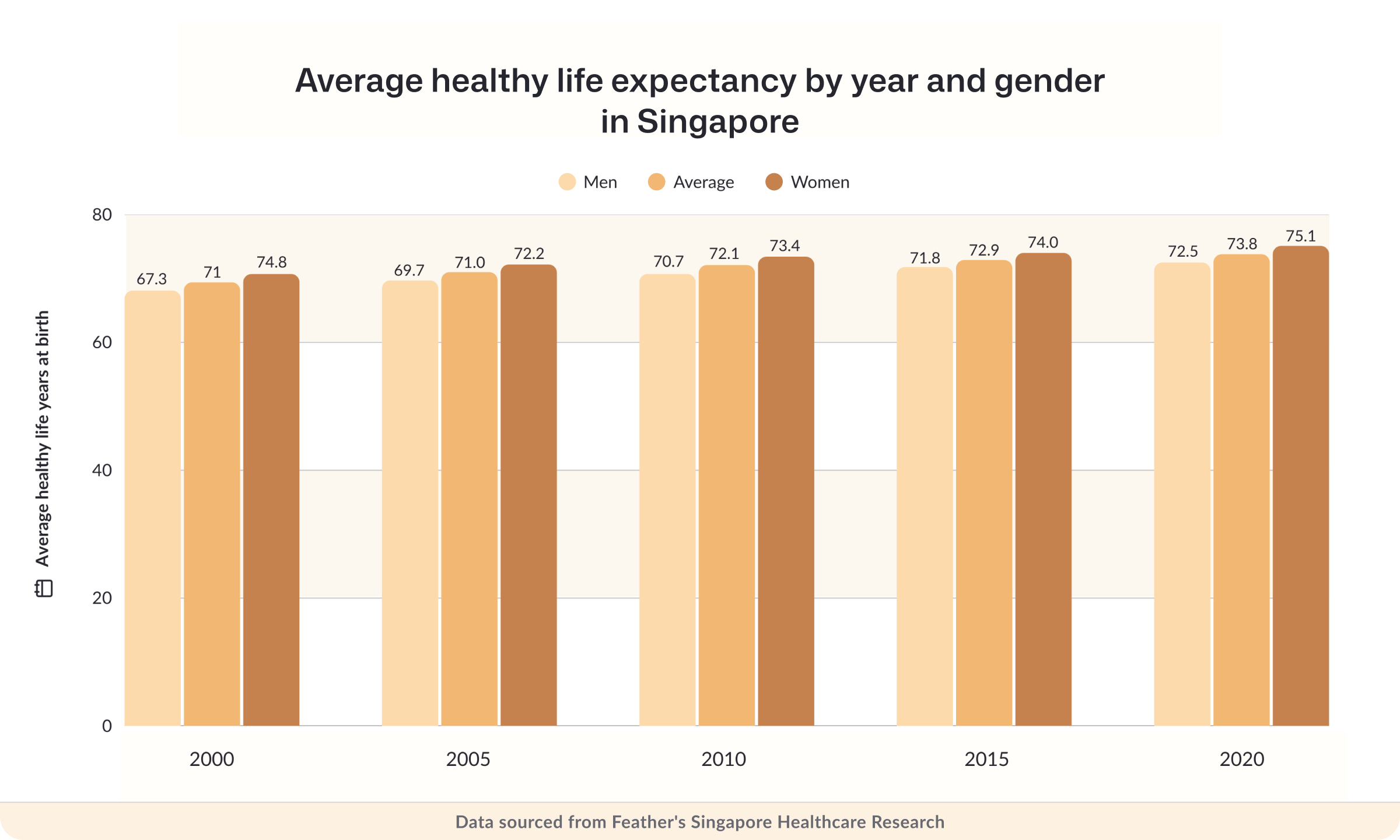
In 2021, the average Singaporean could expect 73.6 healthy life years, up from 69.4 in 2000. That's far above the world average of 61.9 healthy life years and the Western Pacific average of 68.2.
Women can expect 75 healthy life years on average, compared to 72.4 for men.
Source: SingStat, World Health Organization
How much does Singapore spend on healthcare?
In 2022, Singapore spent approximately US$24 billion on health, or 4.9% of its GDP. That's up from 3.3% of GDP in 2012.
It's still close to half the 8.2% average for high-income countries, and the 8.1% average across the Western Pacific.
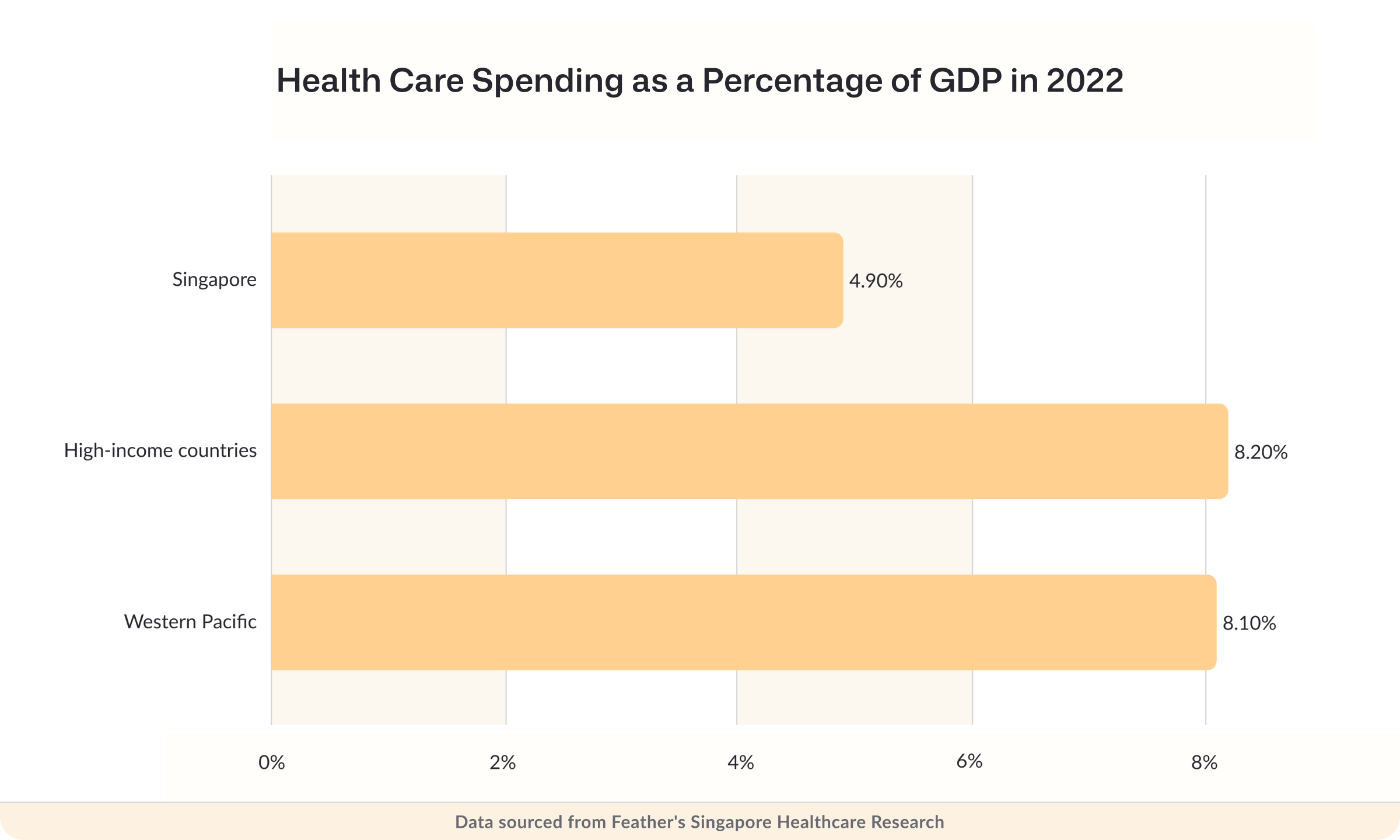
Per person, that works out to US$4,250, well below the US$7,200 average for high-income countries.
Source: SingStat, World Health Organization, Commonwealth Fund
Where does healthcare funding in Singapore come from?
Singapore mixes public and private insurance. 100% of the population is covered for basic healthcare services by the public system.
On top of that, 69% of adults had bought supplementary private health insurance in 2020.
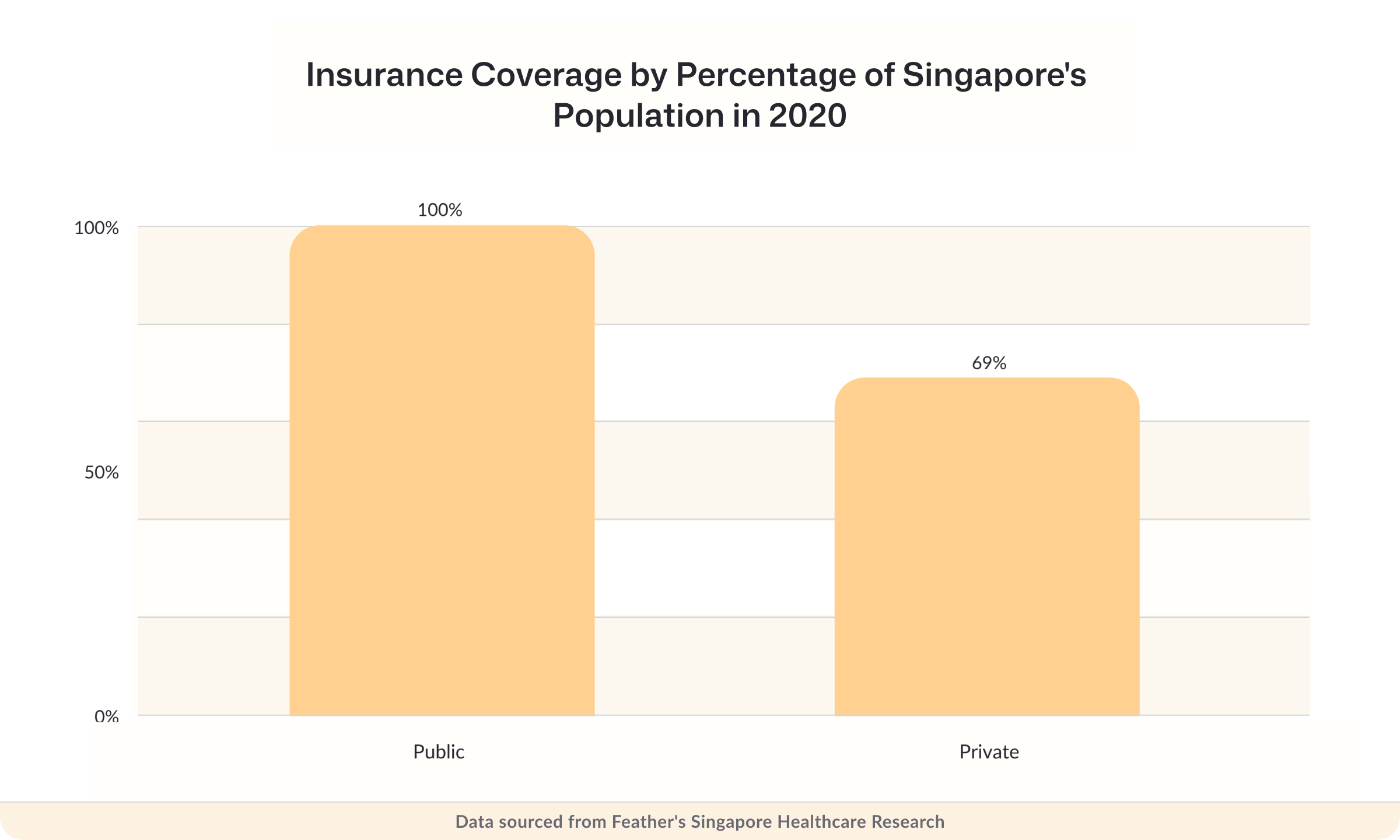
Even with high levels of coverage, people in Singapore pay a lot out of pocket compared to other countries in the region and around the world.
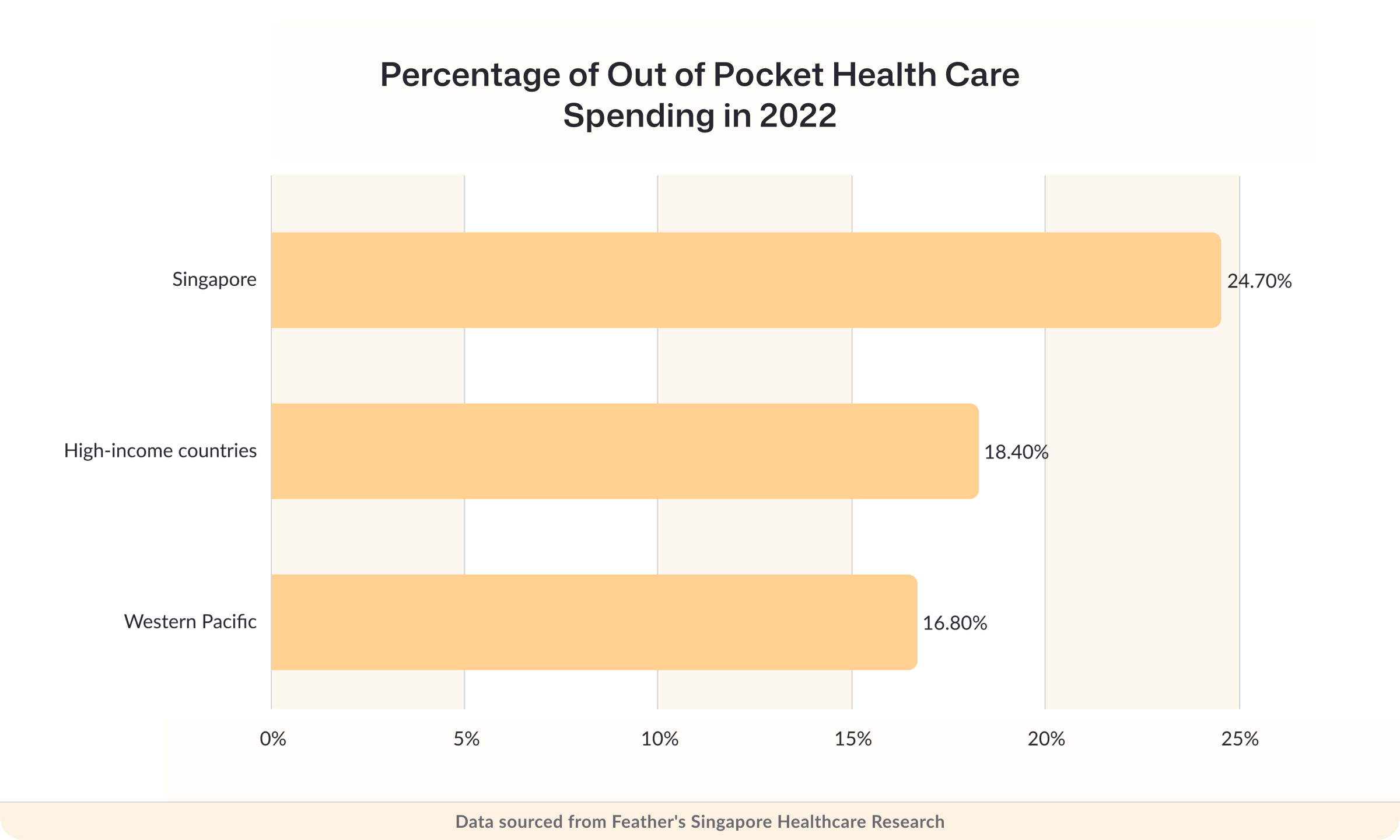
In 2022, 24.7% of healthcare spending in Singapore was out of pocket. That's above the 18.4% average for high-income countries and the 16.8% average for the Western Pacific. Worth factoring in when you plan your budget.
Source: Commonwealth Fund
How healthy are people in Singapore?
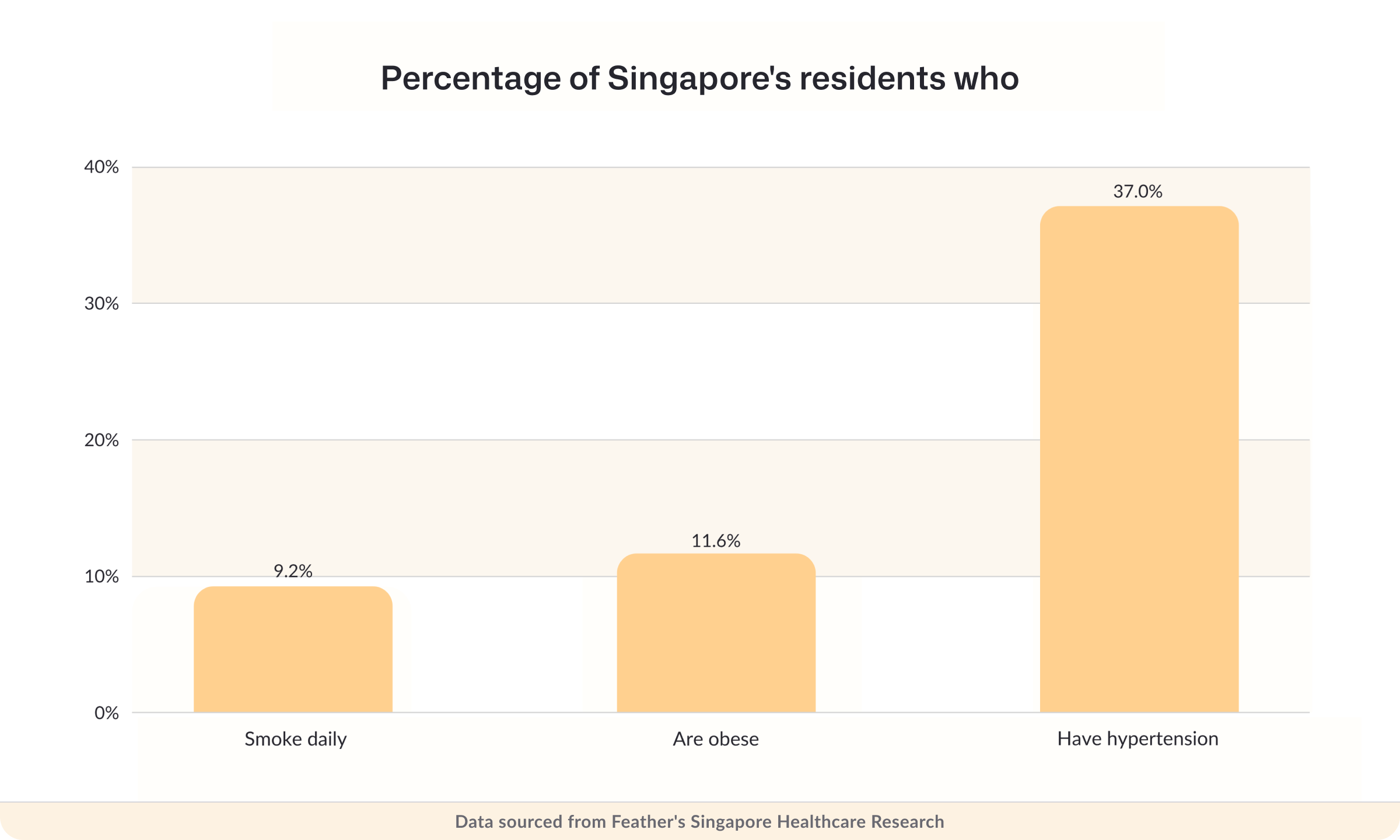
Smoking is on the way down. In 2022, 9.2% of Singaporeans smoked daily, compared to 10.6% in 2019 and 13.3% in 2007. Men are far more likely to smoke (16%) than women (2.7%).
The average Singaporean smoker starts at 17 and becomes a daily smoker at 19. Only 14.4% of daily smokers plan to quit within 12 months.
Drinking is modest. In 2022, 2.5% of Singaporean adults were regular drinkers (more than four times a week). 10.4% were frequent drinkers, 32.1% occasional drinkers and 55% non-drinkers.
Regular drinking is more common among men (4%) than women (1.1%).
Exercise has slipped. In 2022, 74.9% of adults got enough physical activity each week, down from 84.6% in 2019. Men (76.7%) were slightly more active than women (73.2%).
Source: Commonwealth Fund, Ministry of Health Singapore, World Health Organization
How many people in Singapore have a chronic health condition?
Approximately 8.5% of adults in Singapore had diabetes in 2022, a figure that has held steady for a decade. Men (9.7%) are more likely to have it than women (7.3%). And 1 in 5 people with diabetes hadn't been diagnosed before.
Hypertension is a bigger concern. 37% of Singaporean adults have it, up from 19.8% in 2010. Among men the figure climbs to 44%, compared to 30.2% for women.
11.6% of adults are obese, up from 10.5% in 2019 and 10.5% in 2010.
On the plus side, high cholesterol is falling: 31.9% of adults had it in 2022, down from 39.1% in 2019.
Source: Ministry of Health Singapore, World Health Organization
Mental health care statistics in Singapore
In 2022, approximately 17% of Singapore's residents reported poor mental health, up from 12.5% in 2017.
Women are more likely to report poor mental health than men: 18.6% of women compared to 15.2% of men.
Young adults are the most affected. Among residents aged 18 to 29, 25.3% reported poor mental health.
Self-reported figures are one thing. Formal diagnoses are another. In 2022, approximately 11% of Singaporean adults had been diagnosed with a mental illness, lower than the United States (19%), Germany (17%) and France (18%).
Getting help is still a hurdle. Only 56.6% of residents say they'd see a mental health professional if they couldn't cope with stress or other mental health challenges. Among residents aged 60 and over, that drops to just under 48%.
In 2022, depression and anxiety were estimated to cost the government approximately $11.9 billion, roughly 2.9% of GDP.
Source: Commonwealth Fund, Ministry of Health Singapore
How many people are hospitalized due to mental health in Singapore?
Men in Singapore have historically been more likely than women to be admitted to psychiatric care.
In 2013, 220 men for every 100,000 people were admitted to psychiatric care. By 2023, that had risen to 270 men for every 100,000 people.
For women, the figure rose from 140 for every 100,000 people in 2013 to 170 for every 100,000 people in 2023.
Source: Commonwealth Fund, Ministry of Health Singapore
Cause of death statistics in Singapore
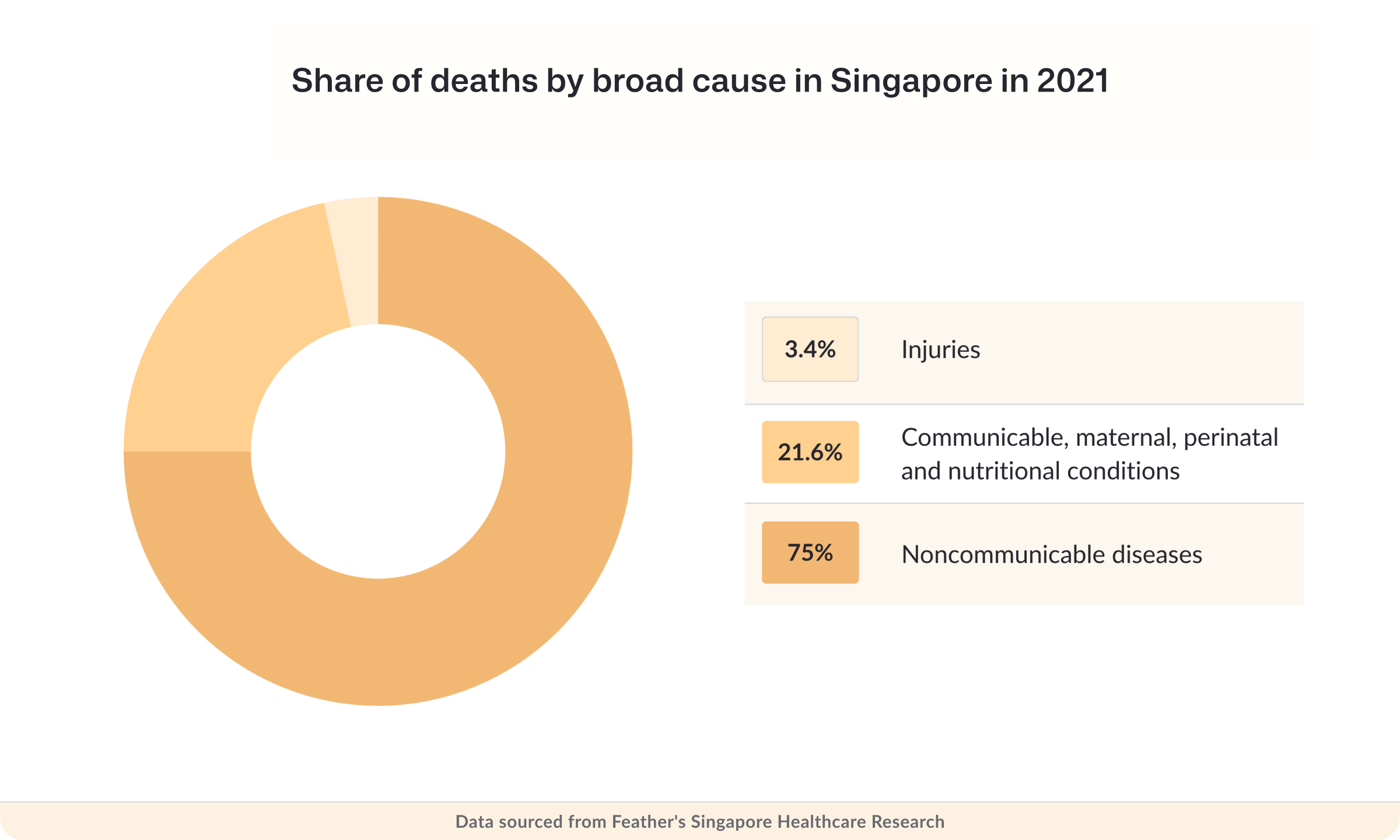
In 2021, 75% of deaths in Singapore were due to noncommunicable diseases. Another 21.6% were attributed to communicable diseases and other conditions, and the remaining 3.4% to injuries.
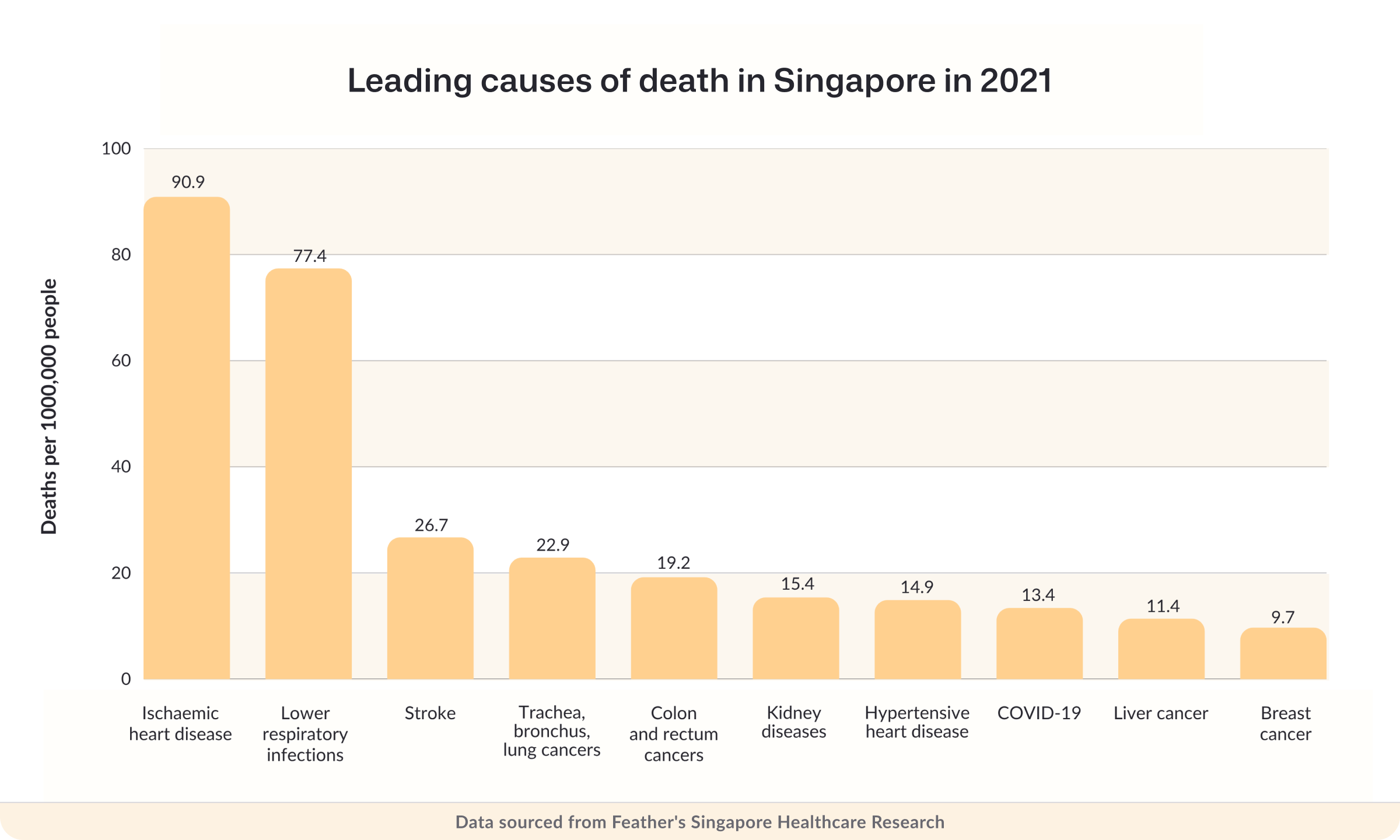
Singapore's three leading causes of death in 2021 were:
- Ischemic heart disease, with 111 deaths per 100,000 people
- Lower respiratory infections, with 78 per 100,000 people
- Trachea, bronchus and other lung cancers, with 29 deaths per 100,000 people
The table below shows causes of death per 100,000 people in Singapore:
In 2021, suicide accounted for 7 deaths per 100,000 people, a rate that has held steady since 2015. That's well below the high-income country average of 11.8 deaths by suicide per 100,000 people.
Maternal mortality stood at 5.9 deaths per 100,000 live births in 2024, far below the Western Pacific average of 35 deaths per 100,000 live births.
Singapore's infant mortality rate was 2 deaths per 100,000 live births in 2023.
Source: World Health Organization, Commonwealth Fund
How many doctors and nurses are there in Singapore?
In 2024, Singapore had 291 doctors for every 100,000 people, above the Western Pacific average of 232 per 100,000. That's approximately 16,753 doctors in total.
63% of doctors work in the public sector and 29% in the private sector. The remaining 8% were not in active practice. 1
In 2024, Singapore had 698 nurses for every 100,000 people.
Many of them trained abroad. In 2022, 13% of Singapore's nurses came from the Philippines, 5.7% from Malaysia, 2.4% from Myanmar and 1.3% from India.
Singapore trains fewer doctors than similar countries. In 2021, it produced 8.4 medical graduates for every 100,000 people, compared to 12.5 in Switzerland, 15.5 in the Netherlands and 22 in Denmark.
Mental health staffing is thin too. In 2020, Singapore had 26.1 mental health professionals for every 100,000 people, against a high-income country average of 62.2 per 100,000.
It had 4 psychiatrists per 100,000 people in 2020, below the high-income average of 9 per 100,000.
Source: Commonwealth Fund
How many hospitals are there in Singapore?
In 2024, Singapore had 11 public hospitals and 9 private hospitals.
For everyday care, there are 26 polyclinics offering subsidized treatment and more than 2,000 private GP clinics. Those GP clinics handle 80% of primary care demand.
Source: Commonwealth Fund
How many hospital beds are there in Singapore?
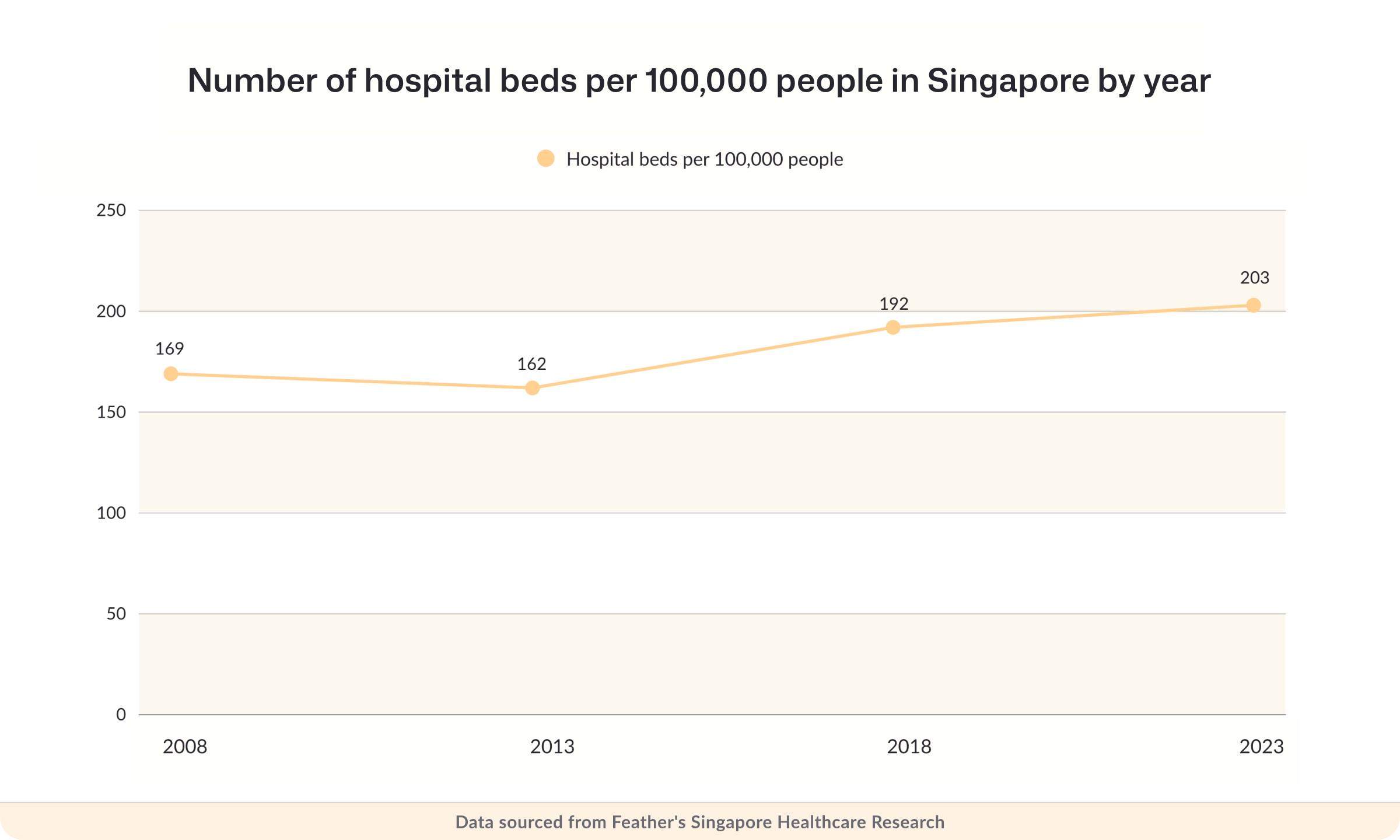
In 2023, Singapore had 203 hospital beds per 100,000 people, up from 169 per 100,000 in 2008. That's still well below the high-income country average of 502 per 100,000.
Mental health beds are a different story. In 2023, Singapore had 33 mental hospital beds per 100,000 people, slightly above the high-income country average of 29 per 100,000.
Source: Commonwealth Fund, World Bank
Vaccination and cancer screening coverage in Singapore
In 2022, 18% of Singapore's total population had a flu vaccine, up from 13.1% in 2017. Among adults, 32.4% were vaccinated.
Cancer screening rates are lower than you might expect. 37.6% of women aged 50 to 69 had a mammogram in the past two years. 43.1% of women aged 25 to 74 had a cervical cancer screening in 2022, down sharply from 57.9% in 2007.
Source: Ministry of Health Singapore
Sick leave statistics in Singapore
In 2021, approximately 52.8% of employees in Singapore took some form of sick leave. On average, they took 5.2 sick days.
Manufacturing had the highest rate, with 60.5% of employees taking sick leave. In facilities processing paper, rubber and plastic products, or printing, it rose to 92.3%.
Accommodation and food services had the lowest rate, with just 42.3% of employees taking at least one sick day.
Source: Ministry of Manpower
Footnotes
-
This is a metric that Singapore tracks but is not commonly reported by other countries. ↩


