Health & healthcare in Portugal: Statistics, trends & facts (2026)
People in Portugal live long lives. In 2024, life expectancy reached 82.7 years, a year above the EU average, even though the country spends 22% less on health per resident. Yet only 52.7% of Portuguese residents say their health is good or very good.
That gap is worth understanding, especially if you're planning to live here. How healthy are people in Portugal really? And do those extra years come with good health, or without it?
In this article, we'll cover:
- Who lives in Portugal, and how many healthy years they can expect
- How much Portugal spends on healthcare, and why so much of it comes out of people's pockets
- Where the budget goes, from outpatient care to medicines
- How healthy the Portuguese are, and what they're most likely to die from
- How many doctors, nurses and hospital beds the country has (and who can't get a family doctor)
- How much sick leave Portuguese workers take
First, the headline numbers.
Key Portuguese healthcare statistics: our top picks
- In 2023, Portugal spent €3,001 per person on healthcare, around 22% less than the EU average of €3,825.
- Outpatient care accounts for 44.9% of total health spending, the highest share in the EU.
- Just 62% of health spending comes from public sources, the third lowest share in the EU.
- Out-of-pocket spending sat at 29% in 2023, nearly double the EU average of 16%.
- 15% of Portugal's residents don't have an assigned family doctor.
- Portugal has the highest alcohol consumption in the EU, at 11.9 liters per adult per year.
Portugal's population statistics
In 2024, Portugal had 10,749,635 residents: 5,609,359 (52.2%) women and 5,140,276 (47.8%) men.
Most people live on the mainland, which had 10,248,000 residents (5,349,499 women and 4,898,978 men).
The autonomous regions of the Azores and Madeira had approximately 241,718 and 259,444 residents respectively.
Portugal is one of the oldest countries in the EU. In 2024, 24% of the population was aged 65 or over, the second highest share in the EU after Italy. That's up from 16% in 2000, and projected to reach approximately 34% by 2050.
On the socioeconomic side, 19.7% of Portuguese residents are at risk of poverty or social exclusion, slightly below the EU average of 20.9%.
Source: Statistics Portugal, European Health Observatory, Eurostat
Life expectancy statistics in Portugal
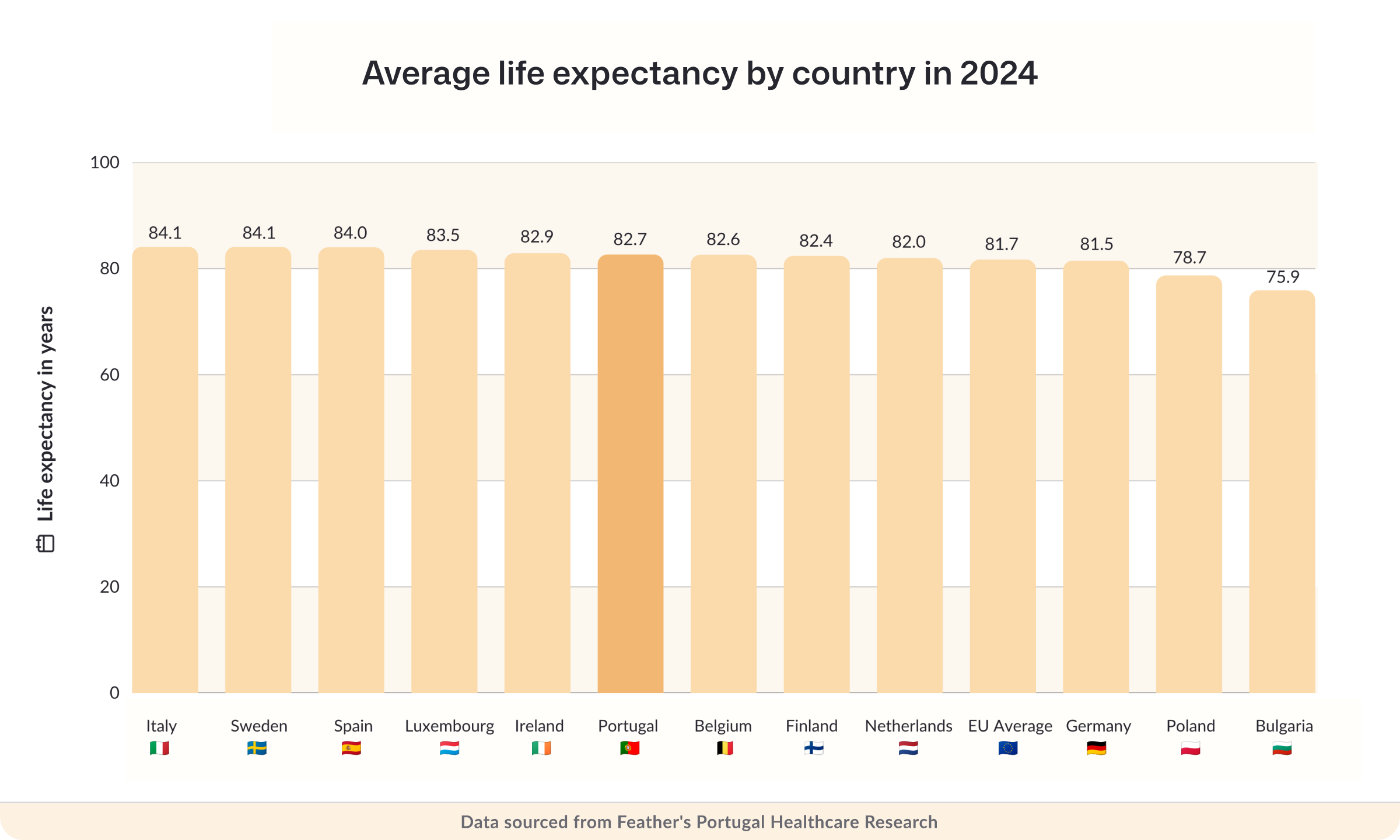
Life expectancy in Portugal reached 82.7 years in 2024, roughly a year above the EU average of 81.7 years. That puts Portugal behind Italy and Sweden (84.1 years), Spain (84.0 years) and Luxembourg (83.5 years).
It's ahead of Belgium (82.6 years), Finland (82.4 years), the Netherlands (82.0 years) and Germany (81.5 years).
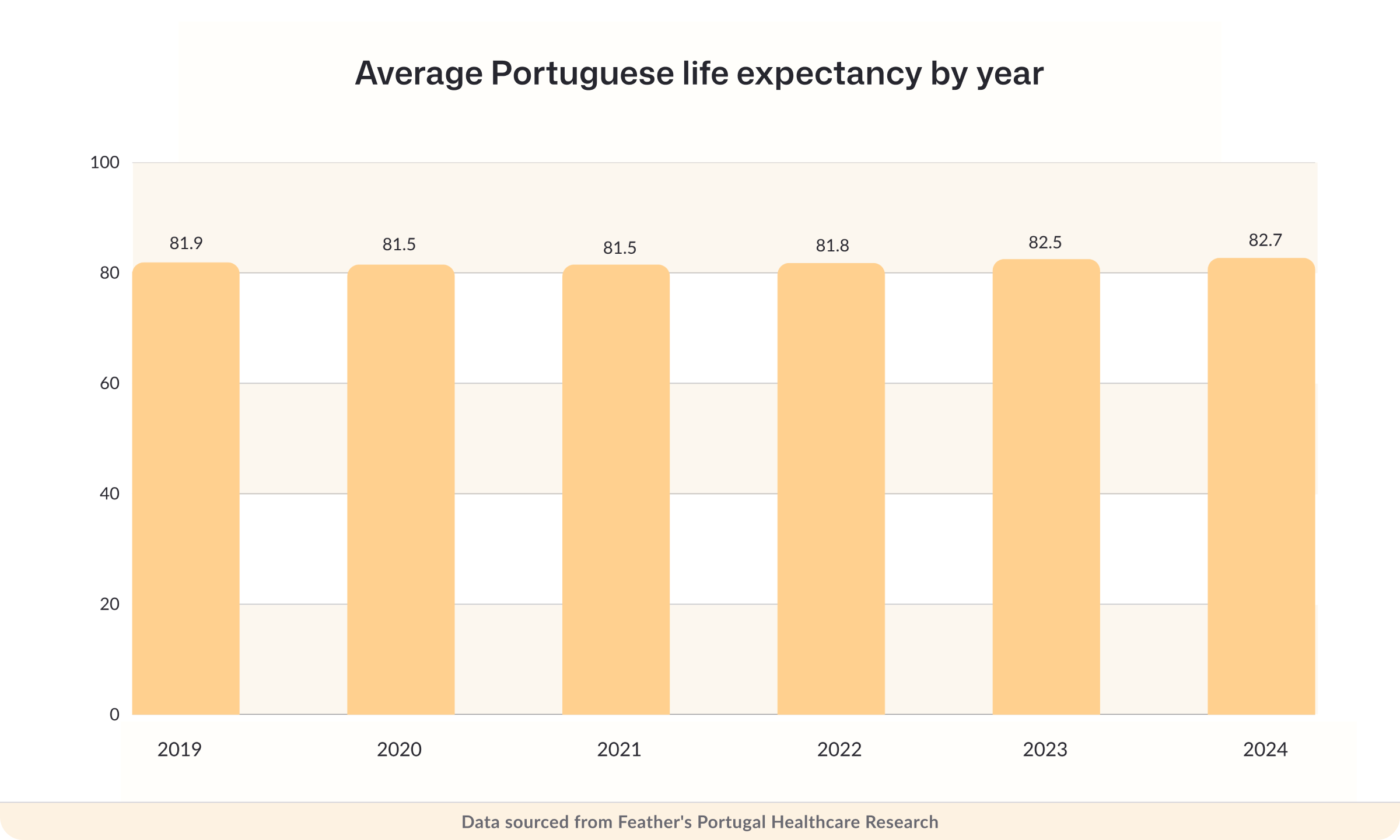
Life expectancy dipped during the COVID-19 pandemic and has climbed steadily since. It stood at 81.9 years in 2019, fell to 81.5 years in 2020 and 2021, and passed its pre-pandemic level in 2023 at 82.5 years.
Living longer doesn't automatically mean more healthy years, though. In 2023, the average Portuguese person could expect 59.6 healthy life years at birth, a slight improvement from 59.1 in 2022 and 58.3 in 2021.
Men fared slightly better, with 61.0 healthy life years in 2023 (up from 60.2 in 2022). Women could expect 58.3 healthy life years (up from 58.0 in 2022).
The gap between total and healthy life expectancy is widest for older women. 43% of women aged 65 and over report limitations in daily activities, 12 percentage points above the EU average of 31%. For men in the same age group, the figure is 21%, on par with the EU average.
Source: European Health Observatory, Eurostat
How much does Portugal spend on healthcare?
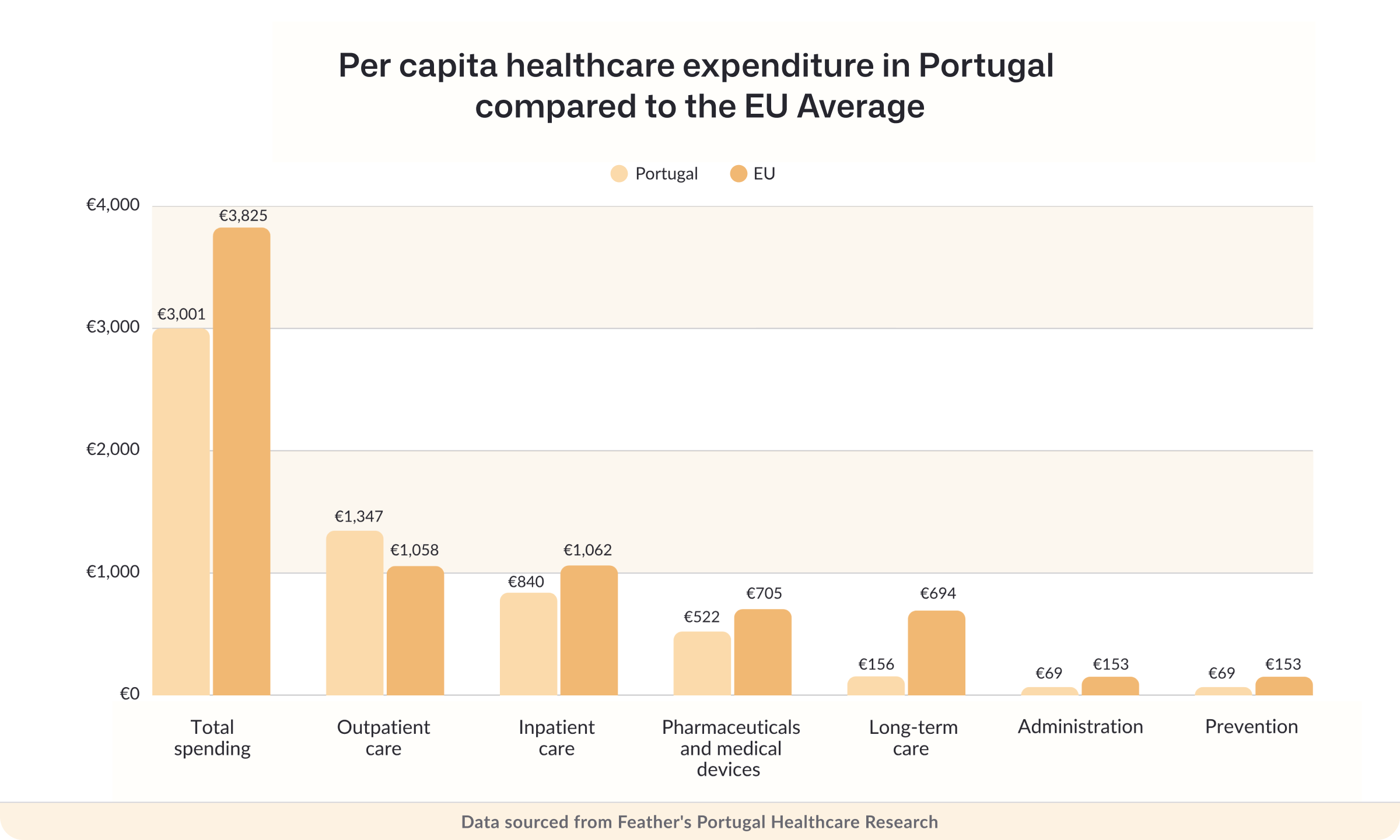
In 2023, Portugal spent an average of €3,001 per person on healthcare. That's around 22% below the EU average of €3,825, adjusted for purchasing power.
As a share of the economy, though, Portugal is average: health spending of 10% of GDP matches the EU.
Here's how Portugal's spending per person compares to the EU average across different areas of care:
-
Outpatient care:
€1,347 in Portugal vs the EU average of €1,058 -
Inpatient care:
€840 in Portugal vs the EU average of €1,062 -
Pharmaceuticals:
€522 in Portugal vs the EU average of €705 -
Long-term care:
€156 in Portugal vs the EU average of €694 -
Administration:
€69 in Portugal vs the EU average of €153 -
Prevention:
€69 in Portugal vs the EU average of €153
Source: European Health Observatory
Where does Portugal spend its healthcare budget?
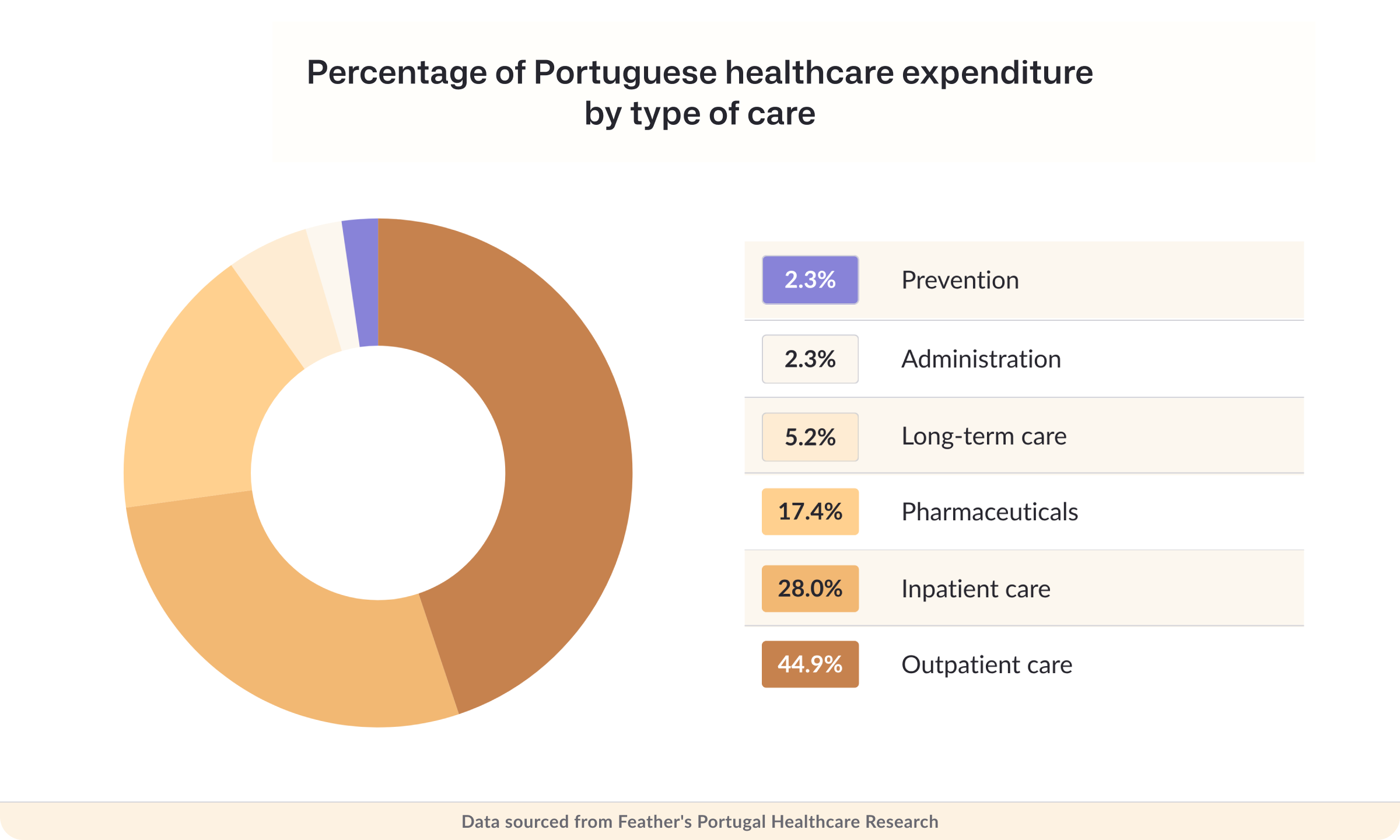
Outpatient care dominates. It takes 44.9% of total spending, the highest share in the EU and well above the EU average of 28%.
Inpatient care accounted for 28.0% of spending, followed by pharmaceuticals and medical devices at 17.4%.
Long-term care got just 5.2% of the budget, far below the EU average of approximately 18%.
Prevention and administration each received 2.3%. For prevention, that's roughly half the EU average of 4.0%.
Source: European Health Observatory
How much does Portugal spend on pharmaceuticals?
In 2023, Portugal spent €396 per person on retail pharmaceuticals (PPP-adjusted), about a fifth below the EU average.
Retail pharmaceuticals took 13% of total health spending, matching the EU average. Hospital medicines account for 45% of total pharmaceutical spending, the third highest share in the EU and above the EU average of 41%.
Hospital pharmaceutical spending more than doubled between 2014 and 2024, to €2.3 billion.
Five drug classes account for more than half of the country's pharmaceutical spending: anti-diabetics, ACE-inhibitor anti-hypertensives, anticoagulants, lipid-lowering medicines and insulins.
Source: European Health Observatory
How are pharmaceuticals funded in Portugal?
Generics make up 52% of total pharmaceutical volume in Portugal, roughly in line with the EU average of around 51–56%.
Portugal uses a four-tier reimbursement system for retail pharmaceuticals. Public coverage reached 55% of retail pharmaceutical costs in 2023, below the EU average of 62%.
The country prescribes 18 defined daily doses (DDDs) of antibiotics per 1,000 people per day, the same as the OECD average.
Source: European Health Observatory
Where does healthcare funding in Portugal come from?
100% of Portugal's residents are covered for a core set of health services through the national health service, the SNS.
But the public purse only goes so far. Just 62% of health spending came from government or compulsory insurance schemes in 2023. That's the third lowest public share in the EU, after Greece and Latvia, and well below the EU average of 80%.
The other 38% came from private sources. Out-of-pocket payments alone accounted for 29% of total health spending, nearly double the EU average of 16% and one of the highest shares in Western Europe. If you're moving to Portugal, plan for that.
Voluntary health insurance (VHI) covered around a third of the population and made up 9% of total spending, the third highest share in the EU after Slovenia and Ireland.
Source: OECD, European Health Observatory
How healthy are people in Portugal?
Less healthy than they'd like, by their own account. In 2025, 52.7% of Portuguese adults aged 16 and over rated their health as good or very good, down slightly from 53.6% in 2024.
At the other end, 12.2% described their health as bad or very bad. That's up from 12.0% in 2024 and above the OECD average of 8%, though well below the peak of 18.3% in 2014.
Around 14.2% of Portuguese adults smoke daily, below the EU average of 18.5%. Alcohol is a different story. Portugal has the highest consumption in the EU at 11.9 liters per adult per year, 21% above the EU average of 9.8 liters. Adult obesity stands at 15.6%, slightly above the EU average of 14.6%.
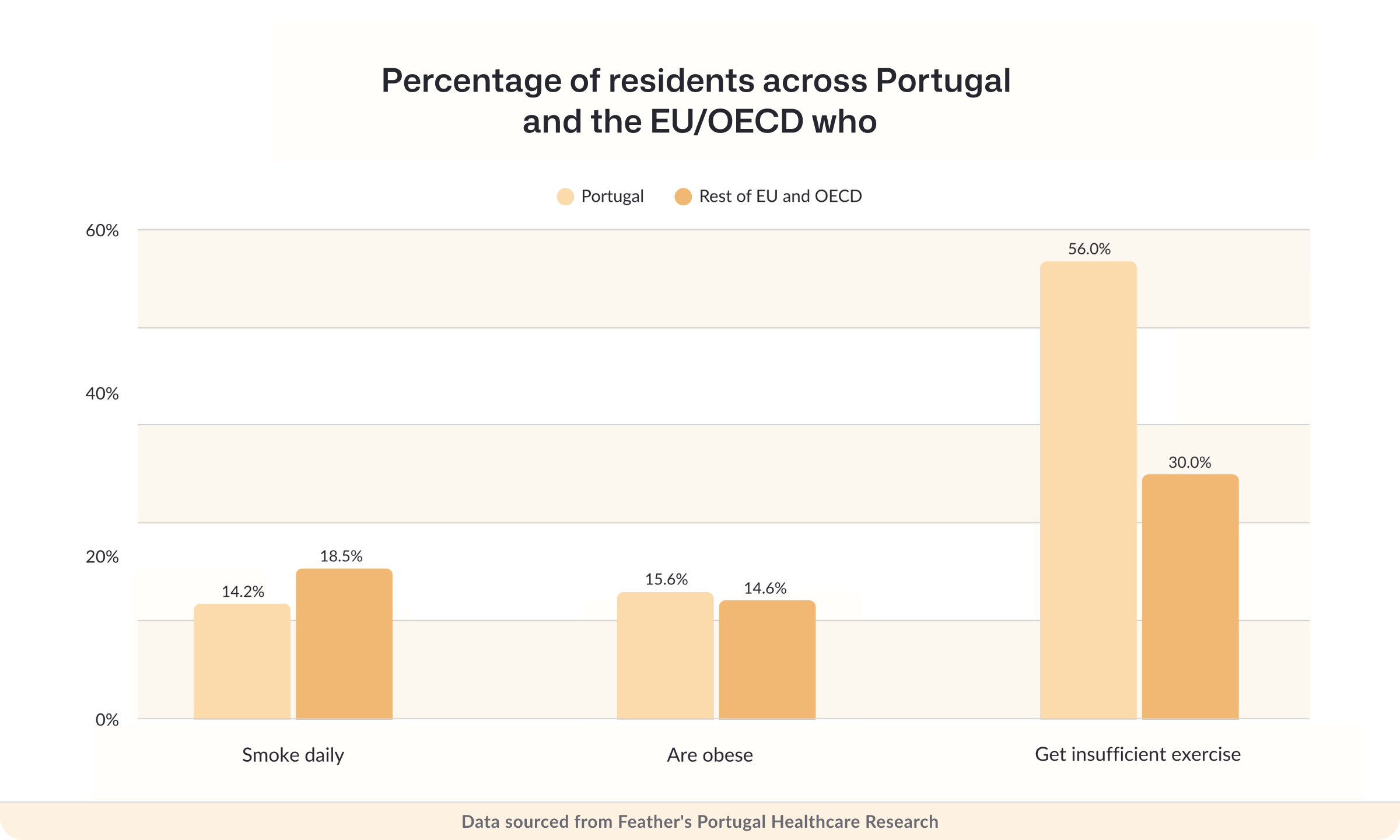
Exercise is a weak spot. An estimated 56% of Portuguese adults don't get enough physical activity, almost double the OECD average of 30% and among the highest rates in the EU.
On mental health, 8.4% of adults reported depressive symptoms in 2019, the last time Eurostat measured it.
Source: European Health Observatory, Eurostat, OECD, Eurostat
How many people in Portugal have a chronic health condition?
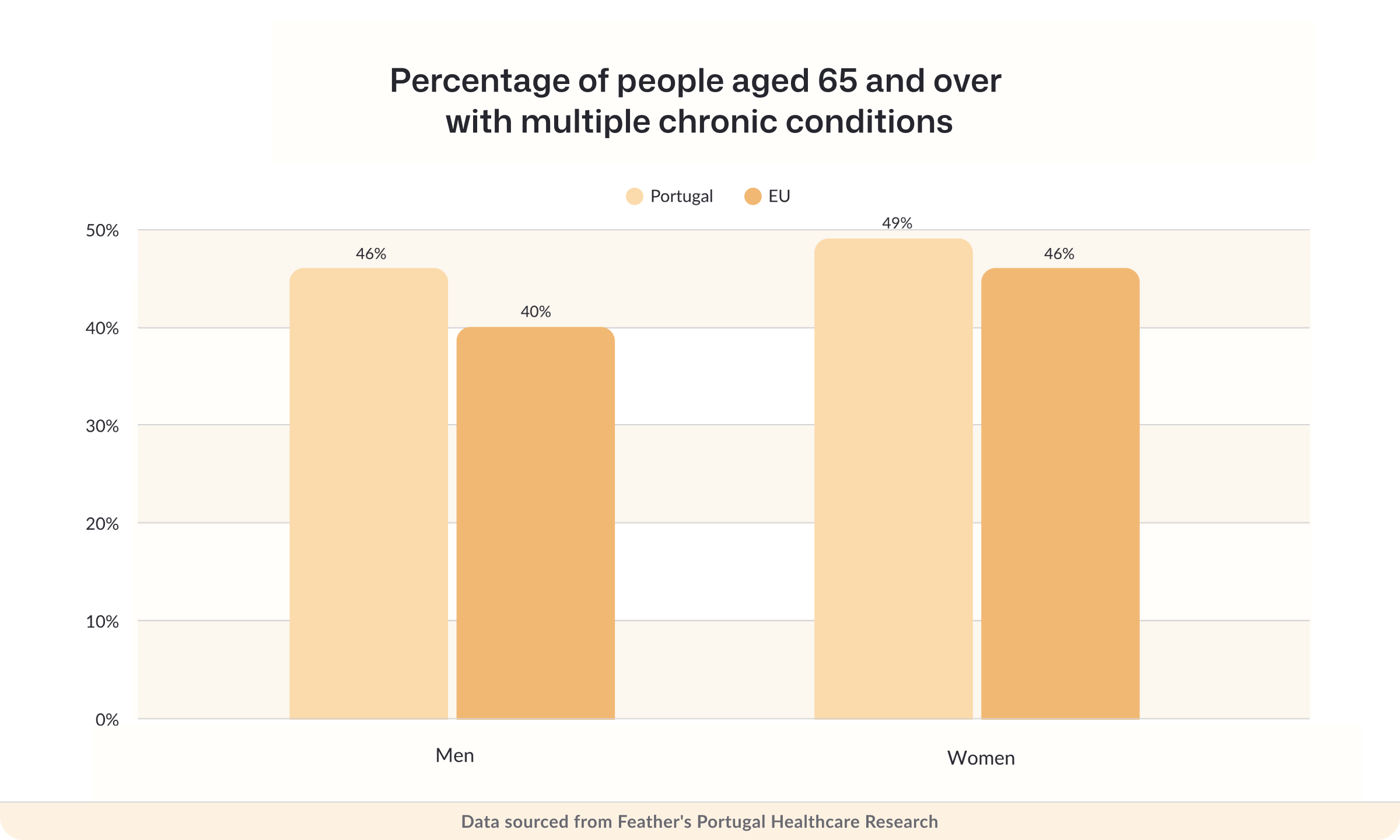
46% of Portuguese men aged 65 and over have multiple chronic conditions, above the EU average of 40%. Among women in the same age group, it's 49%, slightly above the EU average of 46%.
Cardiovascular disease (CVD) is the most common chronic condition. In 2021, approximately 1.1 million people were living with CVD, around 1 in 11 people in the country.
There were an estimated 93,432 new CVD cases in 2021, or 799 new cases per 100,000 residents. That's below the EU average of 1,157 per 100,000.
Nearly 1 in 20 Portuguese people are estimated to be living with a previous cancer diagnosis, slightly below Italy's 6%.
Source: European Health Observatory
Cause of death statistics in Portugal
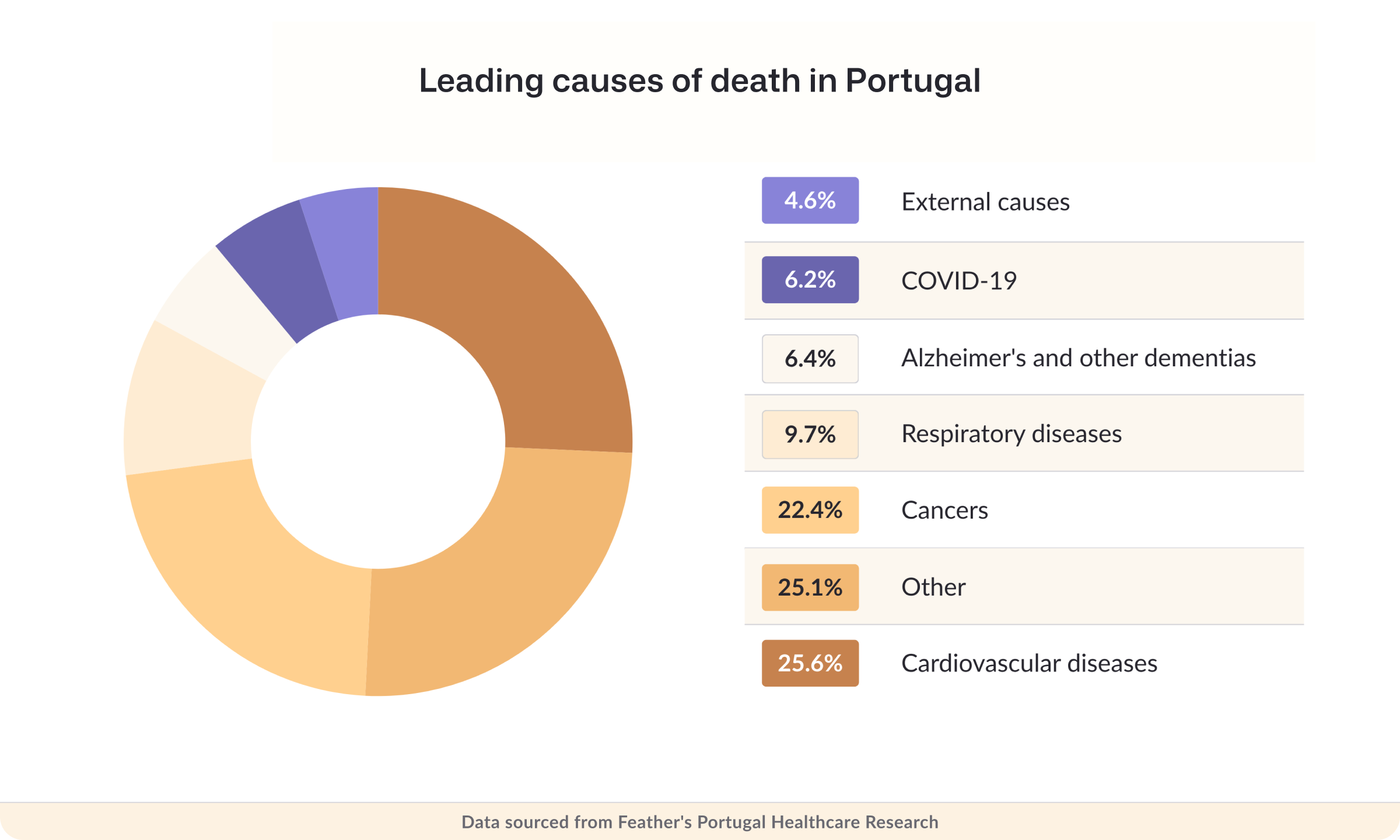
In 2022, Portugal recorded 124,941 deaths. Cardiovascular diseases were the leading cause, at 25.6% of all deaths. Stroke was the most common of these, at 7.7% of all deaths.
Cancers came second at 22.4%. The most common cancer deaths were lung cancer (3.5%), colorectal cancer (2.9%) and stomach cancer (1.6%).
Respiratory diseases ranked third at 9.7% of deaths. Alzheimer's and other dementias accounted for 6.4%, and COVID-19 for 6.2%.
External causes made up 4.6% of deaths, with suicide accounting for 0.8%. That gives Portugal a suicide rate of 8 per 100,000 people, below the OECD average of 11.
Source: European Health Observatory, OECD
How many doctors and nurses are there in Portugal?
Portugal has approximately 5.8 licensed doctors per 1,000 people, above the OECD average of 3.9 practicing doctors per 1,000 people.
Within the national health service, the physician workforce grew 39% between 2010 and 2023, to just over 32,000. The nursing workforce rose 31% to approximately 51,000, giving the country 8 practicing nurses per 1,000 people.
Portugal also has 99 practicing pharmacists per 100,000 residents, above the OECD average of 86.
The workforce is aging, though. One third of doctors and one fifth of nurses are 55 or older, and 12% of doctors are already over 65.
Around 30% of doctors work in family medicine, one of the highest shares in Europe. But retirements have kept GP numbers flat since 2017.
Long-term care is thinly staffed. Portugal has just 0.8 long-term care workers per 100 people aged 65 and over. That's far below the OECD average of 5, and the second lowest in the group.
Source: European Health Observatory, Eurostat, OECD
What percentage of people in Portugal have a family doctor?
Not everyone. By early 2025, 1.6 million people (15% of the population) still had no assigned GP. The gap is widest in the Lisbon-Tagus Valley region, where 31% of residents have no family doctor, compared to just 3% in the North.
Income plays a part too. 85% of people in the highest income quintile have an assigned GP, compared to only 70% of those in the lowest.
Source: European Health Observatory
How many hospital beds are there in Portugal?
In 2023, Portugal had approximately 35,754 hospital beds, down from 35,924 in 2022. That's approximately 338 beds per 100,000 inhabitants, or 3.4 hospital beds per 1,000 people.
It puts Portugal well below the EU and OECD averages of 5.1 and 4.0 beds per 1000 people respectively.
The country has 32 CT, MRI and PET scanners per million people, below the OECD average of 51 per million.
Source: European Health Observatory, OECD, Eurostat
How long is the average hospital stay in Portugal?
With fewer beds to go around, hospitals run close to full. Bed occupancy reached 83% in 2023.
The average hospital stay is 8.6 days, around 20% longer than the EU average of 7.3 days.
Source: European Health Observatory, OECD
What percentage of the population has unmet medical needs?
Universal coverage doesn't mean universal access. Around 4% of Portuguese adults reported an unmet need for medical care in 2024, slightly above the EU average of 3.5%. Among those at risk of poverty, it rises to 7%, compared to the EU average of 6% for this group. Unmet needs for a GP visit reached 6% in 2024, double the EU average.
Satisfaction is below par too. Only 58% of Portuguese are satisfied with the quality of available care, compared to 64% across the OECD.
Source: European Health Observatory, OECD
Vaccination and cancer screening coverage in Portugal
Portugal has some of the highest vaccination rates in Europe. 99% of eligible children have had three doses of the DTP vaccine, well above the OECD average of 93%.
For breast cancer, 56% of women aged 50 to 69 have been screened, on par with the OECD average of 55–56%.
Source: OECD
Sick leave statistics in Portugal
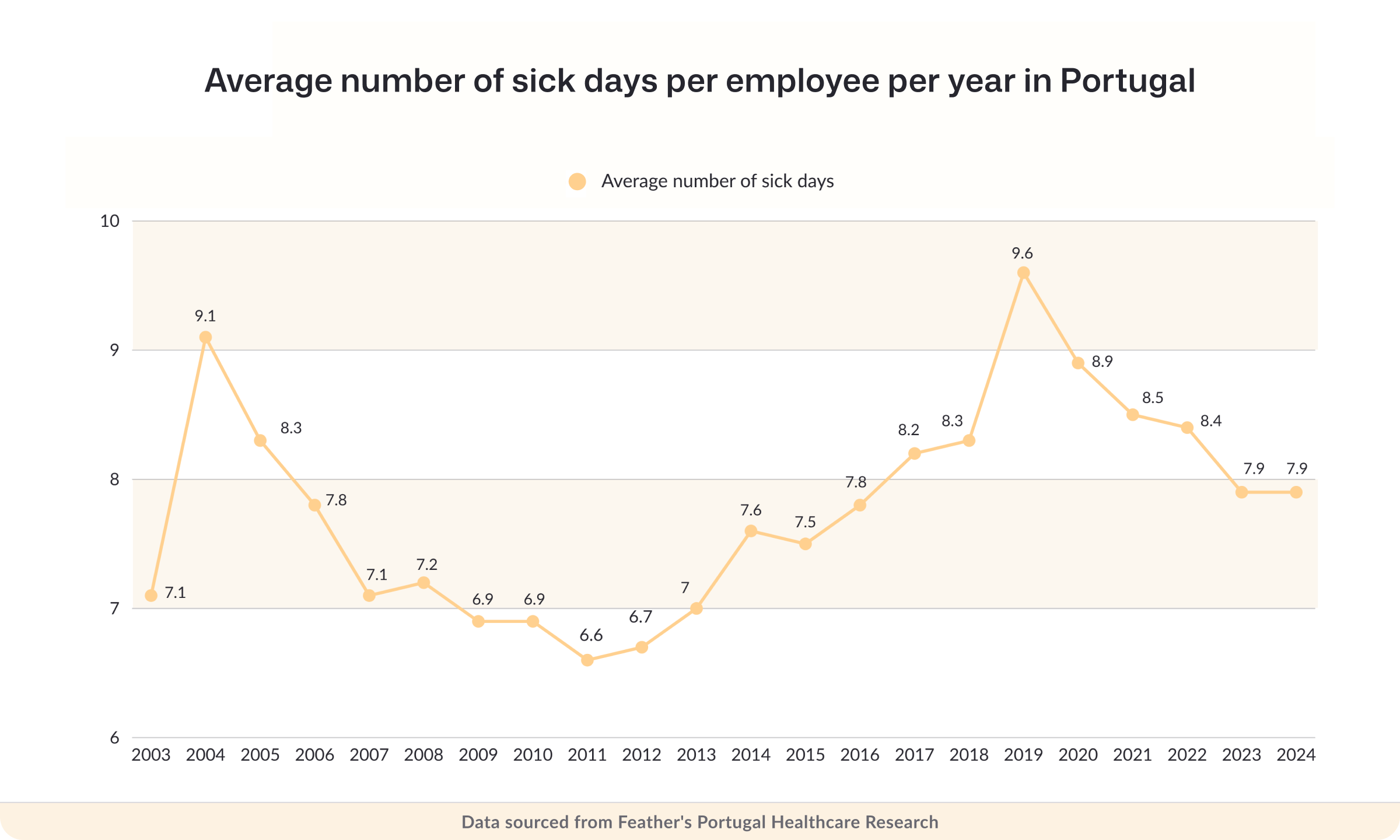
In 2024, the average Portuguese employee took approximately 7.9 sick days. That's down from 8.4 days in 2023 and well below the pandemic peak of 9.6 days in 2020. Before the pandemic, the previous high was 9.1 days per employee in 2005.
Sick leave varies a lot across the workforce, though. In 2024, the average number of sick days per employee ranged from a low of 6.5 to a high of 18.9 days per year.