
Health & healthcare in Mexico: Statistics, trends & facts (2026)
In 2020, Mexico launched the Institute of Health for Welfare, promising free, universal access to public healthcare. Yet only 77.6% of the population is covered by some form of public health coverage.
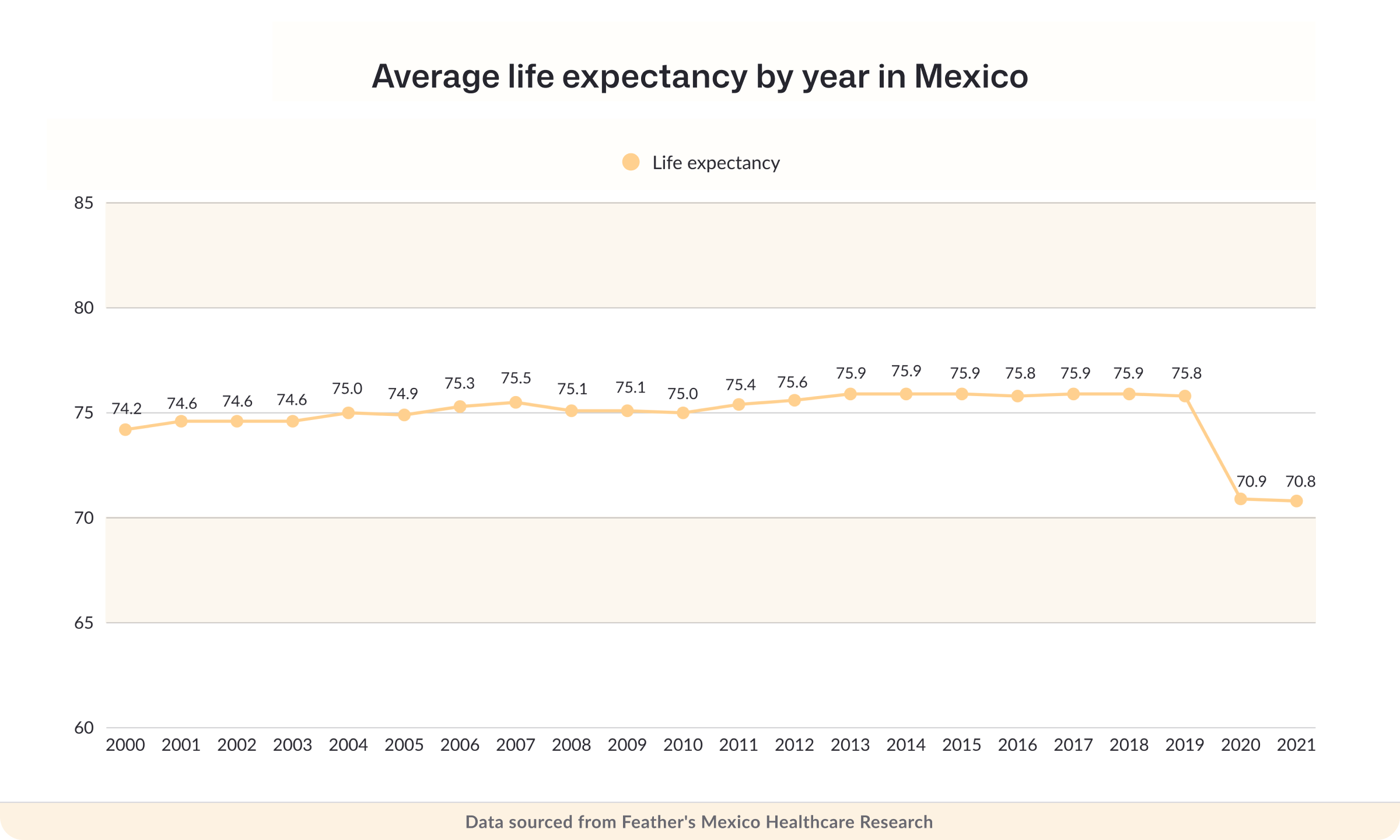
At the same time, life expectancy in Mexico fell by 3.39 years between 2000 and 2021, and healthy life expectancy dropped by 2.67 years. That's an unusual trend, and one worth understanding if you're living in Mexico or planning to.
In this article, we'll cover:
- Who lives in Mexico, and why life expectancy has gone backward
- How much Mexico spends on healthcare, and where the money comes from
- Who has health insurance, and how much people pay out of pocket
- How healthy Mexicans are, from smoking to obesity
- What people in Mexico are most likely to die from
- How many doctors, nurses and hospital beds the country has
First, the headline numbers.
Key Mexican healthcare statistics: our top picks
- Mexico's average life expectancy fell by 3.39 years, from 74.2 years in 2000 to 70.8 years in 2021.
- Generic drugs accounted for 65% of Mexico's pharmaceutical spending in 2023.
- In 2023, 77.6% of Mexico's population was covered by public health insurance.
- Just 14.5% of Mexicans have supplementary private insurance.
- Interpersonal violence is the fifth leading cause of death, at approximately 28.4 deaths per 100,000 people.
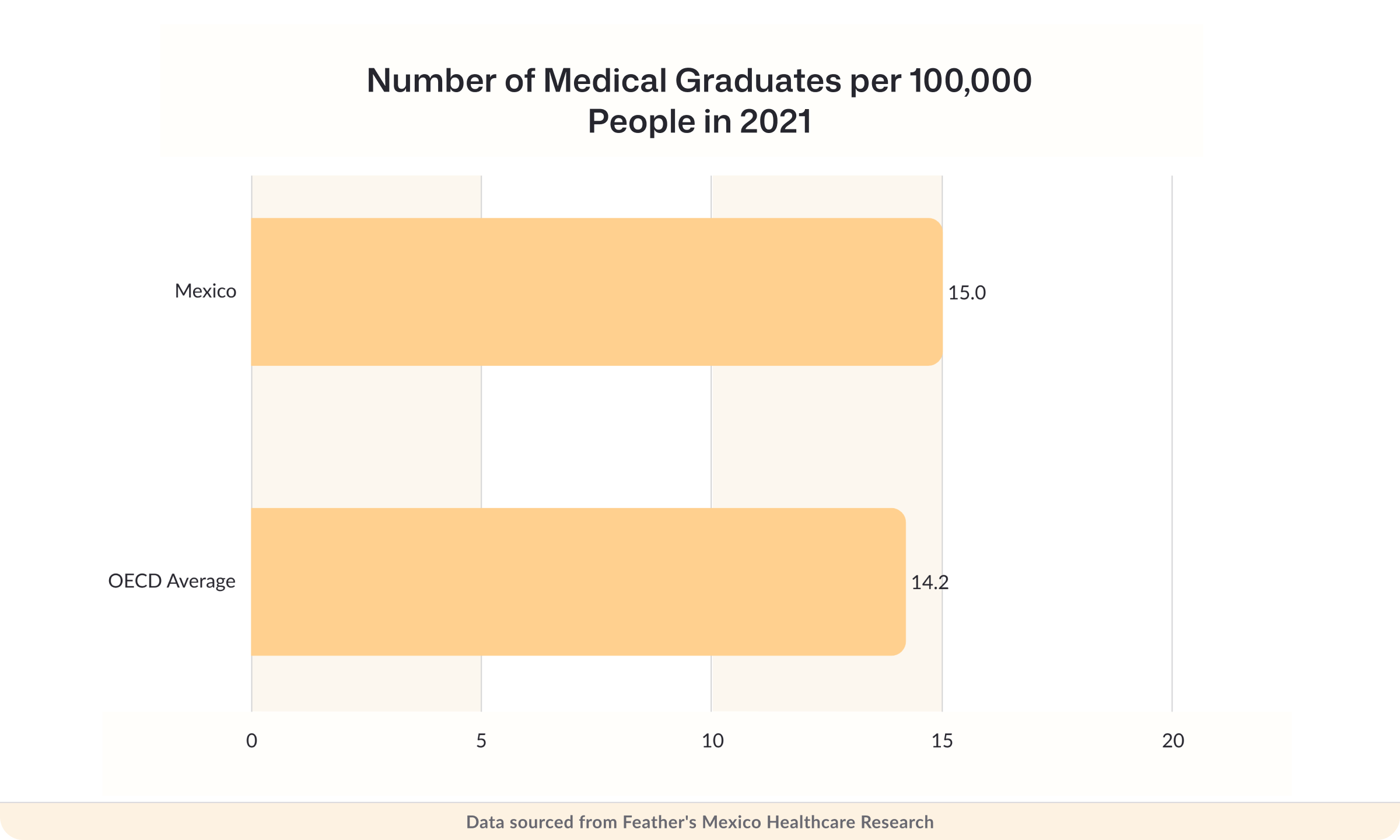
- Mexico produces 15 medical graduates per 100,000 people, 0.8 more than the OECD average.
Mexico's population statistics
In 2023, Mexico's population was estimated at 129,739,759 people, up 0.88% on 2022. It's projected to grow another 15%, to 148,946,274 people, by 2050.
In 2020, women made up 51.2% of the population and men 48.8%. Back in 1970, the split was an even 50% each.
Source: World Health Organization, INEGI
How old is Mexico's population?
Young, but aging. The median age in Mexico was 29 years in 2020, up from 21 years in 1995 and 24 years in 2005.
In 2020, there were an estimated 47.7 elderly people per 100 children and young people in Mexico. In 1990, there were 16.
Source: INEGI
Life expectancy statistics in Mexico
In 2021, average life expectancy in Mexico was 70.8 years, down 3.39 years from 74.2 years in 2000. That puts Mexico below the world average of 71.4 years and the average for the Americas, 74.1 years.
Over the same period, life expectancy across the Americas as a whole improved by 0.02 years.
Men in Mexico can expect to live to 67.2 years, and women to 74.7 years.
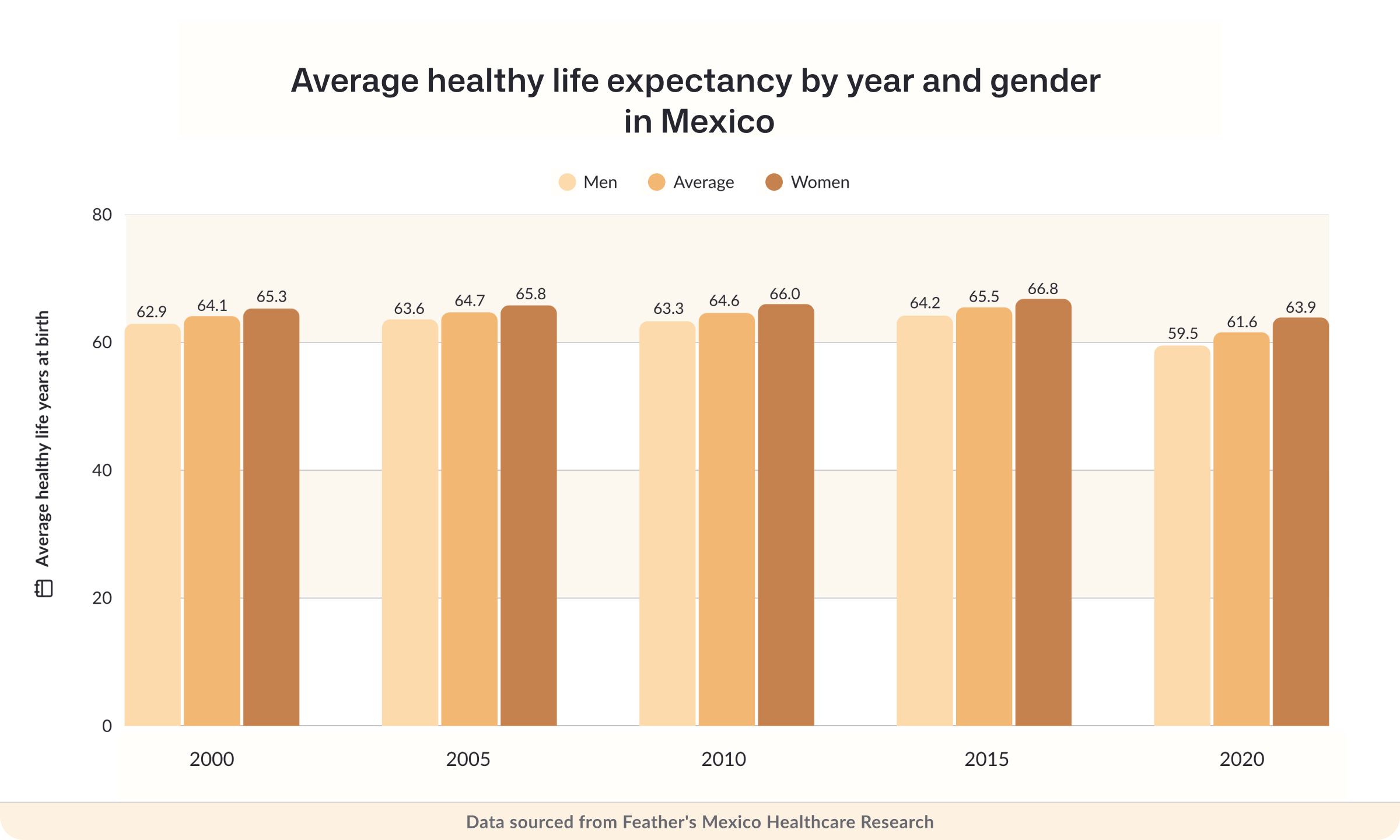
Healthy life expectancy has slipped too. In 2021, the average Mexican could expect 61.4 healthy life years: 59.5 for men and 63.5 for women.
Between 2000 and 2021, healthy life expectancy at birth in Mexico fell by 2.67 years. That leaves Mexico below the global average of 61.9 years and the 63.2 years average for the Americas.
Source: World Health Organization
How much does Mexico spend on healthcare?
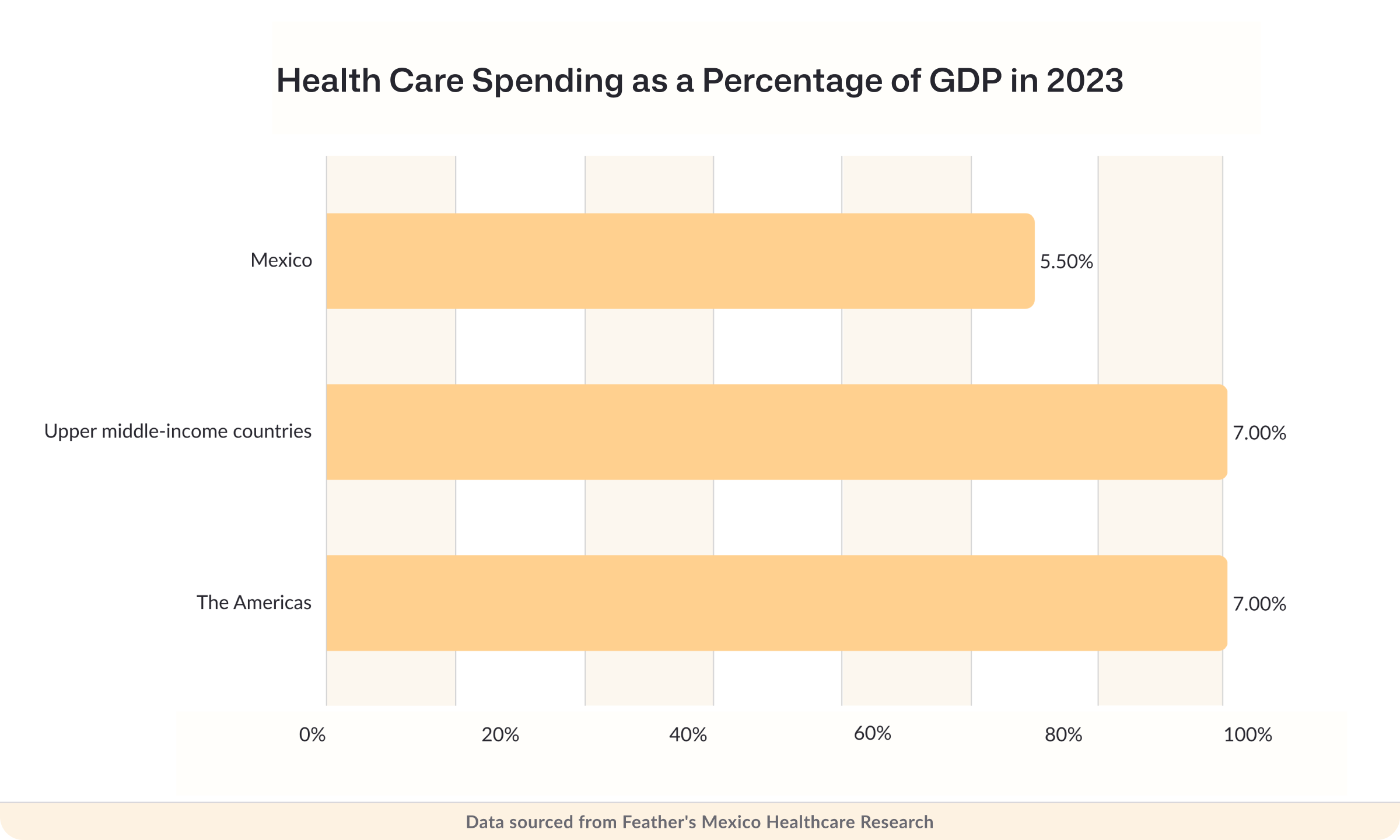
In 2023, Mexico spent approximately 5.5% of its GDP on healthcare. That's below the average for upper-middle-income countries and for the Americas as a whole, both of which spend around 7% of GDP.
In 2022, total healthcare spending was estimated at US$99 billion, up from US$90 billion in 2017.
Per person, spending reached US$776 in 2022. That's above the US$585 average for upper-middle-income countries.
Of the 2022 total, government spending accounted for US$51 billion, out-of-pocket spending for US$39 billion and prepaid private spending for US$9 billion.
Source: World Health Organization, Commonwealth Fund
Where does Mexico spend its healthcare budget?
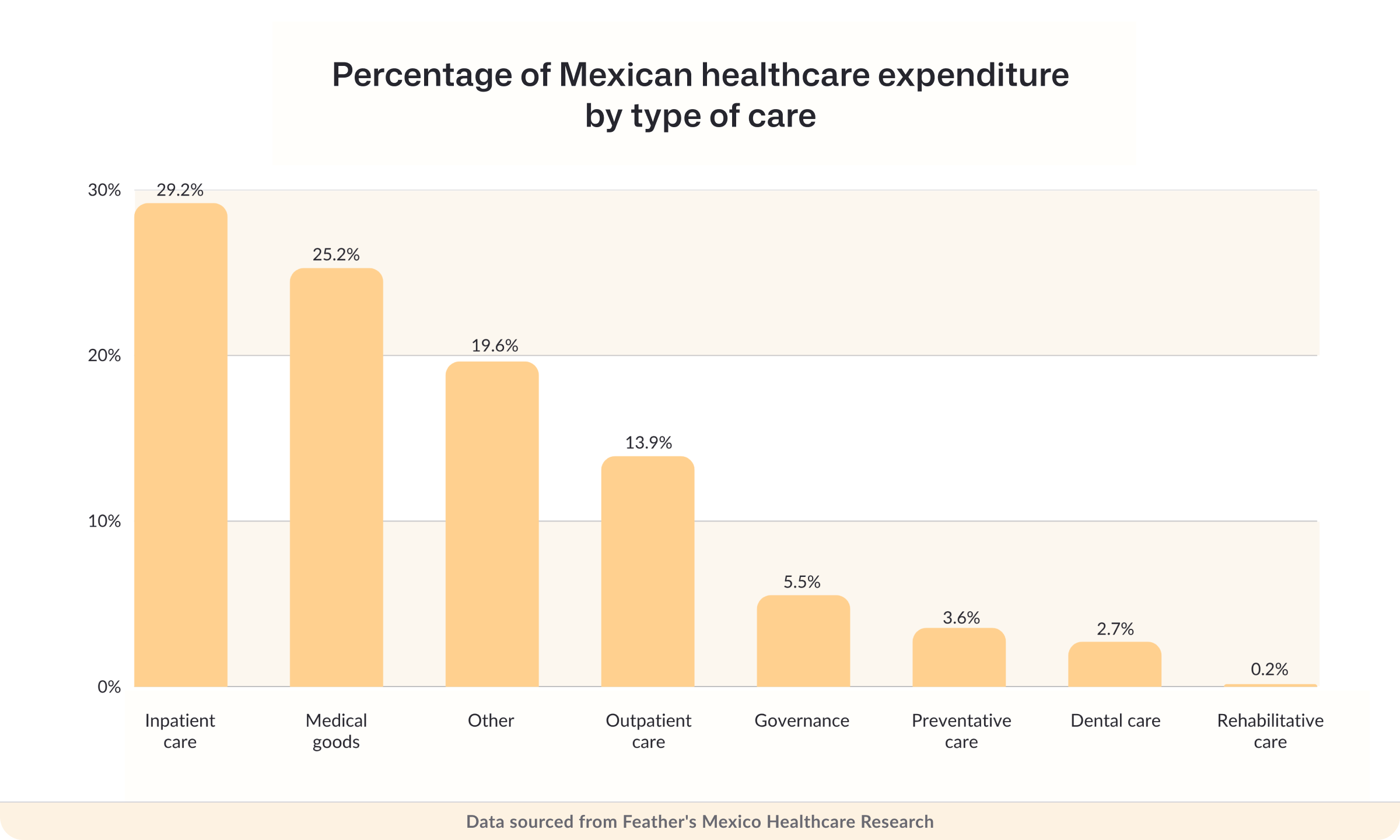
Hospitals take the biggest share. In 2021, inpatient care accounted for 29.2% of Mexico's total health spending.
The five largest areas of health spending were:
- Inpatient care (29.2%)
- Medical goods (25.3%)
- Other health-related spending (19.6%)
- Outpatient care (13.9%)
- Governance (5.5%)
Mexico spends 3.6% of its health budget on prevention. That's below European countries like Italy (4.6%) and the Netherlands (5.2%), but above Portugal, where just 2.3% of health spending goes on prevention.
On medicines, Mexico spent approximately US$292 per person in 2022. Generic drugs accounted for 65% of pharmaceutical spending in 2023.
Mexico controls the prices of patented health products in both the private and public sectors. As a result, medicines cost far less than in the US, which is a major draw for medical tourists. On average, drug prices in the US are 172% higher than in Mexico.
Source: World Health Organization, Commonwealth Fund
Where does healthcare funding in Mexico come from?
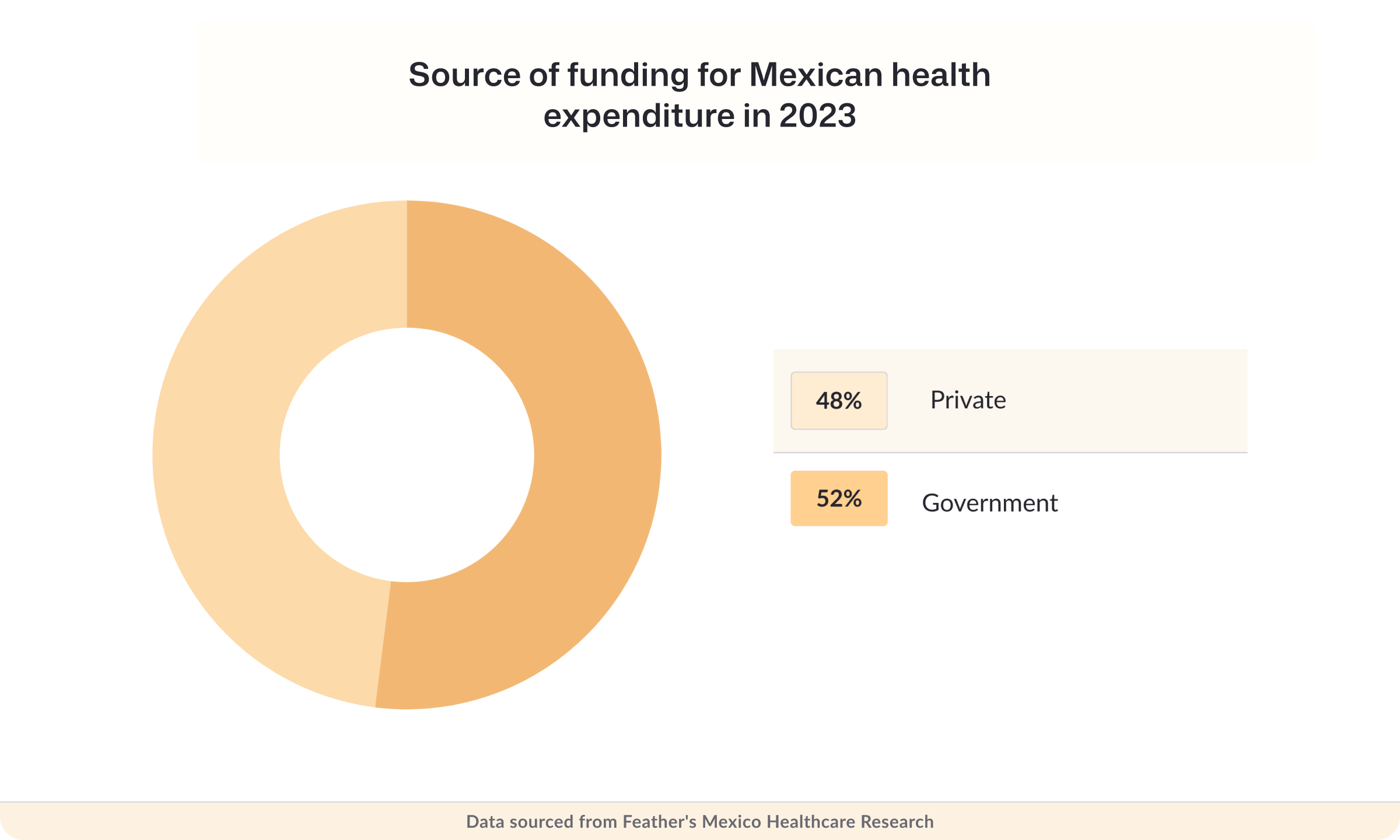
The government is the biggest single funder. In 2023, government spending accounted for 52% of Mexico's health spending.
Private sources, including private insurance and out-of-pocket payments, covered the other 48%.
Source: Commonwealth Fund, World Health Organization
How many people in Mexico have health insurance?
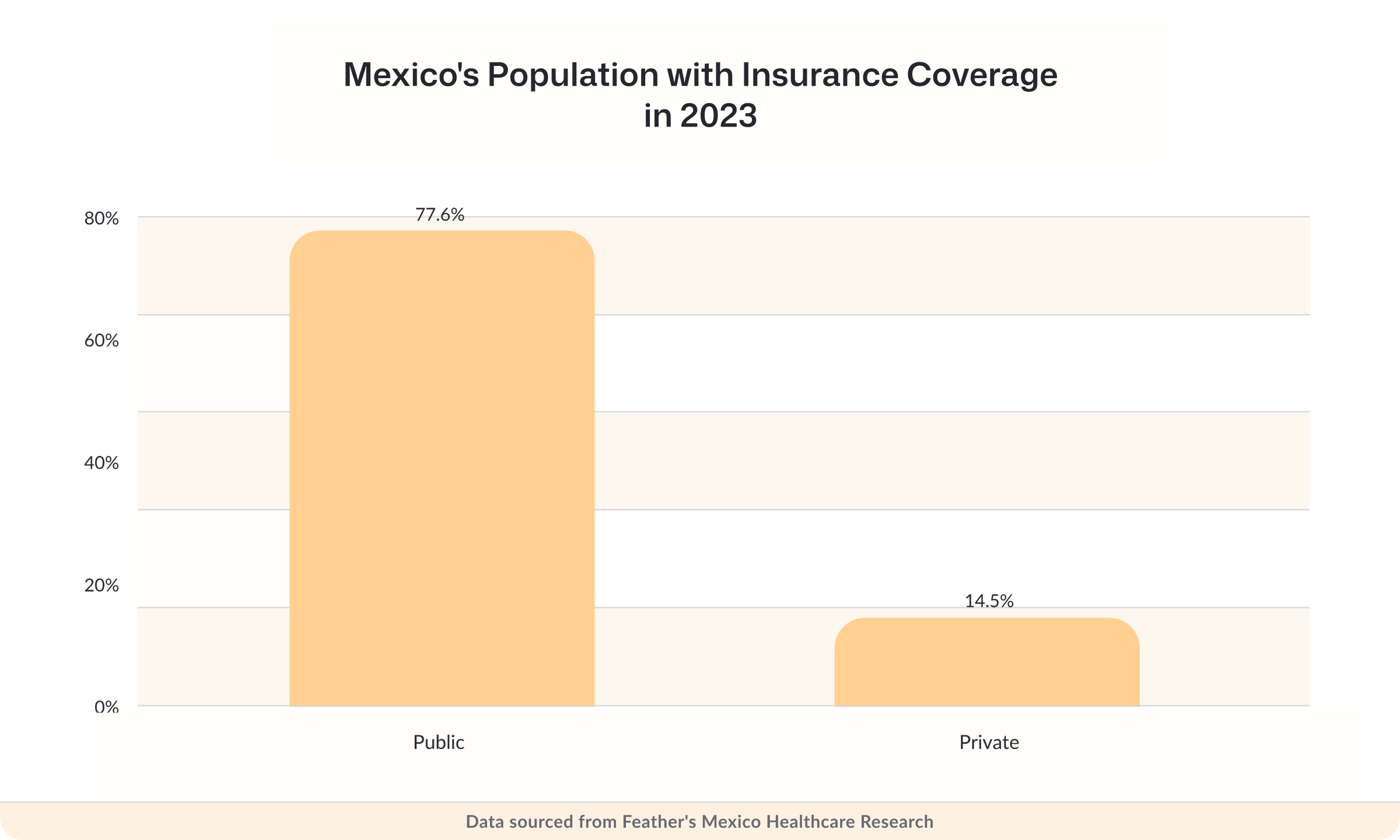
By 2023, 77.6% of the population was covered by public health insurance. Another 14.5% had supplementary private insurance.
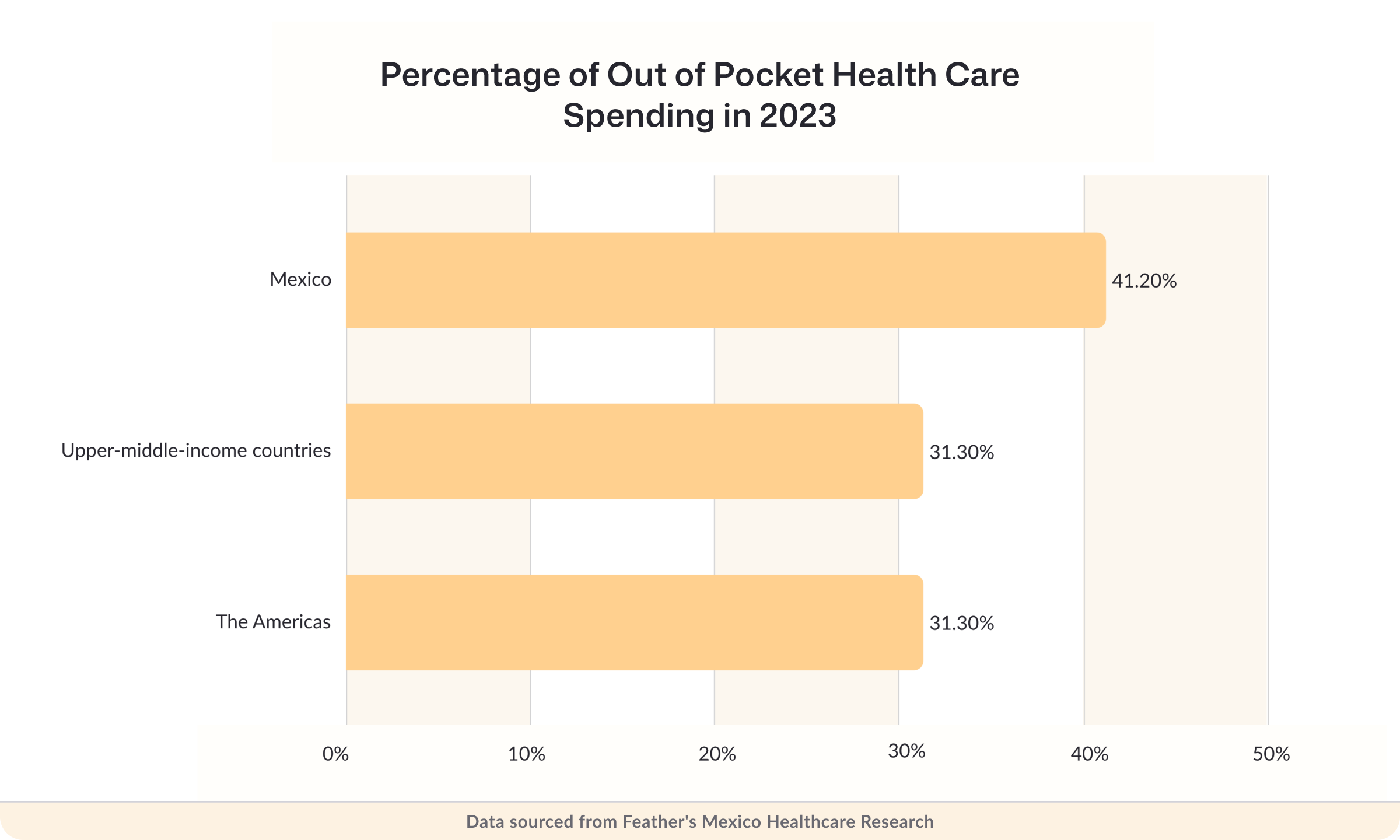
Even as public coverage grows, people in Mexico still pay a lot themselves. In 2023, out-of-pocket spending made up 41.2% of all healthcare spending in the country.
That's well above the 31.3% average for both the Americas and upper-middle-income countries. If you're moving to Mexico, it's a strong argument for sorting out your own coverage early.
Source: Commonwealth Fund, World Health Organization
How healthy are people in Mexico?
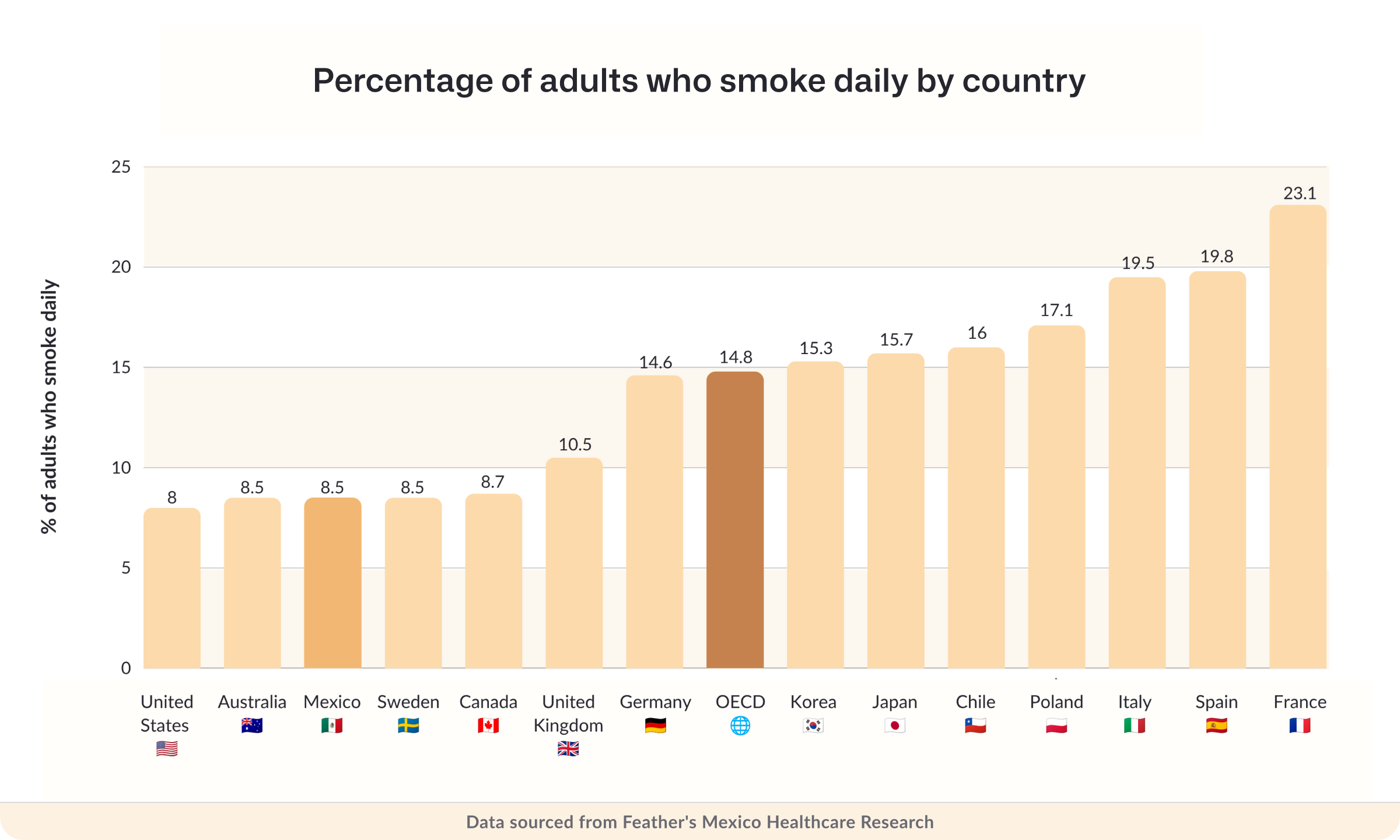
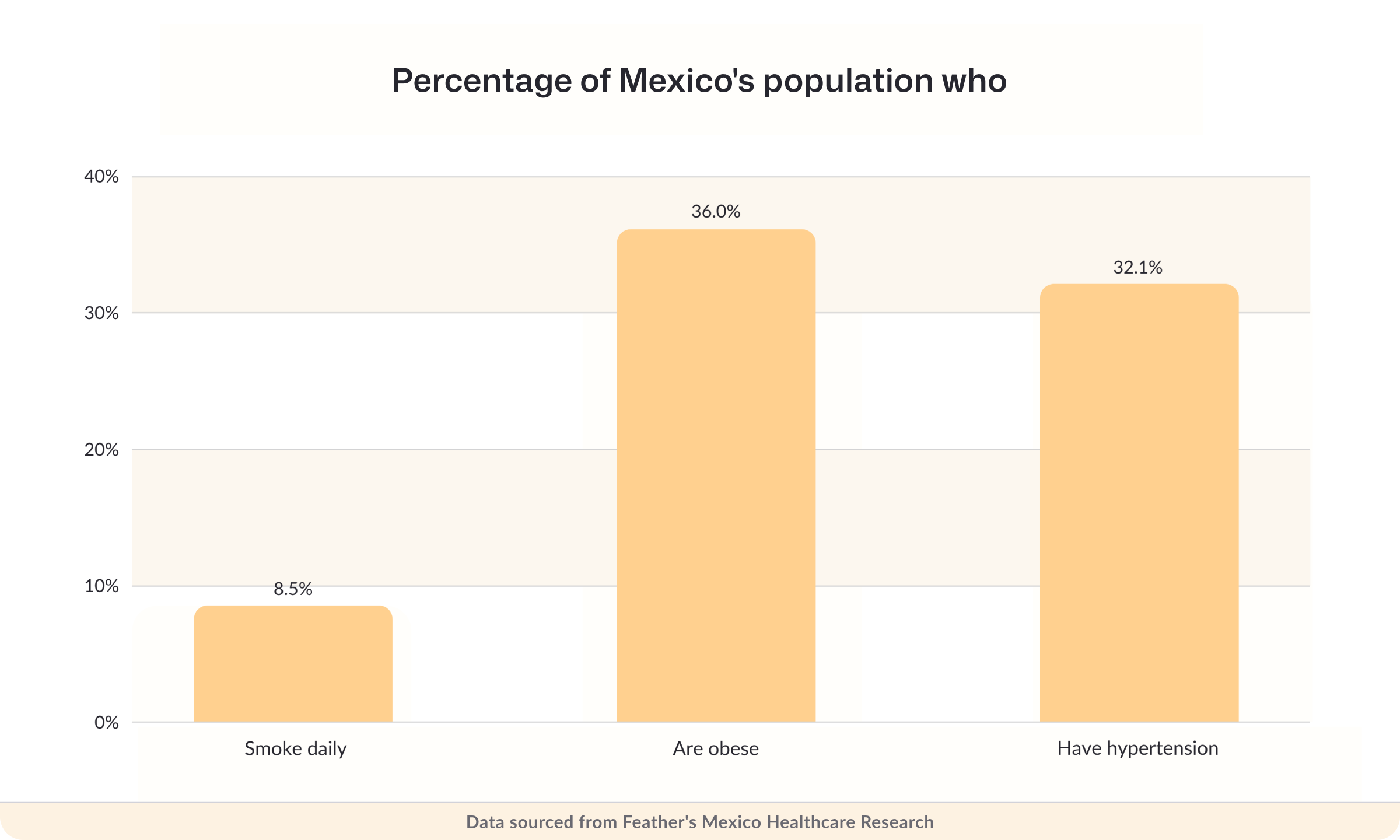
Smoking has dropped sharply. In 2022, approximately 16.1% of Mexican adults smoked daily. By 2025, that was down to 8.5%, on par with Australia and Sweden and well below the OECD average of 14.8%.
In 2022, Mexican adults drank an average of 5.88 liters of alcohol per person, down slightly from 5.91 liters in 2019. That's below the OECD average of 8.5 liters per person a year.
Obesity is the bigger challenge. Approximately 36% of Mexican adults are obese, up from 35.3% in 2021. Among children and adolescents, 17.7% were classified as obese in 2022.
28% of adults in Mexico don't get enough physical activity, slightly below the OECD average of 30%.
In 2020, approximately 32.1% of Mexican adults had hypertension, a slight decrease from 32.4% in 2019.
Source: World Health Organization, OECD
Cause of death statistics in Mexico
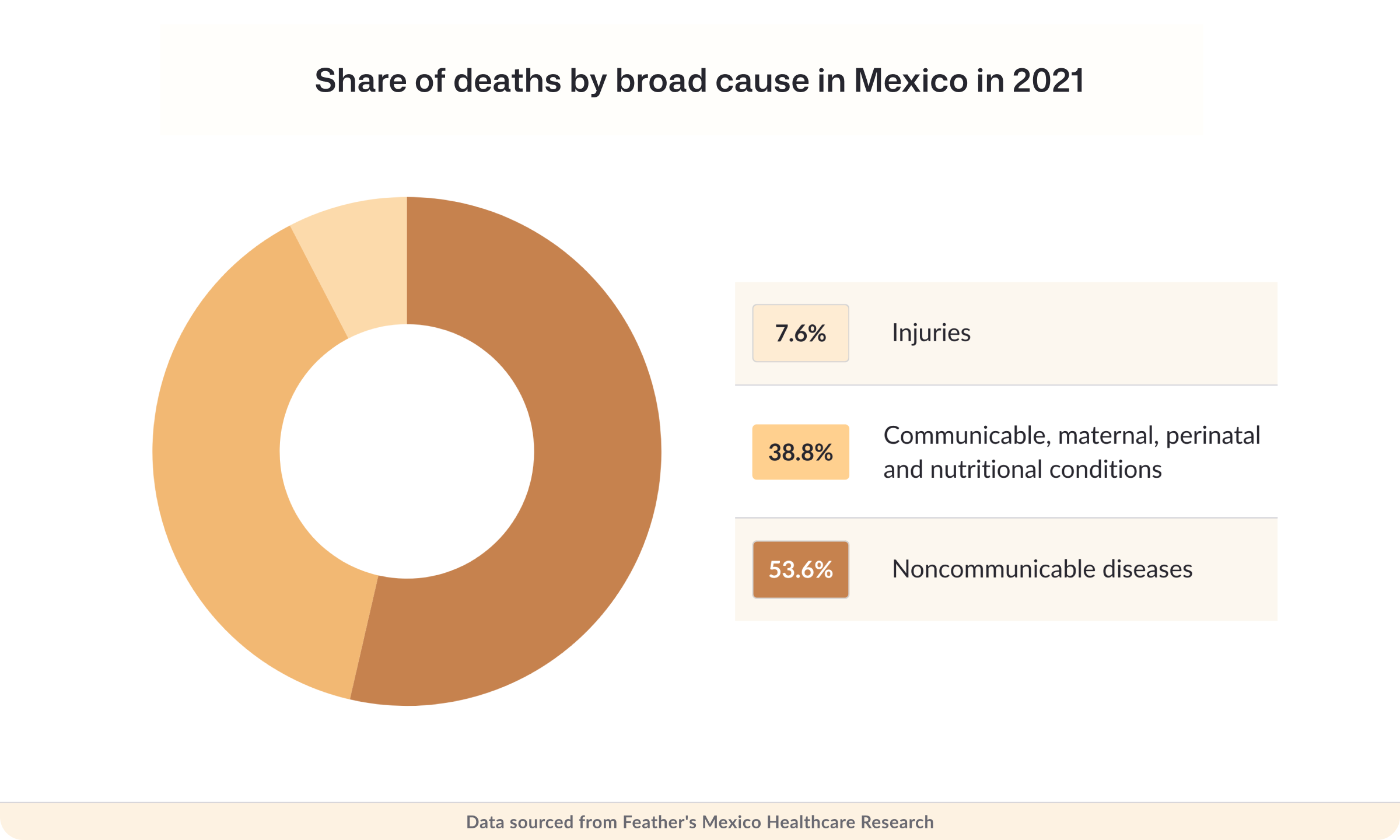
In 2021, non-communicable diseases caused 53.6% of all deaths in Mexico. Communicable, maternal and perinatal nutritional conditions accounted for 38.8%, and injuries for 7.6%.
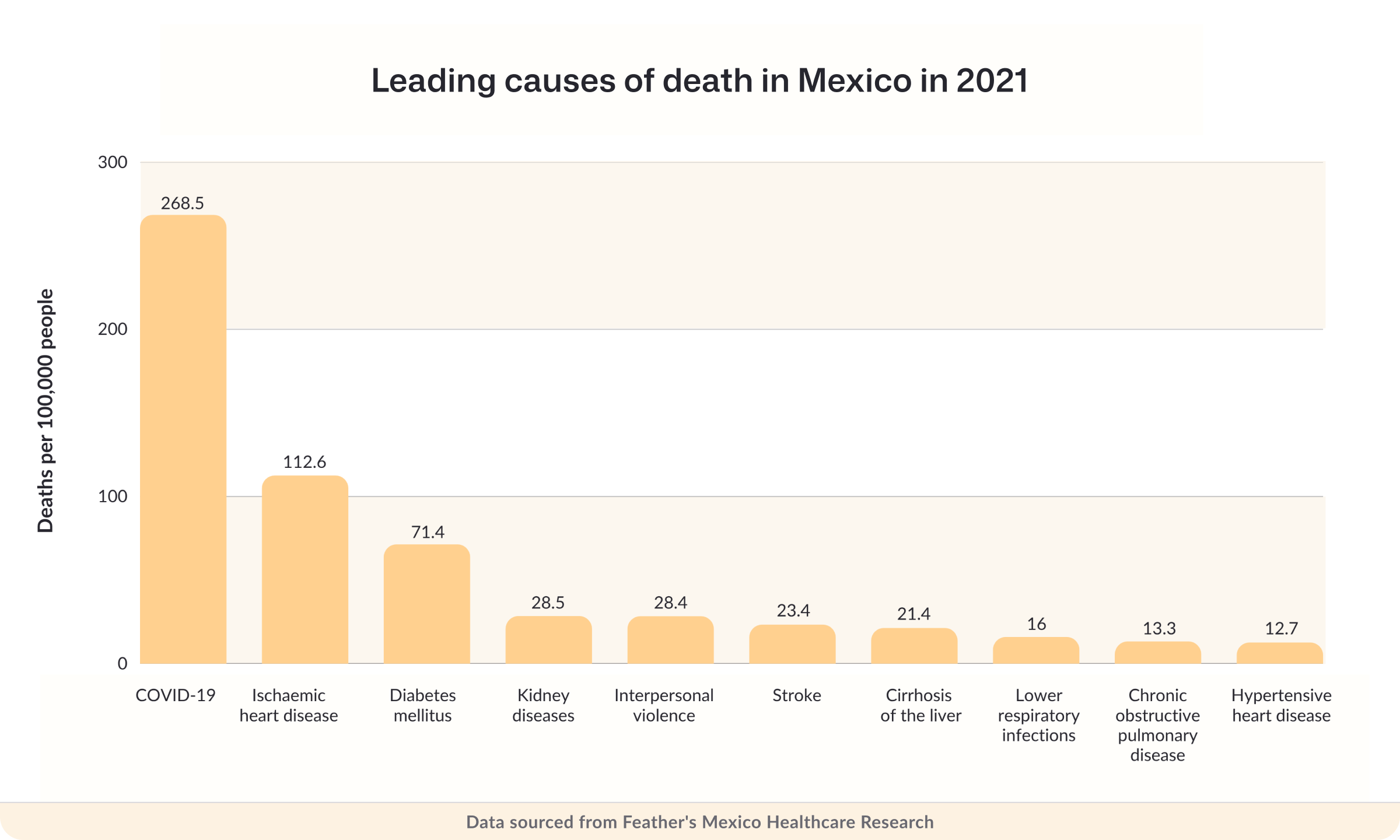
Mexico's three leading causes of death in 2021 were:
- COVID-19, with 268.5 deaths per 100,000 people
- Ischemic heart disease, with 112.6 deaths per 100,000 people
- Diabetes mellitus, with 71.4 deaths per 100,000 people
The table below shows causes of death per 100,000 people in Mexico:
Mexico's suicide rate was approximately 6 deaths per 100,000 people in 2025, nearly half the OECD average of 11 per 100,000.
Violence remains a serious problem. Interpersonal violence was the fifth leading cause of death in 2021, at approximately 28.4 deaths per 100,000 people.
Source: World Health Organization, OECD
How many doctors and nurses are there in Mexico?
In 2025, Mexico had an average of 2.7 practicing physicians per 1000 people, below the OECD average of 3.9.
Nurses are in shorter supply. The country had approximately 3 practicing nurses per 1000 people, a third of the OECD average of 9.
Long-term care is thinly staffed too, with just 0.2 long-term care workers per 100 people aged 65 and over. The OECD average is 5.
Mexico has 10 CT, MRI and PET scanners per million people, a fifth of the OECD average of 51 per million in 2025.
There were 1.6 psychiatrists per 100,000 people in Mexico in 2020, slightly below the 1.7 average for upper-middle-income countries.
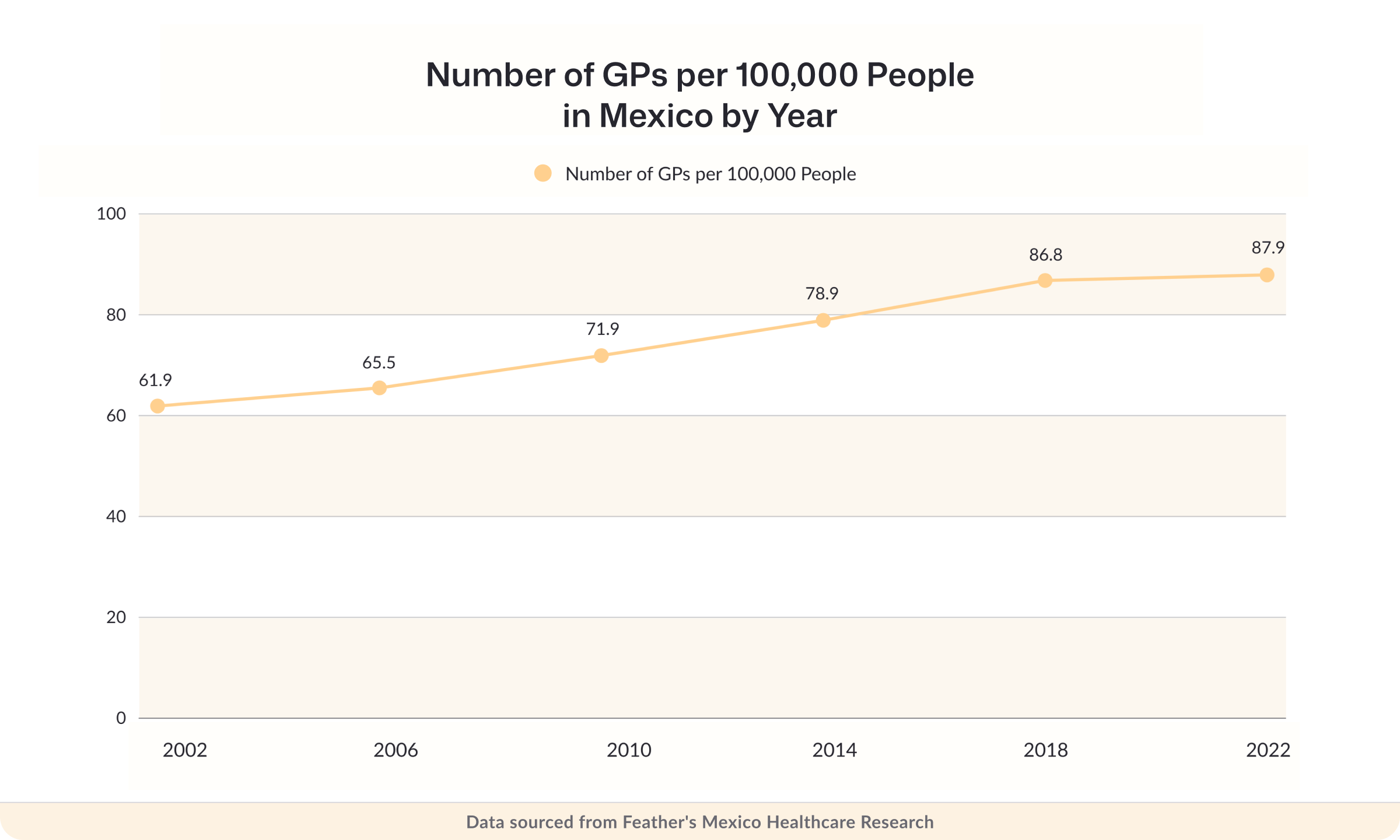
There's progress on primary care, though. In 2022, Mexico had approximately 87.9 general practitioners per 100,000 people, up from 61.9 per 100,000 in 2002.
Mexico also trains more doctors than countries at a similar income level. In 2021, it produced approximately 15 medical graduates per 100,000 people, slightly above the OECD average of 14.2 per 100,000.
Source: OECD, Commonwealth Fund
How many hospital beds are there in Mexico?
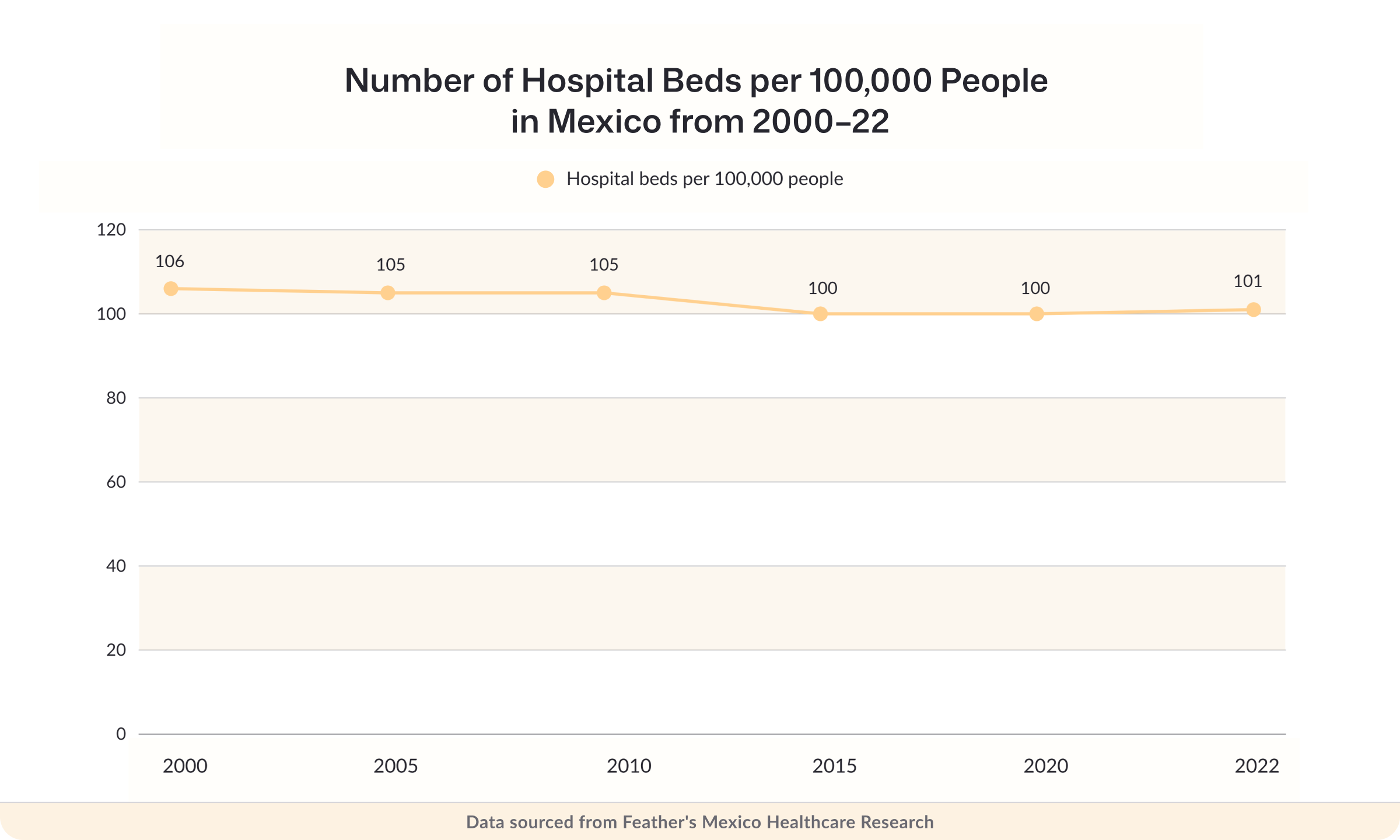
In 2022, Mexico had 101 hospital beds per 100,000 people, down from a high of 106 per 100,000 in 2000.
That's roughly 1 hospital bed per thousand people, a quarter of the OECD average of four hospital beds per 1000 people. It's also well below the 4.5 per 1000 average for upper-middle-income countries.
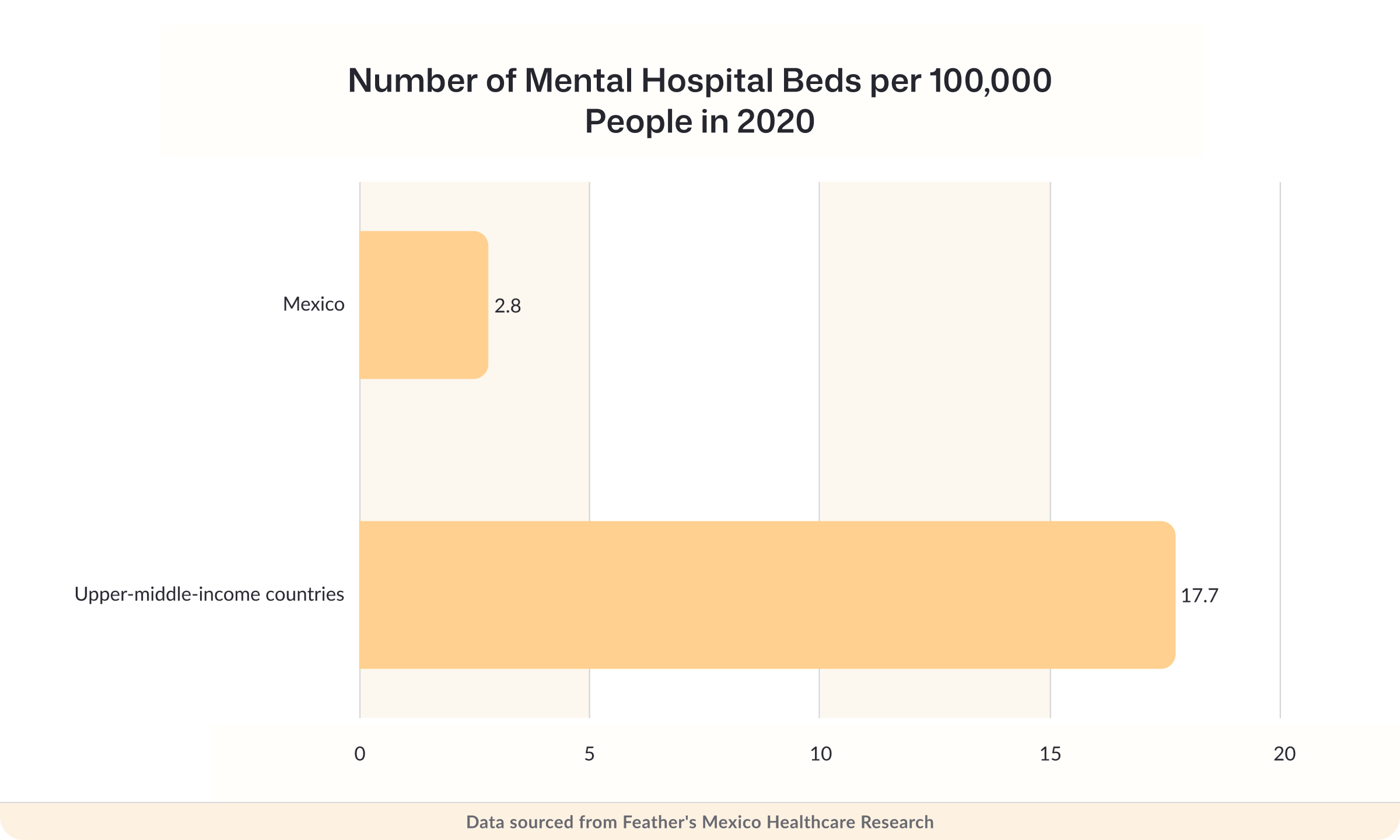
Mental health beds are scarcer still. In 2020, Mexico had just 2.8 mental hospital beds per 100,000 people, nearly 6 times fewer than the 17.7 per 100,000 average across upper-middle-income countries.
Source: World Health Organization, OECD, World Bank, Commonwealth Fund
Vaccination and cancer screening coverage in Mexico
Approximately 78% of eligible children in Mexico had received three doses of the DTP vaccine in 2025. That's far below the OECD average of 93%, and one of the lowest rates among OECD countries.
Screening is low too. In the same year, only 20% of Mexican women aged 50 to 69 had a breast cancer screening. The OECD average is nearly three times higher, at 55%.
Source: World Health Organization, OECD


