
International health insurance in Chile
Health insurance for expats & foreigners

Access any clinic
Skip wait times, get the best care.

Visa-compliant coverage
Documents available instantly.

Top rated: 4.8/5
On 2500+ reviews.
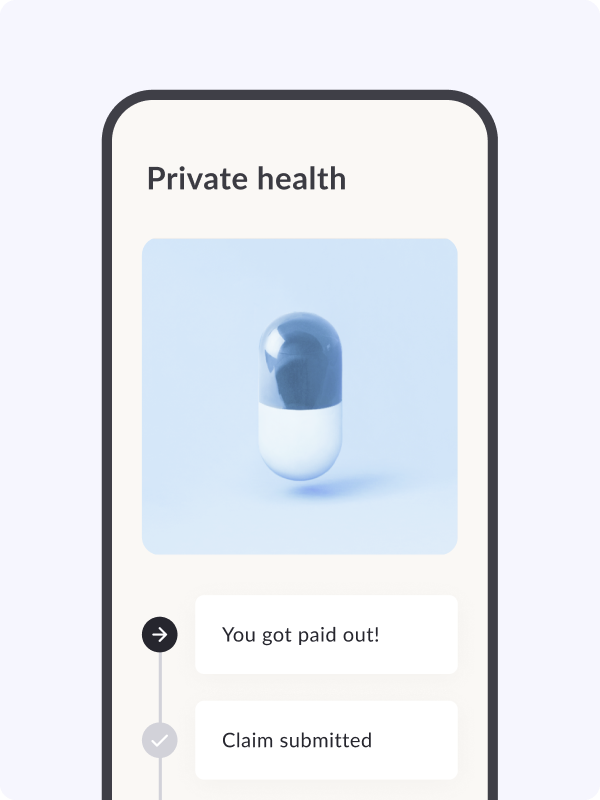
Why get private health insurance in Chile?
Chile has Latin America's strongest healthcare system, but foreigners can't enroll easily. To join the public system (FONASA) or most private health funds (ISAPREs), you need legal residency and a Chilean tax ID (RUT). That leaves a gap of two to six weeks when you first arrive, with no local cover at all.
And care isn't cheap if you're paying out of pocket. A private GP visit runs about CLP 40,000 (€38), and a private hospital bed costs around CLP 425,000 (€410) a day. Plus, the retiree (Rentista) visa requires a minimum of UF 600 in cover (€22,800).
Get a price estimate

How does the healthcare system work in Chile?

Chile's public-private system
Chile runs a dual health insurance system: both private and public. Employees have a 7% salary deduction, funding either the public system (FONASA) or a private fund (ISAPRE) of your choice. The public system guarantees access and capped costs for a set list of conditions through a scheme called GES (Garantías Explícitas en Salud) or AUGE (Acceso Universal con Garantías Explícitas).
Until you have residency and a tax ID, you can't enroll in either.

Chilean pharmacies & medication
Three chains (Cruz Verde, Salcobrand, and Farmacias Ahumada) run about 90% of the market, so you're never far from one. A national rota (the turno de farmacia) keeps one pharmacy per district open overnight, and the flagship stores in Las Condes run 24/7. Antibiotics and psychiatric medicines require a Chilean prescription, and choosing bioequivalent generics can cut costs by around half.

Emergency services in Chile
Dial 131 for an ambulance (the public service, SAMU), or 132 for fire and 133 for police; 911 works too. Public ambulances take 15–25 minutes in cities, while private services like HELP and Inmediata reach their subscribers in 8–15. One thing to know: the public line is Spanish-only, but the top private clinics (like Alemana and Las Condes) have English-speaking emergency intake.
What expats need health insurance?

Digital nomads
There's no digital nomad visa: remote workers usually arrive on a temporary stay permit (90 days, renewable for 90 more days), which comes with no access to the public system or private funds.

Retirees
On the retiree (Jubilado/Rentista) visa, you'll need at least UF 600 in cover (around €22,800). It's worth it: without private insurance, a hip replacement at a top clinic like Clínica Alemana can run around CLP 15.3 million (€14,700).

Families
A private birth at a clinic like Alemana or Las Condes costs around CLP 5.5 million (€5,340). And private funds impose a 9–12-month maternity waiting period, so if you arrive already pregnant, they won't cover it.

Gap year & job seekers
On the temporary stay permit, you have no access to the public system or private funds. And even after you get temporary residency, that two-to-six-week wait for your tax ID leaves you uncovered.

Students
The student residence visa requires health insurance with at least USD 30,000 (around €27,600) in cover, and most universities ask for their own plan on top.

Visa applicants
Consulates routinely ask for proof of health insurance for a temporary residence visa, even when it isn't officially listed. UF 600 (around €22,800) is the unofficial standard.
Get global health insurance that works in Chile
Plans from €56/month. Sign up online in minutes.
How much is health insurance in Chile?
A private GP visit runs about CLP 40,000 (€39), a specialist around CLP 68,000 (€65), a private hospital bed about CLP 425,000 (€410) a night, and a day in intensive care around CLP 1.86 million (€1,790). A private birth costs about CLP 5.5 million (€5,340). Learn more.

Public healthcare in Chile
If you're employed, 7% of your salary goes to health insurance. The public system keeps most care free or low-cost. Private funds usually cost more than the 7%, with the difference coming out of your pocket: a basic plan runs around CLP 48,000 (€46) a month, and a high-tier plan with full access to clinics like Alemana can reach CLP 276,000 (€265) a month.

Private medical insurance
Our plans start at €56/month for Essential and €84/month for Plus — see the full comparison below. You'll get outpatient and inpatient care, plus extras like dental, mental health, maternity, and medical evacuation, with documents in English and Spanish.
Visa & health insurance requirements for Chile
Most Chilean residence permits require proof of private health insurance. The retiree (Rentista) visa requires at least UF 600 in coverage (around €22,800), and the student visa requires USD 30,000 (around €27,600).

Accepted for all major Chilean visas
Both Feather plans meet the requirements for the retiree (Rentista), student, family reunification, and investor visas, and for temporary residence.

Documents ready when you sign up
All your documents (proof of coverage, English/Spanish) instantly in your account. Accepted by consulates.
How does Feather's international health insurance work?

Choose your plan
Compare Essential and Plus, pick your deductible, and sign up in under 5 minutes. No paperwork, no medical exams.

Get your documents instantly
Your confirmation and visa-ready proof-of-coverage documents land in your account straight away.

Visit any doctor
See any licensed doctor, specialist, or hospital in Chile. No referrals, no network restrictions, no pre-approval.

Upload your bill in the app
Already paid? Open the Feather app, snap a photo of your invoice, and submit your claim in under a minute.

Get reimbursed to your account
We review your claim and reimburse you directly to your bank account. Most claims are processed within two weeks.

Cancel anytime after year one
There's a one-year minimum term. After that, cancel whenever you want. No penalties.
Join 200,000+ expats covered with Feather
Get global medical coverage in under 5 minutes.
Why choose Feather?

200,000+ happy customers
Experience insurance crafted by expats, for expats.

100,000+ claims processed
Paid out in three weeks on average.

4.8 Star rating
On over 2,500 reviews.

English-speaking support
Our team speaks your language.

All digital
Sign up, file claims, and manage your policy in our app.

Privacy first
Your data is stored securely in Europe.
Don't take our word for it

Dajana was amazing
“She answered all our questions and provided clear and detailed responses to ensure we select the proper coverage. The whole experience was perfect! I am confident I made the right choice going with Feather!”
Mascia
I trust them. No BS.
“They don't sugar coat the insurances, if they don't provide the best option, they would help you understand what's the best one.”
Michal
Super helpful
“The representative answered my questions clearly and helped me make sure I was aware of my options! This was the perfect fit for my situation as an expat looking for a job in Spain and needing temporary coverage.”
Erin


Sorted your health insurance yet?
Takes 2 minutes. From €56 per month. 4.8/5 rated on over 2,500 reviews.


