
Health & healthcare in Turkey: Statistics, trends & facts (2026)
Türkiye's healthcare system ranks just 60th in the world. Yet it has become one of the most popular destinations for medical tourism anywhere. In 2023 alone, more than 1.8 million medical tourists traveled to the country for treatment.
So what draws people in? And what does the system look like for the people who actually live there? If you're moving to Türkiye, that second question matters more.
In this article, we'll cover:
- Who lives in Türkiye, and how long (and how healthily) they can expect to live
- How much Türkiye spends on healthcare, and how much people pay out of pocket
- Who has health insurance, and how many people go without care
- How healthy people in Türkiye are, and how satisfied they are with the system
- What people in Türkiye are most likely to die from
- How many doctors, nurses, hospitals and beds the country has
First, the headline numbers.
Key Turkish healthcare statistics: our top picks
- In 2024, Türkiye had 1,562 hospitals, 7 more than in 2022.
- In 2021, the country produced twice as many medical graduates per 100,000 people as Canada (15.7 vs 7.5).
- COVID-19 was Türkiye's leading cause of death in 2021, with 143.2 deaths per 100,000 people.
- Only 41% of Türkiye's residents are satisfied with the quality of their country's healthcare.
- 7.1% of Turkish adults rate their health as poor or very poor.
Türkiye's population statistics
In 2025, Türkiye had an estimated population of 86,092,68 people, down from 87,270,50 people in 2023.
The population is projected to grow by roughly 4.6%, to 91,258,061 people, by 2050.
Istanbul is the largest province by a wide margin, with 15,754,053 people in 2025, up 52,451 on 2024. That means 18.3% of the country's population lives in one city.
Ankara is the second most populous province, home to 6.87% of the population.
The population is aging slowly. Between 2024 and 2025, the median age rose from 34.4 years to 34.9 years. For men, it went from 33.7 years to 34.2 years. For women, from 35.2 years to 35.7 years.
Source: World Health Organization, Turkish Statistical Institute
What percentage of Türkiye's population lives in urban areas?
89% of Türkiye's population lives in urban areas or population centers. The other 11% live in rural areas.
That's a higher urban share than the average for upper-middle-income countries (68%), EU members (75%) and OECD members (81%).
Source: World Bank
Life expectancy statistics in Türkiye
In 2025, average life expectancy in Türkiye was 77.3 years, 3.8 years below the OECD average.
Between 2000 and 2021, life expectancy in the country rose by 2 years, from 73.3 years to 75.3 years. Over the same period, average life expectancy across Europe rose by 3.89 years.
In 2021, the average person in Türkiye could expect 65.2 healthy life years, an increase of 3.07 years since 2000.
That puts Türkiye above the global average of 61.9 healthy life years, but slightly below the European average of 66.
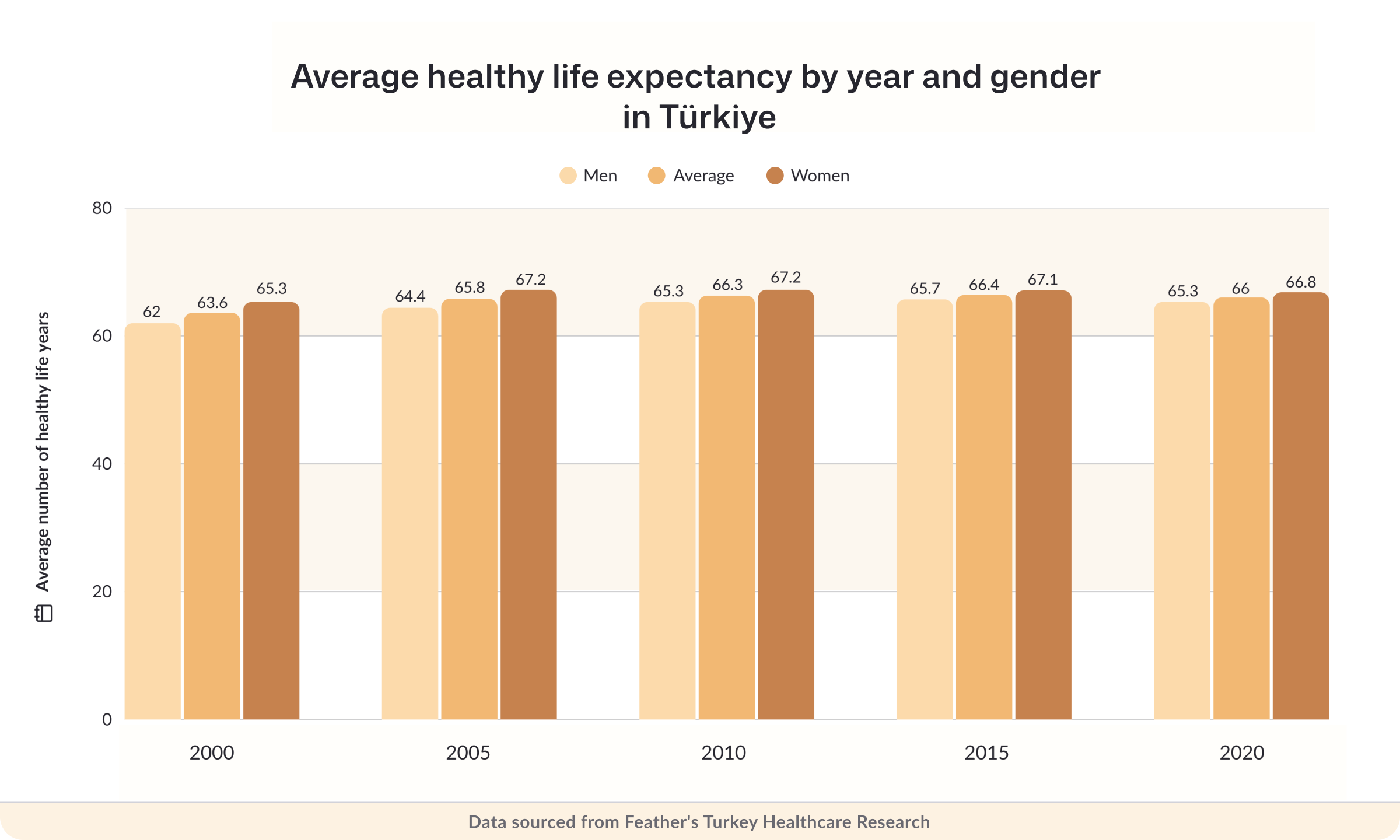
The gap between men and women is small. In 2020, approximately 1.5 years separated them: men could expect 65.3 healthy life years, and women 66.8.
Source: OECD, World Health Organization
How much does Türkiye spend on healthcare?
Not a lot, by OECD standards. In 2025, Türkiye spent US$2,309 per person on health, less than half the OECD average of US$5,967.
That's approximately 4.7% of GDP, compared to an OECD average of 9.3%.
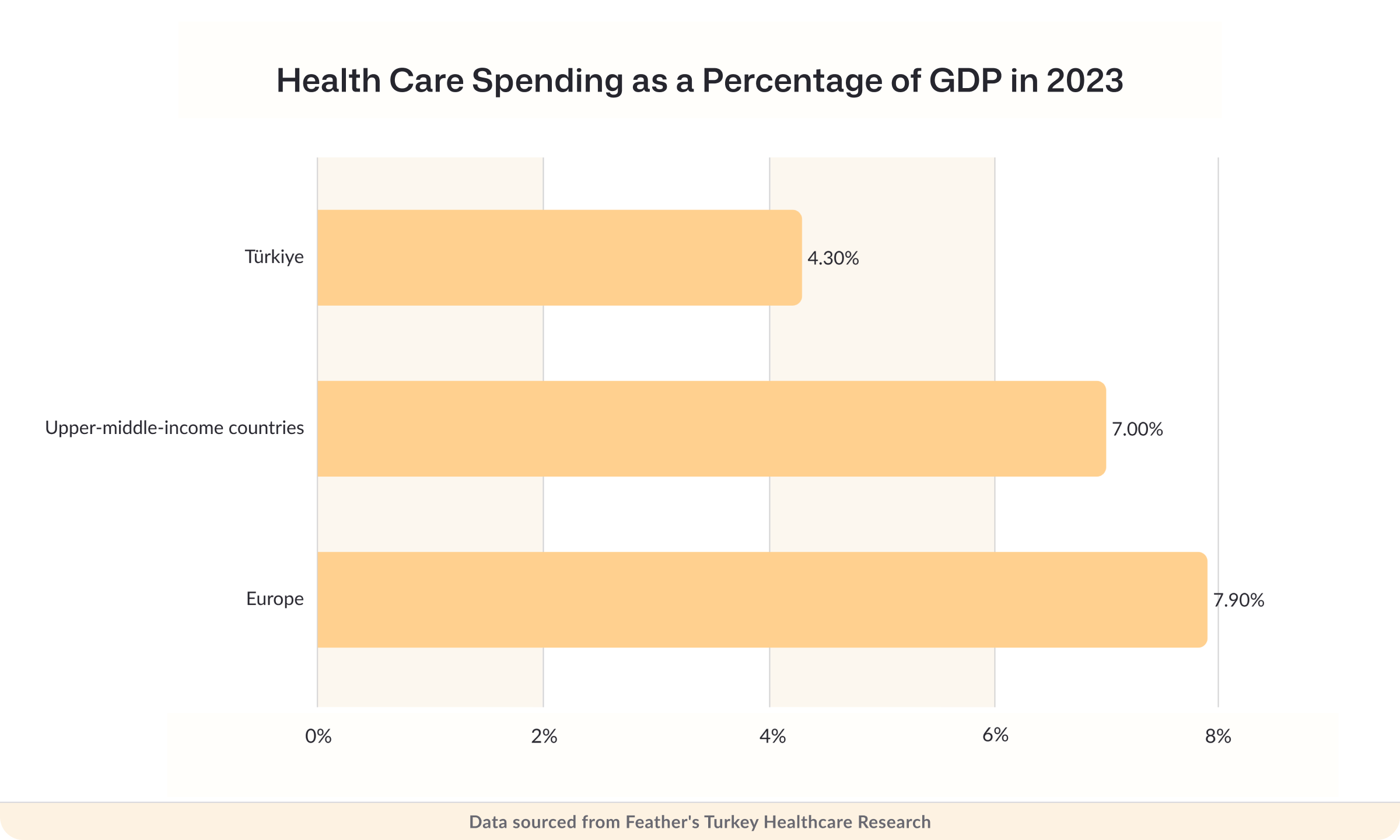
In 2023, Türkiye spent 4.3% of its GDP on healthcare, compared to 7% across upper-middle-income countries and 7.9% across Europe.
Low spending doesn't mean people pay more themselves, though. Out-of-pocket costs in Türkiye are lower than in comparable countries.
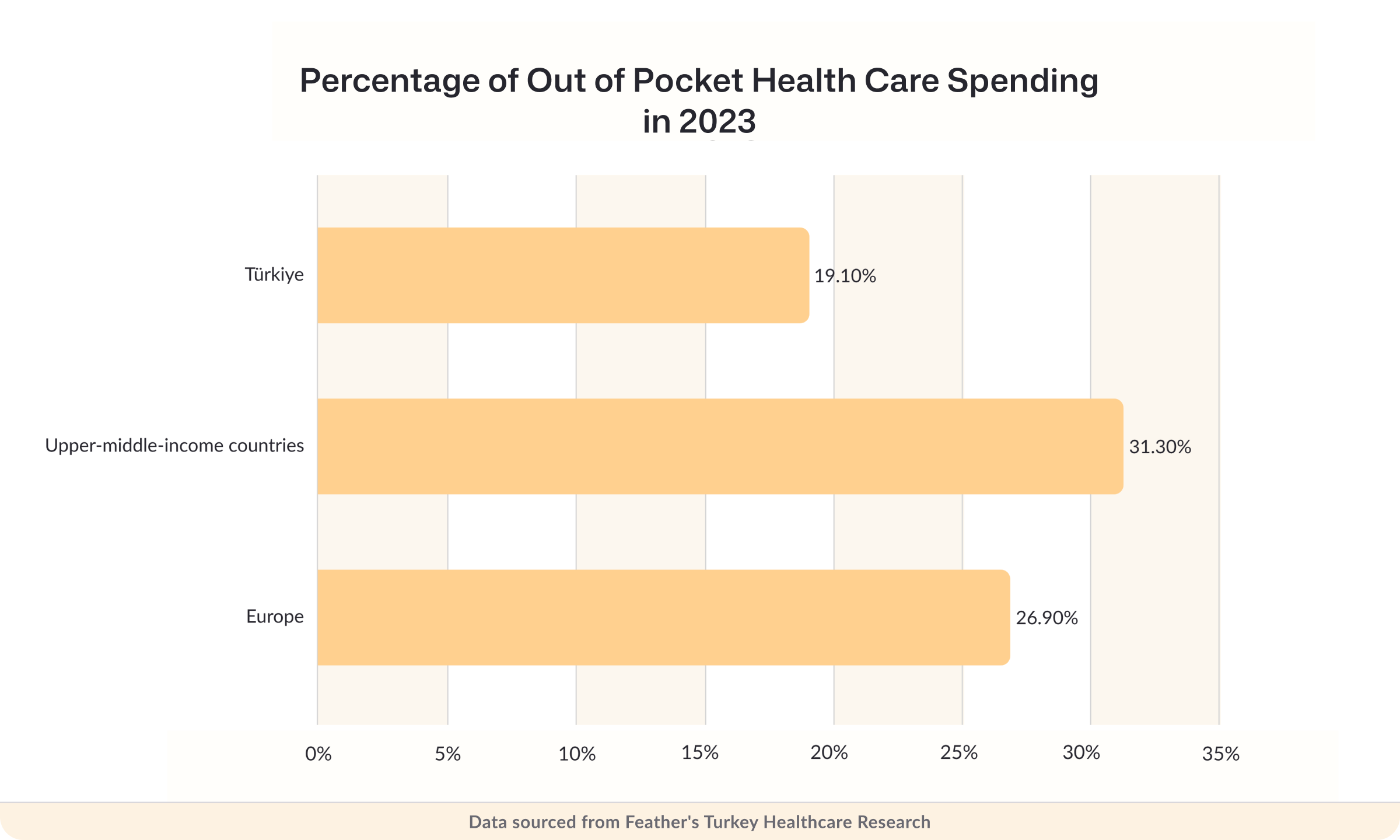
In 2023, out-of-pocket spending accounted for 19.1% of Türkiye's health spending. That's 12.2 percentage points less than the upper-middle-income average (31.3%) and 7.8 percentage points less than Europe (26.9%).
Source: Commonwealth Fund, World Health Organization
How many people in Türkiye have unmet medical needs?
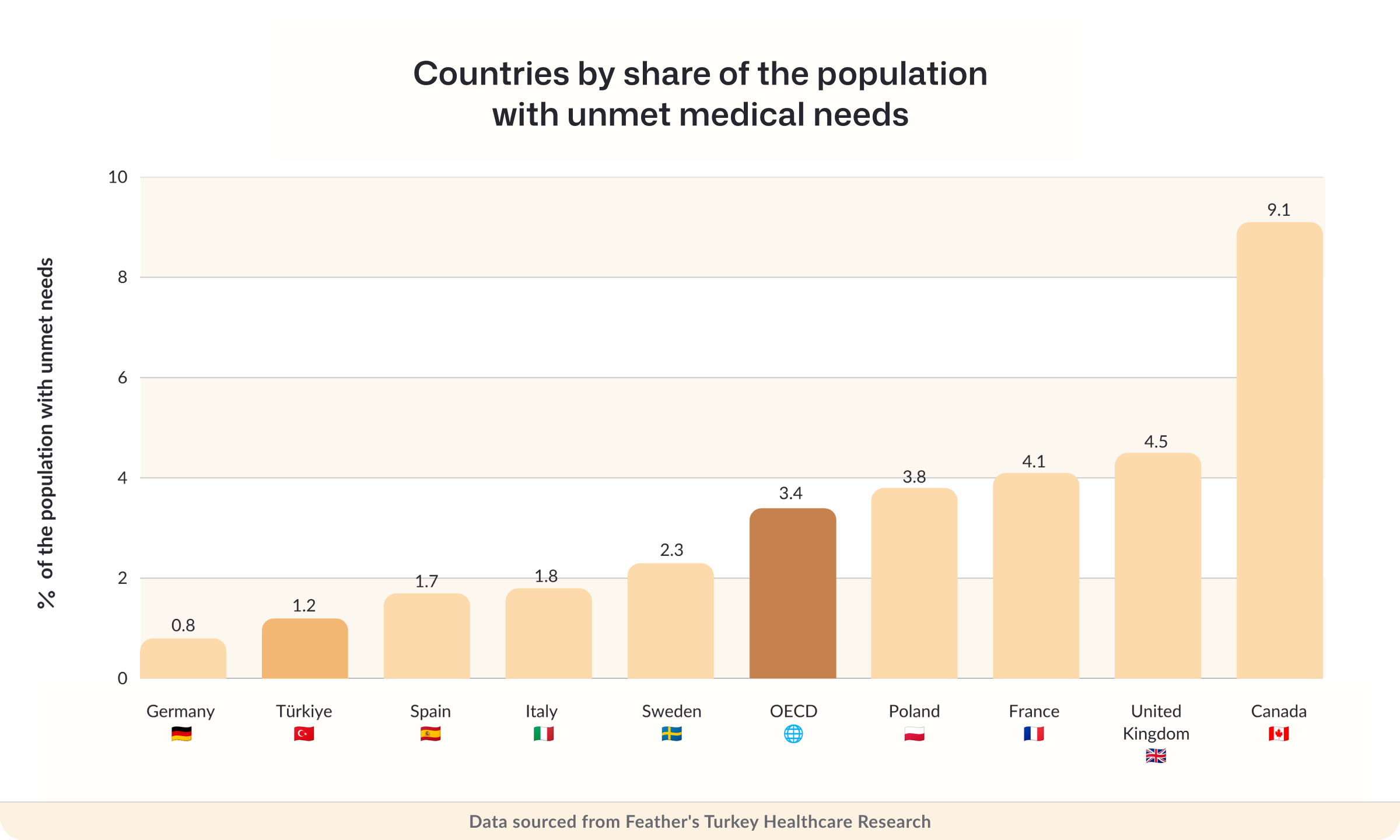
Very few. In 2025, approximately 1.2% of Turkish adults reported unmet medical needs, one of the lowest rates in the OECD.
For comparison, 3.4% of adults across OECD countries and 9.1% of Canadian adults reported the same.
Source: OECD
How much does Türkiye spend on pharmaceuticals?
In 2022, Türkiye spent roughly US$91 per person on pharmaceuticals, compared to the OECD average of US$490.
Brand-name medicines cost about 4 times more than generics. By 2023, the average brand-name medicine cost US$4 per item, compared to US$1 for a generic.
Generics make up 62% of Türkiye's pharmaceutical market, above the OECD average of 56%.
Source: Commonwealth Fund, OECD
Where does healthcare funding in Türkiye come from?
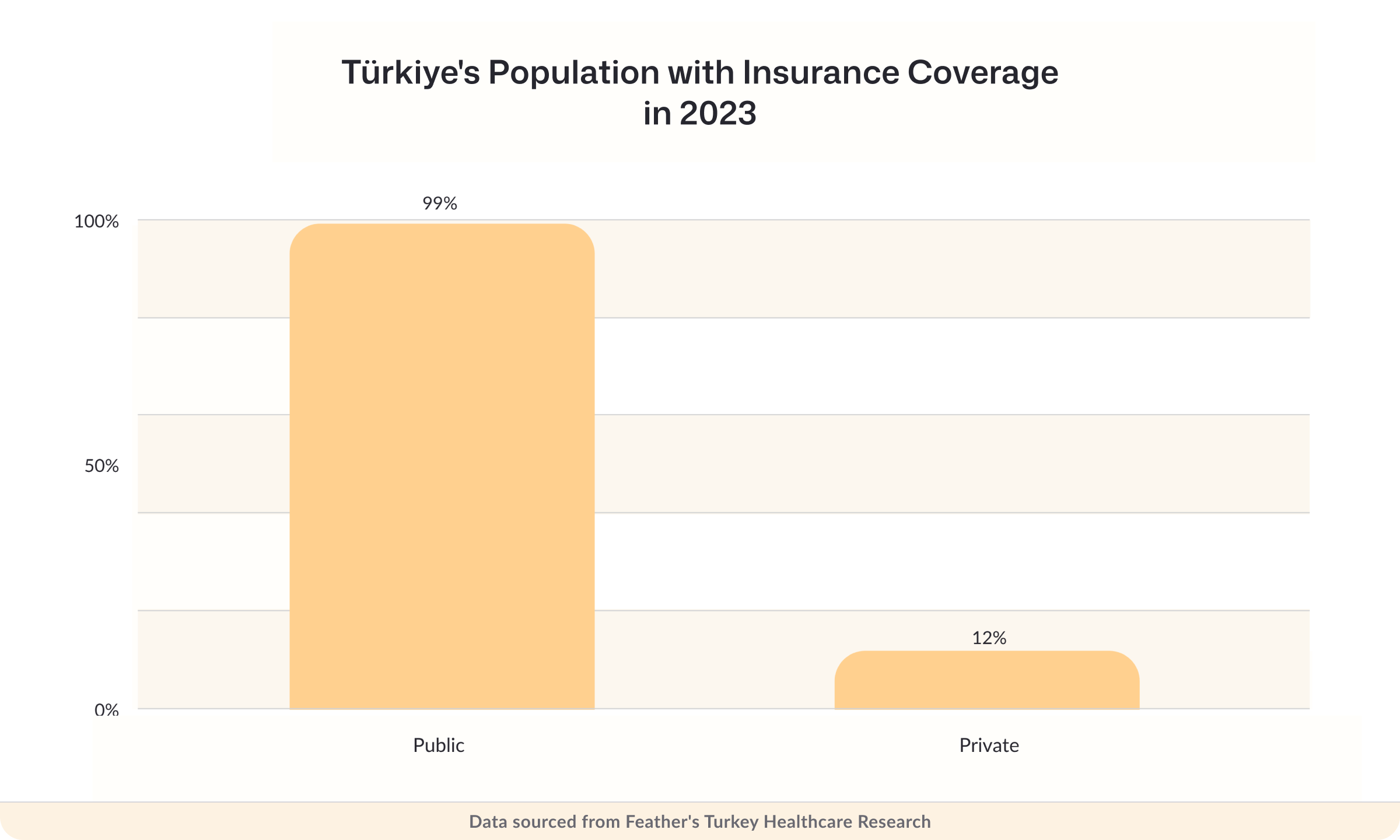
By 2023, 99% of Türkiye's population was covered for a core set of health services through public health insurance and funding schemes. The OECD average is 98%.
Another 12% of people in Türkiye have supplementary private insurance.
Source: Commonwealth Fund, OECD
How healthy are people in Türkiye?
In 2025, 7.1% of people in Türkiye rated their health as bad or very bad, compared to the OECD average of 8.0%.
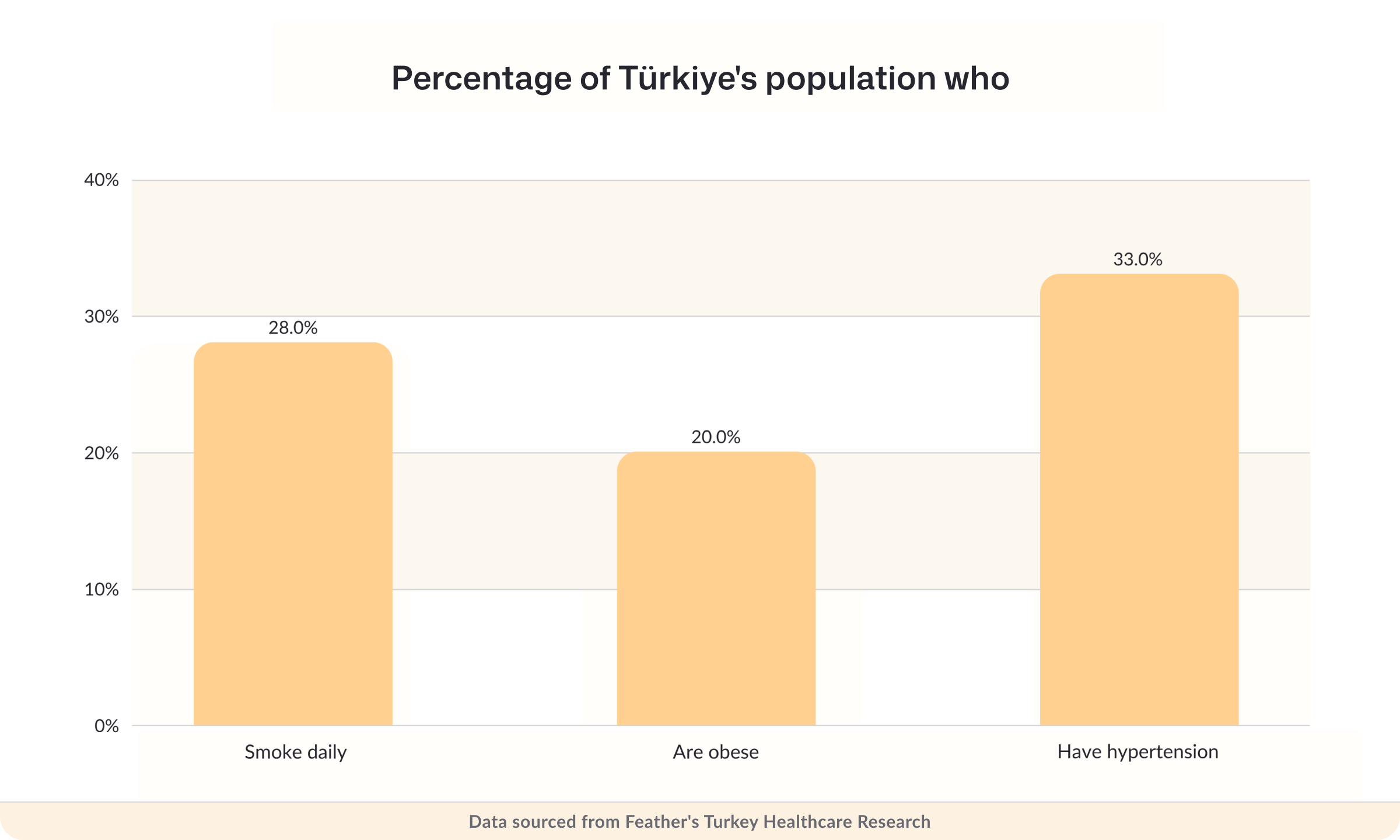
Smoking is the standout risk. Approximately 28% of Turkish adults smoke daily, nearly 10 percentage points above the OECD average of 14.8%.
Drinking, on the other hand, is rare. Alcohol consumption sits at about 1.7 liters per person a year, compared to an OECD average of 8.5 liters.
44% of adults in Türkiye don't get enough physical activity, nearly 50% more than the OECD average of 30%.
In 2025, 20% of adults reported being obese, compared to an OECD average of 19%. Türkiye's child and adolescent obesity rate is estimated at 11.7%.
32.8% of Turkish adults aged 30-79 are estimated to have hypertension.
Source: OECD, Commonwealth Fund, World Health Organization
How satisfied are people in Türkiye with their healthcare?
Not very. Only 41% of Türkiye's residents are satisfied with the quality of their country's healthcare.
That's below the OECD average of 64%, and nearly half of Germany's 81%.
Source: OECD
Cause of death statistics in Türkiye
In 2021, 68.9% of deaths in Türkiye were due to noncommunicable diseases. 22.2% were attributed to communicable diseases and other conditions, and 3.2% to injuries. The remaining 5.7% were linked to the COVID-19 pandemic.
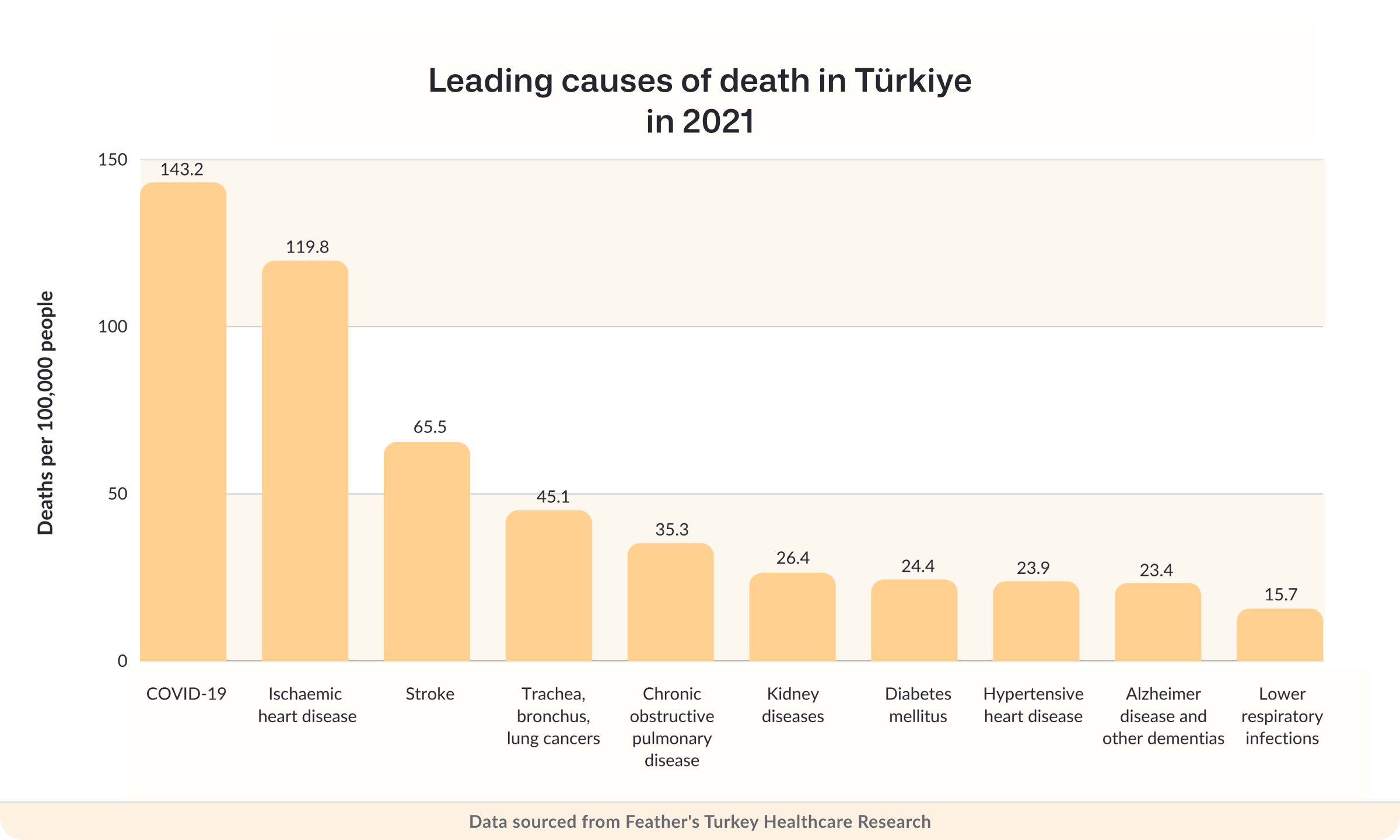
Türkiye's three leading causes of death in 2021 were:
- COVID-19, with 143.2 deaths per 100,000 people
- Ischemic heart disease, with 119.8 deaths per 100,000 people
- Stroke, with 65.5 deaths per 100,000 people
The table below shows the 10 leading causes of death per 100,000 people in Türkiye:
Suicide accounted for just 5 deaths per 100 000 people in Türkiye, less than half the OECD average of 11 per 100 000.
Source: World Health Organization, OECD
How many doctors and nurses are there in Türkiye?
In 2025, Türkiye had an average of 2.4 practicing physicians per 1000 people, below the OECD average of 3.9.
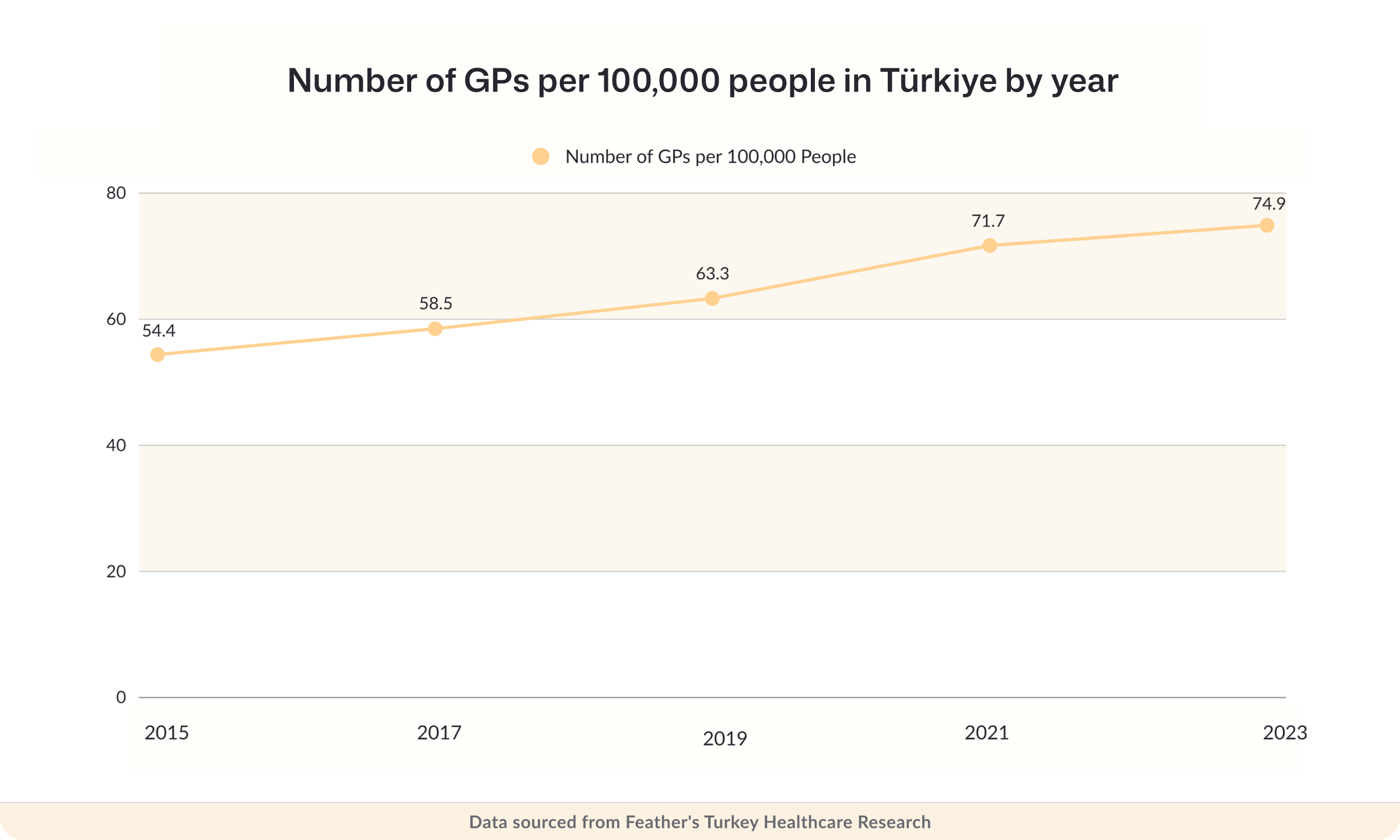
Primary care is improving, though, with more general practitioners than before.
In 2023, there were approximately 74.9 general practitioners per 100,000 people, up from 54.4 per 100,000 in 2015.
Nurses are in short supply. Türkiye had approximately 2.9 practicing nurses per 1000 people in 2025, a third of the OECD average of 9.2.
The country also had roughly 48 pharmacists per 100 000 people, compared to the OECD average of 86 per 100,000.
Türkiye has 30 CT, MRI and PET scanners per million people. That's below the OECD average of 51 per million and behind countries like Portugal (32 per million).
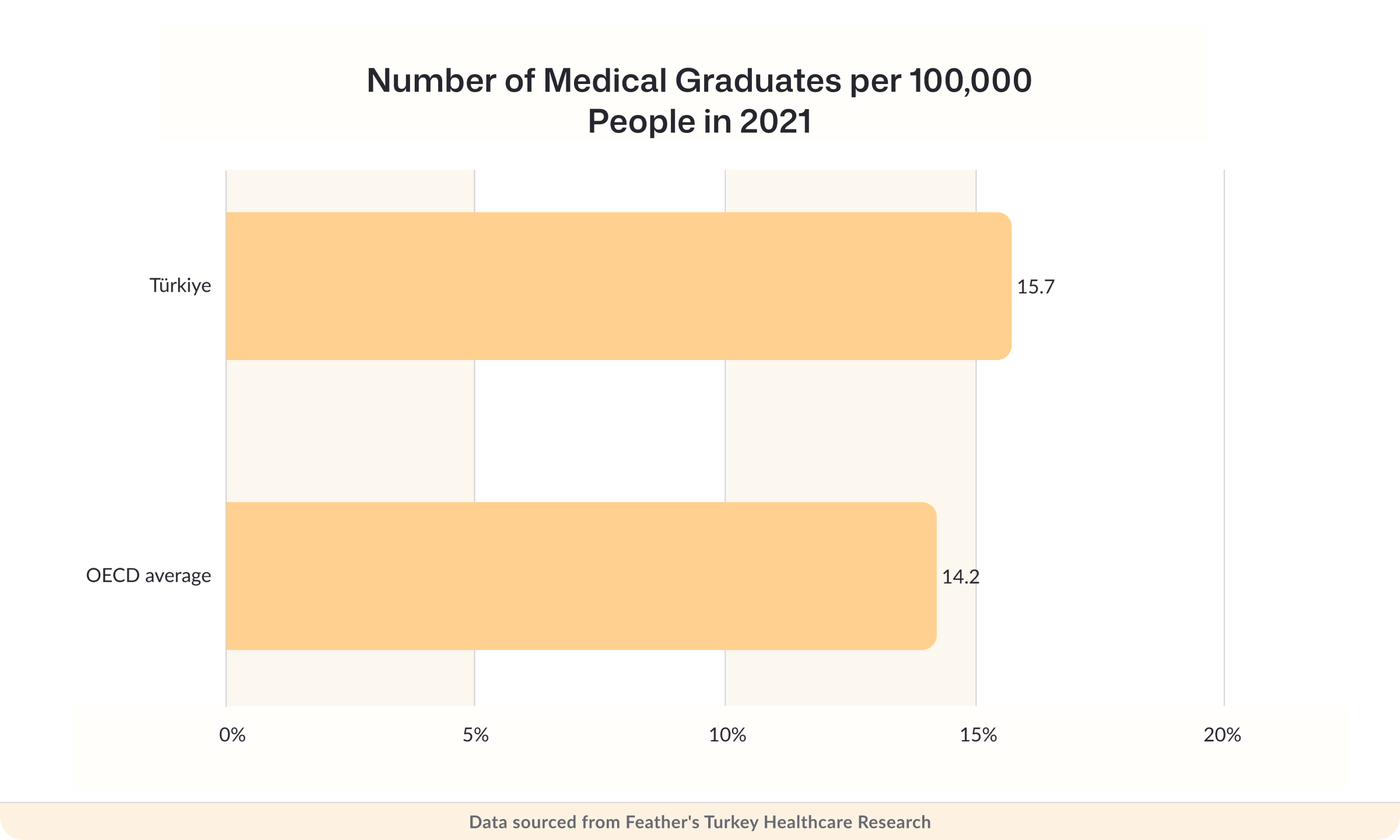
The pipeline of new doctors is healthy. In 2021, the country produced approximately 15.7 medical graduates per 100,000 people, above the OECD average of 14.2 and double Canada's 7.5 per 100,000.
Source: OECD, Commonwealth Fund
How many hospitals are there in Türkiye?
In 2024, Türkiye had 1,562 hospitals actively providing health services, 7 more than the 1,555 operating in 2022.
941 of them were public hospitals run by the Ministry of Health, up from 933 in 2023.
Türkiye also had 69 university hospitals and 552 private hospitals in the same year.
Source: Commonwealth Fund, Republic of Türkiye Ministry of Health
How many hospital beds are there in Türkiye?
In 2023, Türkiye had 312 hospital beds per 100,000 people, up from 283 per 100,000 in 2018.
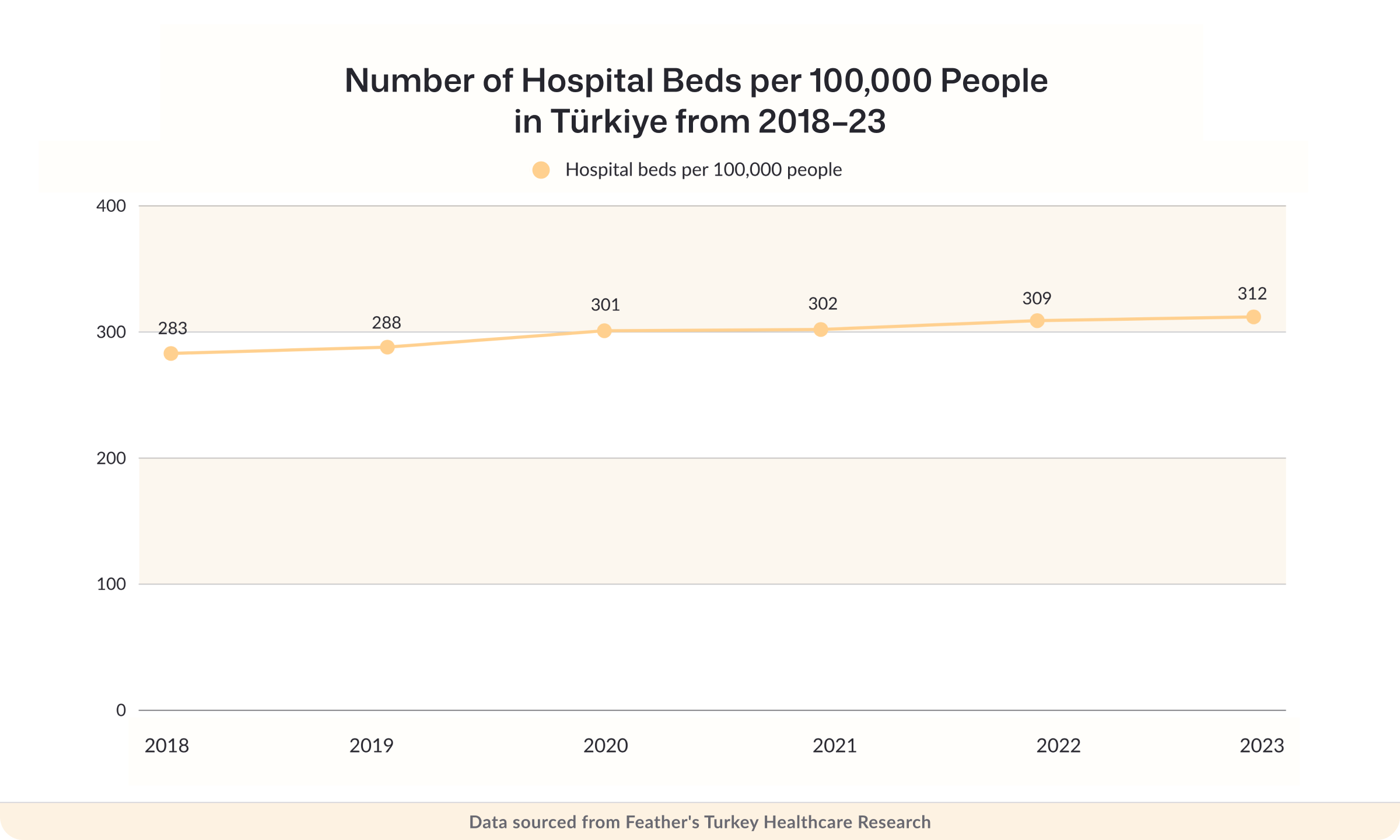
That's roughly 3.2 hospital beds per thousand people, compared to the OECD average of four hospital beds per 1000 people.
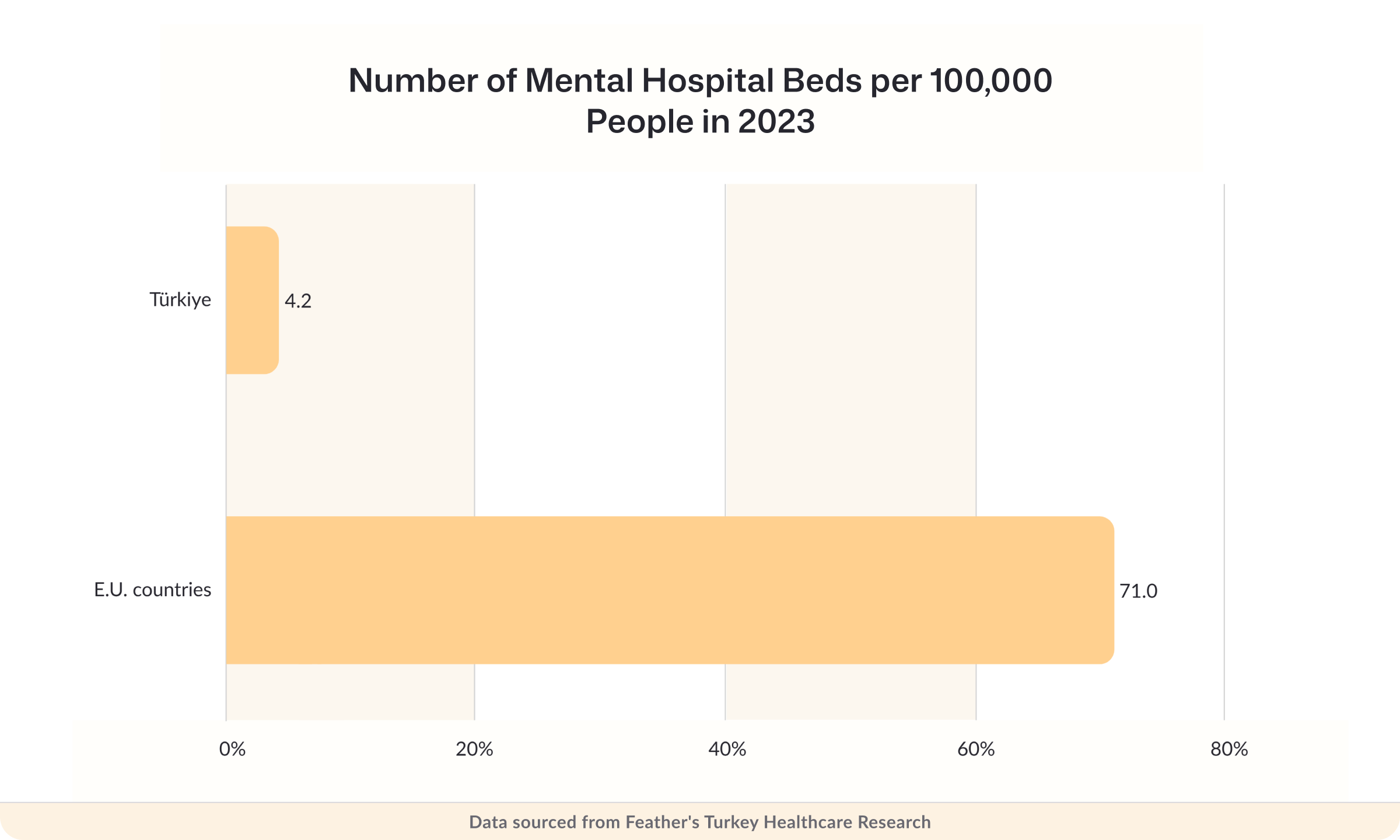
Mental health beds are where Türkiye falls furthest behind the EU.
In 2023, the country had 4.2 mental hospital beds per 100,000 people, nearly 17 times fewer than the EU average of 71 per 100,000.
Source: OECD, Commonwealth Fund, Republic of Türkiye Ministry of Health
Vaccination coverage and cancer screening in Türkiye
Approximately 96% of eligible children in Türkiye had received three doses of the DTP vaccine in 2025, above the OECD average of 93%.
Screening is weaker. 37% of Turkish women aged 50 to 69 were screened for breast cancer, compared to the OECD average of 55%.
Source: OECD


